
What Are AI Agents? Understanding Their Role in the Next Tech Era
Learn about the working of AI agents and applications in daily life.


Do you wonder how AI is moving beyond simple automation? The answer is AI agents; smart systems that can sense and act with little human help.
Unlike regular software that just follows fixed instructions, these agents can learn and adapt over time. They show up in every industry and are also powering the best AI image generators.
As the industries continue to embrace the shift, it becomes vital to have a clear understanding of how these AI agents work and their potential in the years ahead.
Tracing the Evolution of AI Agents
In the 1950s, scientists began experimenting with programs that solved puzzles. But if the rules didn't fit, the programs would fail. By the 1980s, the belief-desire-intention model came into existence, which could plan around goals, making them more flexible in changing situations. The 1990s brought multi-agent systems: teams of programs that could cooperate or compete, useful in robotics and simulations. In the last decade, machine learning gave agents a big upgrade. They could remember past actions, use outside tools, and adapt as they went. What started as rigid code now looks more like a digital coworker, capable of handling multi-step tasks in real time. |
How AI Agents Work
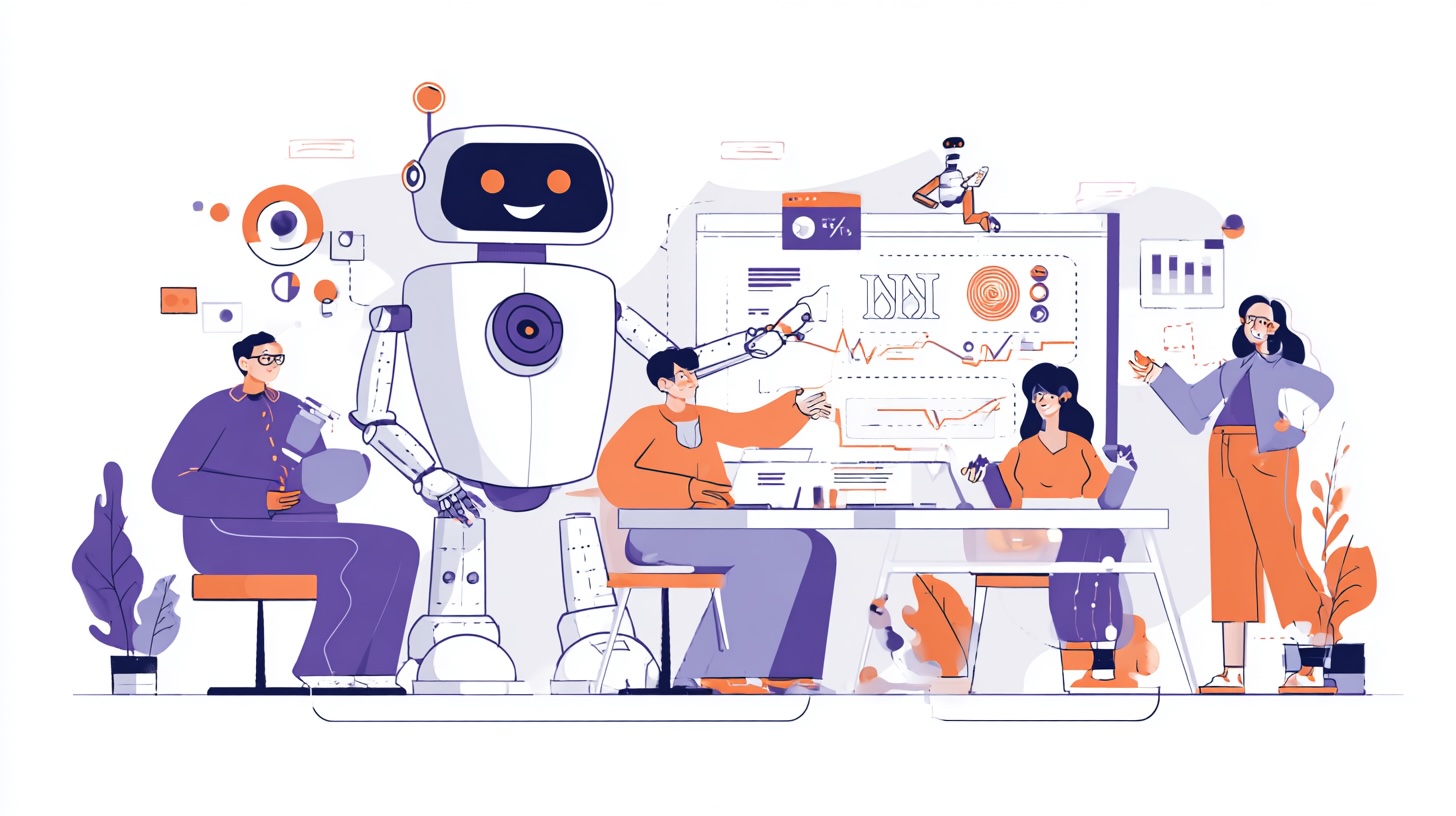
Understanding how the AI agents work becomes easier when you can picture them step by step and think about how they act in different stages. It follows a natural flow, and this is how it looks.
1. Define the Goal
The first and foremost thing is defining a clear purpose. For example, you may ask the agent to generate an image or schedule a meeting. The set goal acts as a driver that gives instructions to the agent.
2. Gathering Context
Once the goals are set, the agent collects all the information about the command from the web. It could involve either analyzing the given prompt or pulling data from external sources.
3. Reasoning and Planning
Now the context is finally set, and the agent begins to plan the best way out to reach the goal. Suppose the instruction given to the agent is to set a draft for the blog, the agent will work on it and generate a proper outline, the key points, set tone, metas, and more.
4. Taking Action
The AI agent executes the steps, whether that’s generating text, creating a visual, analyzing numbers, or sending instructions to another app. It is the “hands-on” phase where the abstract plan becomes a real output.
5. Learning and Adapting
The most advanced AI agents don’t just stop at execution. They review what worked, identify what could be improved, and adjust their behavior over time. This feedback loop is what makes them smarter and more useful with repeated use.
Real-World Applications of AI Agents
AI agents are taking over different industries and changing the way works get done across different industries. Here are some of the real-world applications of AI agents.
Domain | Example Use Case | Benefit |
Customer Support | Chatbots handling FAQs and troubleshooting | Faster responses, improved customer satisfaction |
Marketing | Content and ad generation | Saves time, boosts creativity |
Healthcare | Reviewing scans, analyzing patient data | Early detection, improved accuracy |
Finance | Fraud detection, spending analysis | Increased security, smarter financial decisions |
Creative Design | AI image generation, image upscaling, branding visuals | Faster creation, creative automation |
Education & Research | Summarizing texts, analyzing large datasets | Saves time, uncovers hidden insights |
Examples of AI Agent Use Cases
1. Customer Support
Chatbots or virtual assistants are the best examples of where AI agents help. Bots are instantly helping with customer queries across various industries. The bots also help them reset the passwords for their accounts on the diverse businesses. They dont have to wait for hours for the humans to join and resolve their queries.
2. Marketing and Content Creation
Marketers can use the agents to brainstorm ideas. Plus, it can design visuals. AI-powered design tools can analyze trends and generate graphics that fit brand guidelines. A real-world example is the Zawa AI Agent in the creative workspace: a small business owner can instantly generate and edit a post by typing a prompt like " generate a modern tech-themed Instagram post," and the agent instantly produces multiple professional design options.
3. Healthcare
AI agents are becoming helpful companions for doctors. Agents help them review medical records, scan images, or highlight unusual patterns.
4. Finance
Banks and fintech apps now rely on AI agents that are helping them to keep their finances on track. It acts like a financial assistant for the users. Suppose you make a purchase, and the agent instantly notices something unusual and alerts you. Or it might quietly track your spending over time and suggest simple tweaks to save more.
5. Creative Design and AI Visual Generation
Artists are seamlessly relying on agents for AI visual generation and graphics in seconds. Agents powered by the best AI image generators help designers show their creative side and iterate quickly. A designer needs to input the concept, give a prompt, and AI generates variations instanlty, speeding up the workflow.
6. Education and Research
AI agents are proving to be handy helpers for students and researchers. They can help them with long articles, assignments, and suggest ideas for experiments. The creative automation can save a lot of their time and allows them to focus on what truly matters.
Types of AI Agents
AI agents appear in various forms, depending on their intended purpose. Here’s a look at some common types, in a way that's easy to picture:
1. Reactive Agents
Without keeping a track of the past activity, AI Agents respond to the environment impulsively. They simply react to what is happening at that moment. Think of the thermostat working, which automatically turns on when the room gets chilled. It simply does what it is supposed to do without being clever.
2. Goal-Based Agents
These AI agents work with a clear working goal in mind. They have the designated steps to reach their goals. Consider the working of a GPS app, it looks for the traffic, assigns the fastest route, adjusts to your needs, and helps you reach your goals.
3. Utility-Based Agents
The agents compare options and pick the one that works best. Imagine a finance assistant weighing investment choices to maximize returns. It’s not just following instructions; it’s thinking a few steps ahead.
4. Learning Agents
Agents notice what works and what doesn't, adjusting over time. A customer support chatbot that remembers common questions and improves its answers is a simple example.
5. AI Image Agents
They can turn a simple prompt into visuals, mockups, or even 3D backgrounds or designs. The Zawa AI Agent in the Zawa workspace is a perfect example. You can type in a concept like “tech-themed Instagram post,” and it generates multiple professional-looking designs in minutes. No fancy design skills required, and it lets you experiment quickly.
6. Multi-Agent Systems
Sometimes, several agents work together, like a small team. They coordinate, divide tasks, or even compete to solve bigger problems. This approach is useful in places like warehouses, robotics, or simulations, where a single agent wouldn’t be enough.
AI Agents vs. Agentic AI
AI agents and agentic AI might sound like the same thing, but there's a huge difference.
AI agents handle specific tasks using rules, data, or instructions. They can plan, take action, and even learn a bit from experience, but they usually stick to their assigned job. For example, the Zawa AI Agent can help with AI visual generation from your prompts, but it won’t suddenly start checking emails or making unrelated decisions.
Agentic AI goes a step further. It can make decisions on its own, and sometimes even figure out how to use different tools without any instructions given. Think of it like a very independent digital assistant; it still helps you, but it can also take initiative to reach bigger objectives.
Meet Zawa AI Agent: Your All-in-One Creative Toolkit
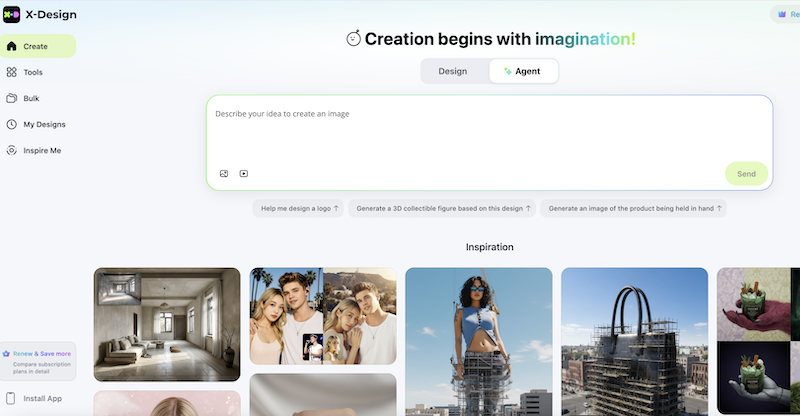
Zawa AI agent in the workspace is a handy and robust creative tool that allows users to generate stunning images without any chaos. It lets users remove backgrounds, generate brand-new scenes, sharpen blurry photos, and even place super-realistic models into product shots, all with simple prompts or one-click tools.
Features of Zawa AI Agent
AI Image Generation: Allows you to create unique visuals from simple text prompts.
Background Removal and Generator: Helps you to instantly clear and replace the background with ease.
Photo Restoration: Helps sharpen the old and damaged images and turn them into high-quality visuals.
Image Upscaling: Turn low-quality or blurry images into crisp, high-resolution versions.
Watermark-Free Downloads – Export polished designs without distractions, even on the free plan.
The Future of AI Agents
AI agents continue to become smarter, more adaptable, and better at handling complex tasks, and are seamlessly helping almost all industries. By simply anticipating the user’s need, they can assist users in creative projects such as film, design, or scientific research.
Tools like Zawa AI agent hint at this future while showing how quickly professional and creative tasks can be accomplished. As the technology continues to advance, AI agents may not just follow instructions but could proactively suggest solutions.
Related articles

The Creator's Guide to Veo 3.1: What's Changed and How to Use it
What is VEO 3.1? The Video Model That Demands Creative Control
The Best Roles for Veo 3.1: Where Google's New AI Video Model Excels
