
Veo 4 Could Change AI Video From Clip Generation to Scene Direction
Leaked reports suggest Veo 4 may push AI video beyond single-shot generation into multi-angle scenes, native audio, and more production-ready storytelling workflows.

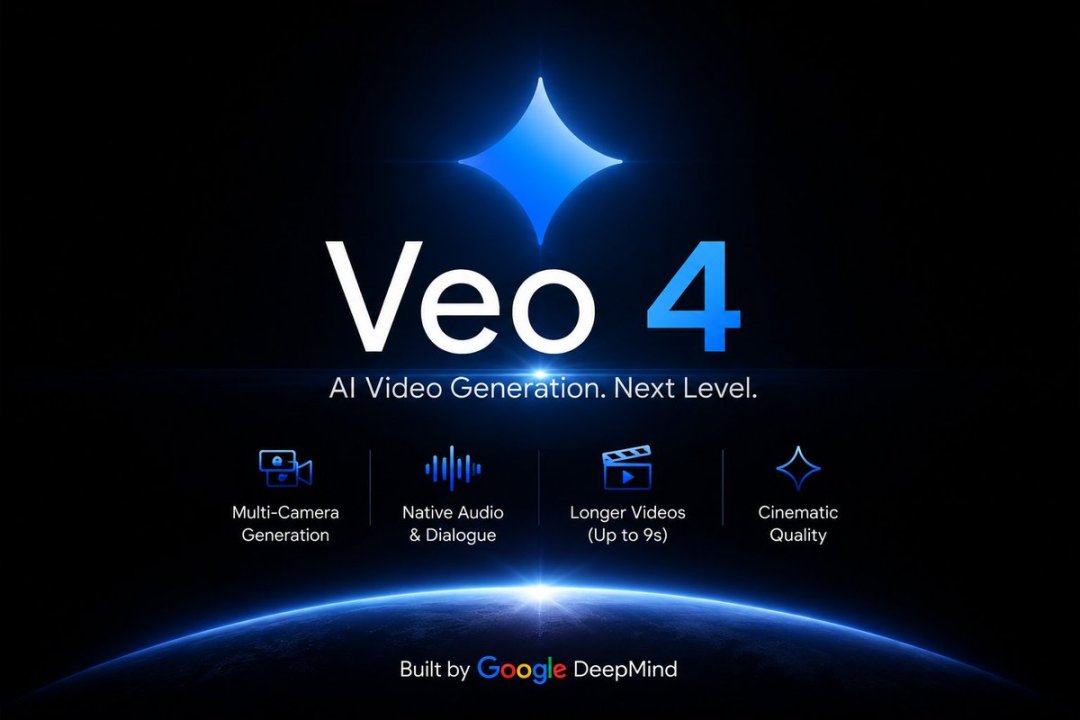
The next big step in AI video may not be about making clips longer or visuals sharper. It may be about teaching models how to think more like directors.
That is why the recent Veo 4 leak has generated so much attention. According to reports circulating ahead of Google I/O, the next version of Google’s video model may move beyond single-camera clip generation and toward multi-angle scene creation, with synchronized audio and more coherent cinematic output. If that direction holds true, Veo 4 would represent more than another model upgrade. It would suggest a shift from AI video as a content gimmick to AI video as a storytelling tool.
It is important to be precise here: at the time of writing, Google has not formally published a full official Veo 4 announcement that confirms all leaked capabilities. But even as an unconfirmed preview, the discussion around Veo 4 already reveals where AI video is heading next.
Why This Leak Feels Different
Most AI video tools today are still strongest at generating a single continuous shot. They can produce motion, camera movement, and atmosphere, but the result usually behaves like one camera capturing one uninterrupted moment.
The reported Veo 4 leap is different. The most discussed capability is dynamic multi-angle scene generation. In simple terms, that means a model may be able to portray the same moment from different perspectives while keeping the characters, environment, timing, and object placement coherent. That sounds subtle, but it is not. In filmmaking terms, this is the difference between generating a shot and generating a scene.
That distinction matters because camera cuts are not just visual decoration. They are part of narrative logic. A close-up, a reaction shot, or a wide-angle transition changes how an audience understands emotion, pace, and emphasis. If AI can manage that kind of scene continuity across angles, it moves closer to assisting with direction rather than simply producing moving images.
From Visual Generation to Narrative Structure
This is why the Veo 4 conversation matters beyond benchmark culture. For the last wave of AI video products, the question was often, “Can the model generate something realistic enough to impress people for a few seconds?” The next question is more demanding: “Can the model generate something structured enough to communicate a story?”
The leak suggests that Google may be aiming at exactly that shift. Rather than competing only on prettier frames or better physics, the goal appears to be a more complete creative unit: a scene with viewpoint changes, synchronized sound, and more polished output in one workflow.
If that happens, the practical impact is significant. It reduces the amount of manual stitching that creators currently need to do between clips. It also makes AI video more relevant for explainers, branded storytelling, education, ads, and short-form narrative content, where continuity matters more than isolated visual spectacle.
Native Audio May Be Just as Important as Better Video
Another reason the Veo 4 leak stands out is audio. Reports describe stronger synchronized dialogue, ambient sound, and even contextual background music generated natively with the video.
That may sound like a secondary feature, but it is actually a major workflow upgrade. Video that looks strong but still requires separate sound design, timing fixes, and music layering is not truly production-ready. Native audio closes part of that gap.
Google had already positioned earlier Veo releases around native audio generation, so this is not a completely new direction. What is new in the leak narrative is the suggestion that the model could handle richer audio structure inside the generation itself, especially if background music becomes context-aware rather than an afterthought. If true, that would move AI video closer to something that feels edited, not merely rendered.
Why Creators and Marketers Should Pay Attention
For creators, the appeal is obvious: less time spent combining separate tools, fewer compromises between visual quality and production speed, and a shorter path from prompt to usable output.
For marketers and content teams, the implications are just as important. A model that can generate more coherent scenes with built-in audio could become far more useful for campaign drafts, product storytelling, social clips, and rapid concept testing. The value is not only in quality, but in compression of workflow. The more steps the model absorbs, the more commercially useful it becomes.
That is why interest in Veo 4 is rising so quickly. People are not just looking for another AI video release. They are looking for the point where AI video starts to resemble a real creative system rather than a fragmented set of experiments.
The Bigger Industry Signal
The Veo 4 discussion also lands at a moment when the AI video market is becoming more demanding. Novelty alone is no longer enough. Users now expect controllability, consistency, sound, format flexibility, and outputs that can survive real publishing environments.
In that sense, Veo 4 is important even before its full details are confirmed. It represents the new standard that advanced users are asking for. Better coherence. Better audio. Better scene logic. Less manual post-production. More direct creative leverage.
Whether Google officially calls the next step Veo 4, Gemini Omni, or something else, the direction is clear: the future of AI video will not be defined only by how realistic a clip looks. It will be defined by whether the model can shape a moment into something that feels intentional, structured, and ready to use.
Final Thoughts
If the leaked reports are even partially accurate, Veo 4 could mark a meaningful shift in generative video. Not because it simply extends duration or improves realism, but because it points toward AI systems that understand scenes, not just shots.
That is the transition worth watching. The next era of AI video will belong to tools that can help creators build narratives, not just generate fragments. And that is why Veo 4 has become one of the most closely watched model rumors in the industry right now.
You May Also Like
Veo 4 Could Change AI Video From Clip Generation to Scene Direction
GPT-Image-2 May Be Coming Soon
PixVerse vs Runway: Which AI Video Tool Is Better in 2026?
How to Use Pixverse V6: The Complete Step-by-Step Guide to AI Video Generation
How to Use Grok for AI Image Generation: A Complete Step-by-Step Guide
Why Grok AI Restricts Content (And How to Get Better Answers)
Is Grok Better Than ChatGPT? Key Differences You Need to Know

What Is Seedream 5.0 Lite and How to Use It to Create AI Images

How to Prompt with Kling: Examples and Pro Tips

Top 30 Prompts for Seedream Image Creation: A Detailed Guide

What is Seedance and how to use it

20 Seedance Prompts for AI Video Creation: Ready-to-Use Examples

Nano Banana 2 vs. Nano Banana Pro: What’s the Difference? (2026 Updated)

Nano Banana vs. Sora AI: Which Gen AI Tool Should You Use?

10 Viral Social Media Prompts You Can Create with Nano Banana Pro
Nano Banana for Fashion: AI-Powered Virtual Try-On Images

Nano Banana 2 vs Nano Banana 1 — What's Changing in Google's AI Image Editing Revolution?

The Super-Brain in Your Pocket: Speculating on Google's Next-Gen Nano Banana 2 (Pro)

How Zawa Nano Banana 2 (Pro) Reinvents Posters, Logos, and Brand Visuals

Nano Banana 2 (Pro) is HERE: The Game-Changing AI Upgrade for Zawa!

Most popular AI models you should know in 2026 (Tested & Tried)

What is Kling AI – A Complete Guide

How to Use Nano Banana?-Next-Gen AI Image Generator

A Complete Guide on How to Blend Photos with Nano Banana AI

How Big Is A 16x20 Photo?

Google Gemini 3 Pro: The Next Great Leap in AI Development

How To Generate Viral AI Videos With Sora 2 + Nano Banana 2 (Pro)
Gemini 3 Pro VS Gemini 2.5 — What to Expect from Google's Next AI Leap

Gemini 3 Pro & Nano Banana 2 (Pro): Release May Delay!

12 Best MidJourney Alternatives to Use For Image Generation

8 Best Image Extender Tools: The Ultimate AI Photo Background Expanders

15 Best AI Video Generators in 2025

10 Best AI Video Enhancers to Upscale Your Videos

10 Best AI Tools in 2025 for Powerful Image, Video, and Voice Generation

18 Best AI Tools for Small Businesses That Save Time and Cut Costs

10 Best AI Models You Should Know

20 Best AI Marketing Tools You Should Know in 2026

The Top 15 Best AI Logo Generators You Need to Know

13 Best AI Image Generators in 2025: Full Comparison

13 Best AI Headshot Generators for Professional Photos

8 Best AI Hairstyle Generators

We Tested Best AI Art Generators of 2025 — Here's What Actually Works

What are the Best AI Agents?

8 Best 3d Figure AI Tools for Stunning Creations

Seedream 4.5 vs Nano Banana Pro

I Tested Sora 2: The Essential Use Cases for Filmmakers and Marketers

Sora 2 vs ImagineArt AI — Which AI Creative Tool Wins in 2025?

Sora 2 vs Sora 1: What You Need to Know

Sora 2 vs Veo 3: A Head-to-Head Comparison for Video Content

Top 4 Best AI Image Generators for Realistic Photos and More

Top 6 AI Video Generators for Beginners and Experts

Top 6 Most Popular AI Image Generators: Complete Explanation
The Best Roles for Veo 3.1: Where Google's New AI Video Model Excels

What Are 3D Figures? A Beginner’s Guide to Collectibles and Models
What Are AI Agents? Understanding Their Role in the Next Tech Era

Hailuo AI Review – A Complete Guide [2025]

What is Luma AI – The Complete Guide

What is Nano Banana AI: 8 Best Use Cases for Generating Realistic Images

What is Runway AI – The Complete Guide
What Is Sora 2 AI -The Complete Guide

What is Sora AI and How Does it Work
What is VEO 3.1? The Video Model That Demands Creative Control
What is Veo 2 and How Does it Work: The Ultimate Veo 2 Guide
What is Veo 3 and How Does it Work – A Detailed Guide

The Creator's Guide to Veo 3.1: What's Changed and How to Use it
What's New in Veo 3.1 + Nano Banana 2 (Pro): Top Features Not to Miss
What is Krea AI and How Does it Work

Seedance 2.0: Next-Gen AI Video Generation for Modern Creators

14 Best AI Productivity Tools That You Need in 2025
