
What Is Commercial Photography
This guide explains commercial photography, including its meaning, major types, business uses, production process, image rights, and marketing value. It also shows how photographers plan, shoot, retouch, and deliver images for brands and sales today.


Commercial photography influences how customers understand a product, service, or brand. It appears in everything from ecommerce listings and restaurant menus to national advertising campaigns. Unlike personal photography, every creative decision must support a defined business purpose. This guide explains its uses, major types, production process, and value to businesses.
What Is Commercial Photography?
Commercial photography refers to images created for advertising, marketing, branding, or sales. The subject could be a product, person, building, meal, or experience; what makes the photograph commercial is how a business intends to use it. Before production begins, the client and photographer usually agree on the target audience, creative direction, publishing channels, and image rights.
Where Commercial Photos Are Commonly Used
Commercial images support customer communication across digital and physical channels. Common placements include:
Ecommerce listings and company websites
Digital advertisements and social media campaigns
Product packaging, catalogs, and brochures
Restaurant menus and food-delivery platforms
Billboards, posters, and in-store displays
Press kits, presentations, and trade-show materials
The required composition changes with the placement. A product page needs clear details and accurate colors, while a billboard depends on a simple subject that remains recognizable from a distance.
How Commercial and Editorial Photography Differ
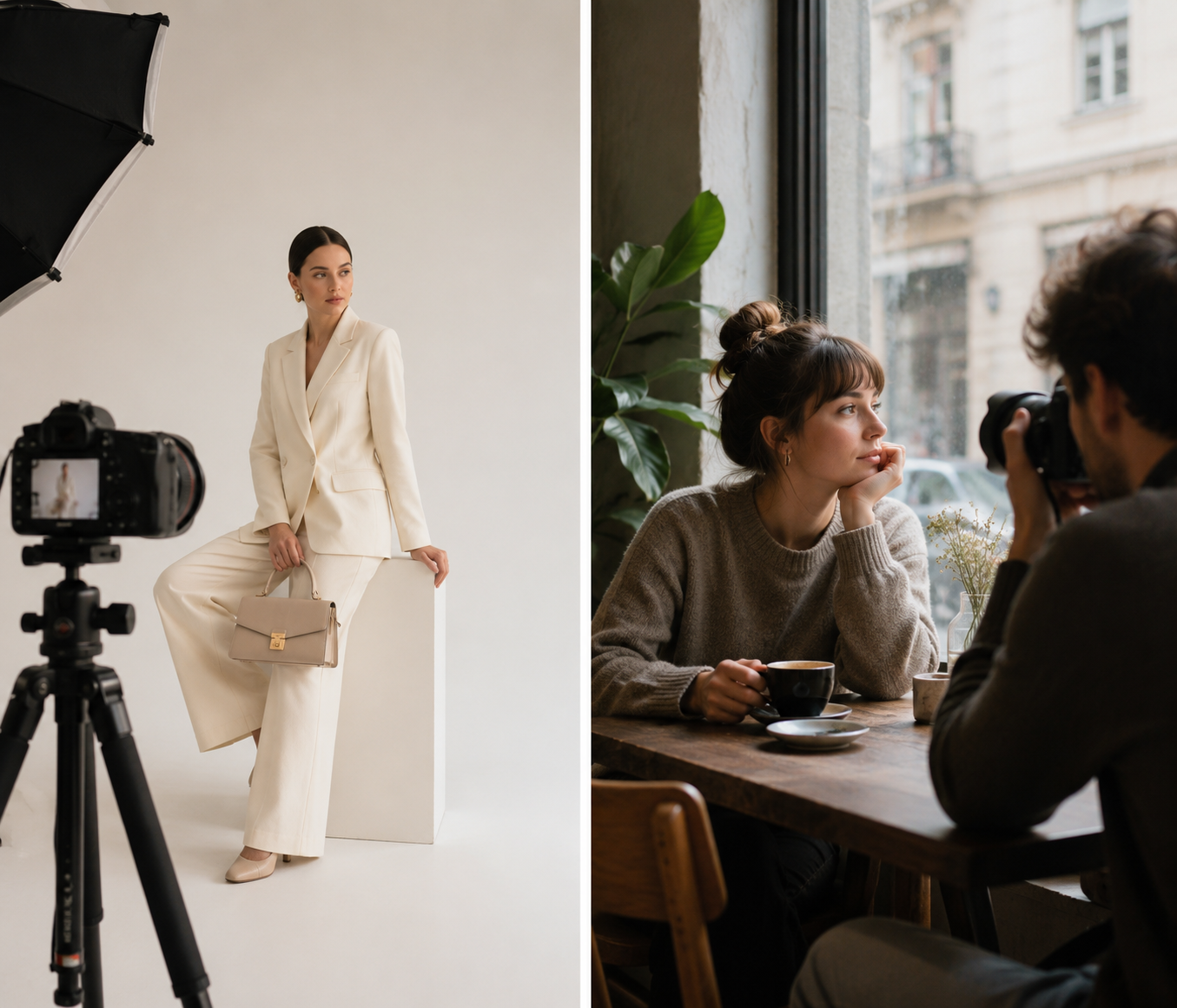
Commercial and editorial photographs may show similar subjects, but they are created under different expectations. Their purpose affects creative control, editing standards, permissions, and licensing.
Purpose and Intended Use
The same photograph can belong to either category depending on why and where it is published. An image designed to influence a purchasing decision is commercial, while one selected to document or explain a subject is editorial. For example, a chef’s portrait in a newspaper profile serves an editorial purpose; using it in the restaurant’s advertisement turns it into commercial content.
Creative Control and Editing Rules
Brand guidelines and campaign objectives usually shape a commercial shoot from the beginning. Editorial photography tends to prioritize accuracy, which may limit alterations that change the meaning of a scene. Replacing a dull sky could support the mood of a travel advertisement, but making the same change in a news photograph might misrepresent the actual conditions.
Model Releases and Usage Rights
Recognizable people commonly sign model releases before their images are used to promote a company or product. Editorial publication may follow different requirements, particularly when photographs document public events, although privacy and local laws still matter. A commercial agreement should also specify the permitted channels, geographic regions, publication period, and whether the client receives exclusive rights.
| Area | Commercial photography | Editorial photography |
| Primary purpose | Promote a product, service, or brand | Inform, explain, or document |
| Creative direction | Usually shaped by the client and campaign | Usually shaped by the publication or story |
| Image editing | May be extensive but should not mislead customers | Often restricted by editorial standards |
| Model releases | Common for recognizable people | Depends on the setting and applicable law |
| Licensing | Based on agreed marketing uses | Based on publication and reporting needs |
What Are the Types of Commercial Photography?
Commercial photography contains several specialties, each with different production requirements. The right approach depends on what the business needs customers to notice, understand, or feel.

Product and E-commerce Photography
Accuracy matters because online shoppers cannot inspect a product in person. Consistent angles, neutral backgrounds, realistic colors, and close-up details help customers compare options and understand what they will receive. These same priorities guide the process of taking good product photos, from preparing the setup to capturing the details buyers need. A footwear retailer may require front, side, sole, packaging, and on-model photographs for every style.
Advertising and Campaign Photography
Rather than simply documenting an item, campaign photography builds a persuasive idea around it. Custom sets, actors, props, special effects, and detailed post-production can all contribute to the final message. These productions are often more conceptual and expensive than standard catalog shoots because every element must reinforce the campaign theme.
Food and Beverage Photography
Texture, temperature, and freshness determine whether food looks appealing on camera. Lighting can reveal steam, crisp surfaces, condensation, or glossy sauces, while styling keeps ingredients presentable during a long session. Menu photographs should remain close enough to the served dish that customers are not given unrealistic expectations.
Fashion and Beauty Photography
Fashion work may emphasize garment fit, fabric movement, accessories, makeup, or an aspirational lifestyle. Beauty photography often requires precise lighting to reveal skin texture and product finish without producing distracting reflections. Models, wardrobe stylists, makeup artists, art directors, and retouchers usually coordinate closely on larger productions.
Lifestyle and Brand Photography
A lifestyle image places a product or service inside a believable situation instead of isolating it against a plain background. A camping company, for instance, might show friends cooking beside a tent so customers can imagine using the equipment themselves. Casting, wardrobe, location, and body language all help determine whether that scene feels relevant to the intended audience.
Corporate and Headshot Photography
Corporate photography gives an organization a professional and human presence. Along with professional headshots, a session may cover leadership portraits, team interactions, office interiors, manufacturing processes, or employees assisting customers. The tone can range from formal to relaxed depending on the company culture and where the images will appear.
Architecture, Interiors, and Real Estate Photography
Space, structure, materials, and layout take priority in architectural photography. Wide views establish how rooms connect, while tighter compositions draw attention to finishes, furniture, and design features. Correcting perspective and balancing indoor and outdoor exposure are especially important when photographing windows, tall buildings, or compact interiors.
What Does a Commercial Photographer Do?
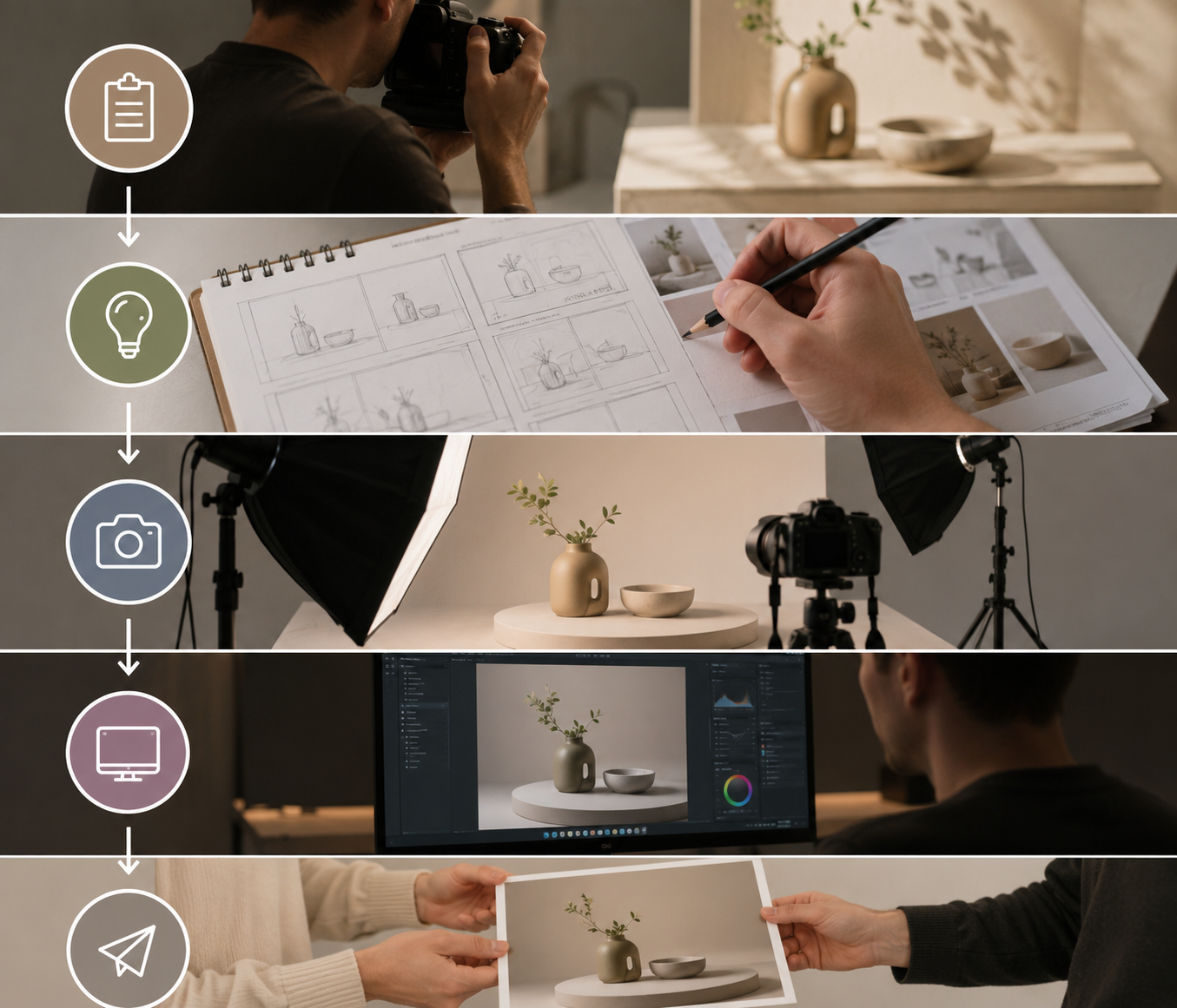
A commercial photographer’s work begins well before the shutter is pressed. The role can include interpreting a brief, organizing production, directing the shoot, supervising post-production, and preparing approved files for delivery.
Understand the Client Brief and Target Audience
A photographer first determines what the images need to communicate and whom they must reach. The brief may identify the campaign message, required products, visual references, mandatory details, brand restrictions, and intended response from customers. Luxury watch photography, for example, would use a different atmosphere from a campaign aimed at first-time fitness buyers.
Plan the Concept, Budget, and Shot List
The creative idea must be achievable within the available time and budget. Expenses may include studio rental, equipment, locations, permits, travel, talent, props, styling, assistants, and retouching. A detailed shot list then confirms that every required subject, angle, and scene is captured before the set is changed or cleared.
Prepare Locations, Products, Props, and Talent
Efficient productions depend on careful preparation. Products are cleaned and inspected, garments are steamed, locations are checked for power and access, and props are arranged before shooting begins. When talent is involved, schedules, wardrobe sizes, transport, catering, and signed releases may also need coordination.
Manage Lighting, Styling, and Creative Direction
During the shoot, technical decisions must support the approved visual concept. Lighting reveals form and texture, styling controls the placement of objects, and creative direction guides a model’s expression or movement. Photographing a glass skincare bottle, for instance, requires carefully positioned highlights that show its shape without obscuring the label.
Retouch Photos for Different Marketing Channels
Commercial retouching may remove dust, balance color, correct minor distractions, refine selections, and clean imperfect backgrounds. An AI photo editor can speed up routine work such as background cleanup, object removal, resizing, and basic image enhancement, but every result should still be checked for accuracy. Ethical limits depend on the claim being made: removing a temporary blemish is different from exaggerating how a cosmetic product performs. Enough clear space should also remain around important subjects for later cropping, copy placement, or layout adjustments.
Select and Deliver the Final Commercial Images
After production, weak, repetitive, or technically flawed frames are removed before the strongest options reach the client. Approved photographs are processed according to specifications for resolution, color space, file format, naming, and compression. A retailer might receive high-resolution TIFF files for print together with optimized JPEG or WebP files for its online store.
Why Businesses Use Commercial Photography
Professional images are not valuable simply because they look polished. They help a business present information clearly, establish a recognizable visual character, and maintain a reliable supply of approved marketing assets.
Build a Clear and Recognizable Brand Identity
Repeated visual choices can make a company recognizable even when its logo is absent. Color palettes, lighting, locations, casting, and composition collectively shape how the brand feels to its audience. When that identity also needs to extend across logos, posters, and social media materials, a creative branding platform such as ZaWa can bring those assets into the same visual direction. A sustainable clothing label, for example, might use natural light, muted tones, and outdoor settings to express a practical, environmentally conscious identity.
Show Products and Services More Clearly
Photography can answer practical questions that written descriptions leave unresolved. Scale becomes easier to judge when an item appears beside a familiar object, while an in-use image may demonstrate fit, assembly, or operation. Service companies can similarly photograph real employees and environments to make an intangible offer easier to understand.
Keep Visuals Consistent Across Marketing Channels
A documented photography style gives employees, photographers, and outside agencies the same visual standard to follow. Approved rules may cover image tone, subject placement, background treatment, empty space for text, and acceptable levels of retouching. Such guidance prevents a brand from looking fragmented when several teams create content simultaneously.
Build a Reusable Library of Brand Content
A searchable image library helps teams find approved content without repeating work or accidentally publishing outdated files. Descriptive filenames, dates, subject tags, usage-right records, and campaign status make each asset easier to manage. A hotel could tag photographs by room type, season, amenity, and location so its marketing team knows which images remain suitable for publication.
FAQs
Can You Take Commercial Photos With a Smartphone?
Yes. A recent smartphone can produce usable commercial images when lighting, stabilization, composition, and resolution meet the project’s requirements. It is particularly suitable for informal social posts and small-business updates, although complex product sets, large prints, and demanding lighting conditions may require dedicated equipment.
Can Stock Photos Be Used for Commercial Purposes?
Stock photos can be used commercially when their licenses cover the intended placement, distribution, audience, and modifications. Images labeled for editorial use only generally cannot be repurposed for advertising. Restrictions involving recognizable people, private properties, trademarks, and sensitive contexts should also be checked before publication.
Is Product Photography Commercial Photography?
Yes. Product photography becomes commercial when it is created or licensed to market and sell an item. This includes images used on ecommerce pages, advertisements, packaging, catalogs, marketplaces, and branded social accounts.
Can AI Images Be Used in Commercial Campaigns?
Potentially, but the rules depend on the AI service, subscription plan, source materials, and jurisdiction. Permission from a platform does not automatically remove copyright, trademark, privacy, or publicity risks. Businesses should review the provider’s current terms and avoid unauthorized use of protected logos, characters, artwork, or recognizable people.
Conclusion
Commercial photography translates a business objective into images created for a specific audience and purpose. Depending on the assignment, that may involve accurate product documentation, an elaborate campaign concept, professional portraits, or a carefully styled interior. A clear brief, appropriate permissions, and thoughtful production planning allow the finished photographs to remain useful well beyond the original campaign.
You May Be Interested

6 Free Art Prompt Generators

7 Ways to Use an AI Topic Generator

75+ Father’s Day Messages for Every Dad (Sweet, Funny & Heartfelt)

How to Create a Logo for Bakery Business

13 Best AI Headshot Generators for Professional Photos
