10 Famous Drinks Photographers to Know in 2026
Discover 10 leading drinks photographers known for bottle campaigns, cocktail styling, liquid motion, and lifestyle imagery. Compare their approaches to lighting, reflections, branding, and storytelling, plus tips for hiring the beverage specialist.
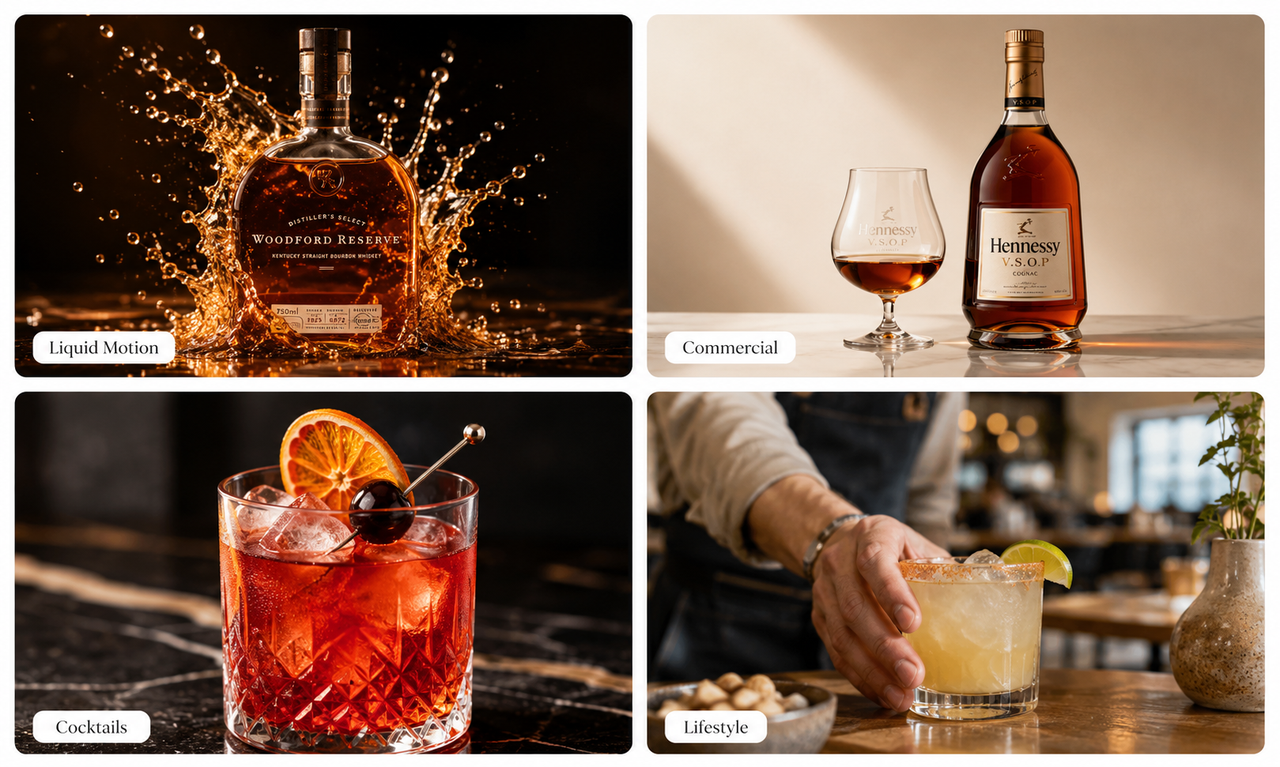
The best drinks photographer depends on the type of project. Some specialize in liquid motion and splash photography, while others focus on luxury bottle campaigns, cocktails, or lifestyle beverage content.
How We Chose These 10 Photographers
Active professional portfolio with recent drink or beverage work.
Clear drinks specialization shown through bottles, cocktails, liquids, or hospitality images.
Recognized experience supported by clients, campaigns, awards, publications, or industry influence.
A distinct visual style that separates the photographer from similar portfolios.
Creative range across studio, lifestyle, editorial, motion, and people-led photography.
Geographic diversity includes photographers working in different markets.
This table provides a quick comparison. It does not measure which photographer is best.
| Photographer | Location | Main strength | Work to study |
| Jonathan Knowles | London | Liquid motion | Splashes and bottle campaigns |
| Martin Wonnacott | London and New York | Advertising photography | Polished global campaigns |
| Adrian Mueller | New York | Bottle lighting | Glass, labels, and shadows |
| Rob Lawson | London | Lifestyle and motion | Social drink settings |
| Jordan Hughes | Portland | Cocktail photography | Recipes and drink styling |
| Cayla Zahoran | New York | Editorial drinks | Menus and visual stories |
| Louise Palmberg | New York | Hospitality photography | People and real locations |
| Gabriel Lucido | California | Commercial color | Bright product images |
| Hannah Caldwell | Melbourne | Moody still life | Darker drink photography |
| Matthew Lloyd | United Kingdom | People-led campaigns | Drinks with lifestyle subjects |
10 Famous Drinks Photographers to Know
For the 10 drinks photographers, some focus on bottles and liquid movement, while others build images around cocktails, people, or real locations. Their portfolios offer useful examples of lighting, styling, reflection control, and brand presentation, making it easier to identify the type of photographer that fits your own project.
Jonathan Knowles and Bold Liquid Motion
Jonathan Knowles is known for controlled liquid splashes and detailed bottle photography. His London studio works across drinks, still life, people, and special effects. His beverage portfolio includes projects like Coca-Cola, Coors, Carlsberg, and Stella Artois. He has also appeared in Lürzer’s Archive selections of leading advertising photographers.
Knowles keeps the bottle and label clear even when liquid is moving around the product. His work is useful for studying how motion can add energy without hiding important packaging details.
Source: Jonathan Knowles official portfolio
Martin Wonnacott and Polished Drink Campaigns
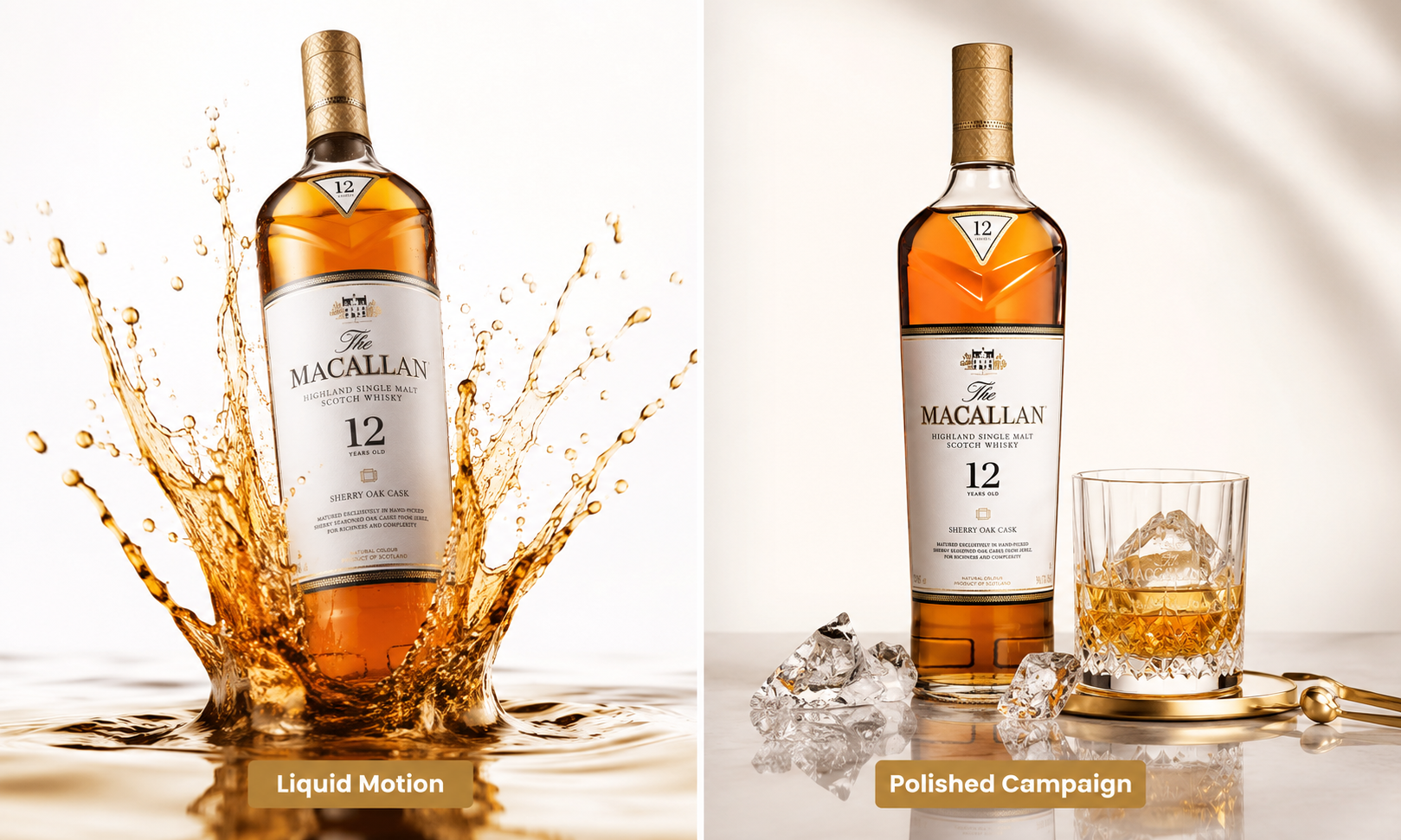
Martin Wonnacott has built a long career around drinks and advertising photography. His portfolio includes beer, spirits, soft drinks, glassware, and liquid effects. Published client work includes Guinness, Coca-Cola, Bacardi, Budweiser, Jack Daniel’s, Heineken, and Pepsi. His projects have also received recognition from major advertising award programs.
His finished images have clean glass edges, readable labels, and carefully positioned ice.
Study Wonnacott’s work when the final image needs the polished appearance often used in posters, packaging, and large advertising displays.
Sources: Martin Wonnacott's official website and Professional Photographers of America profile
Adrian Mueller and Sculptural Bottle Lighting
Adrian Mueller is a New York photographer with extensive experience in liquid, splash, food, and beverage photography.
His drink images often use strong contrast and carefully placed shadows. The shape of the bottle stays clear, even when the glass and background use similar colors. Mueller also pays close attention to smaller details. In his works, bottle shoulders, caps, printed labels, and embossed glass receive enough light to remain visible.
Source: Adrian Mueller liquids portfolio
Rob Lawson and Drinks in Motion
Rob Lawson photographs drinks in studio settings and real locations. His portfolio includes still life, lifestyle images, close-up details, motion, and clean product cutouts. This range makes his work useful when one project needs several types of content. For example, a campaign may require a bottle image for a website and a social video showing the drink being served.
People often appear naturally in Lawson’s images. Hands, bartenders, and customers support the drink without drawing attention away from it. It is worth studying when the product needs to feel connected to a bar, restaurant, party, or everyday drinking moment.
Source: Rob Lawson drinks portfolio
Jordan Hughes and Modern Cocktail Photography
Jordan Hughes combines cocktail photography with recipe development and drink education. He is based in Portland and works with bars, restaurants, and beverage brands. He created High Proof Preacher in 2017. His cocktail work later received recognition through Saveur’s drinks-related awards.
Hughes pays close attention to ingredients and preparation. Garnishes, glassware, ice, and drink color all help explain what the cocktail contains.
He also teaches cocktail photography through Cocktail Camera. This makes his work easy for beginners to study because the images are closely connected to the way drinks are prepared.
Sources: High Proof Preacher and Cocktail Camera
Cayla Zahoran and Editorial Beverage Stories
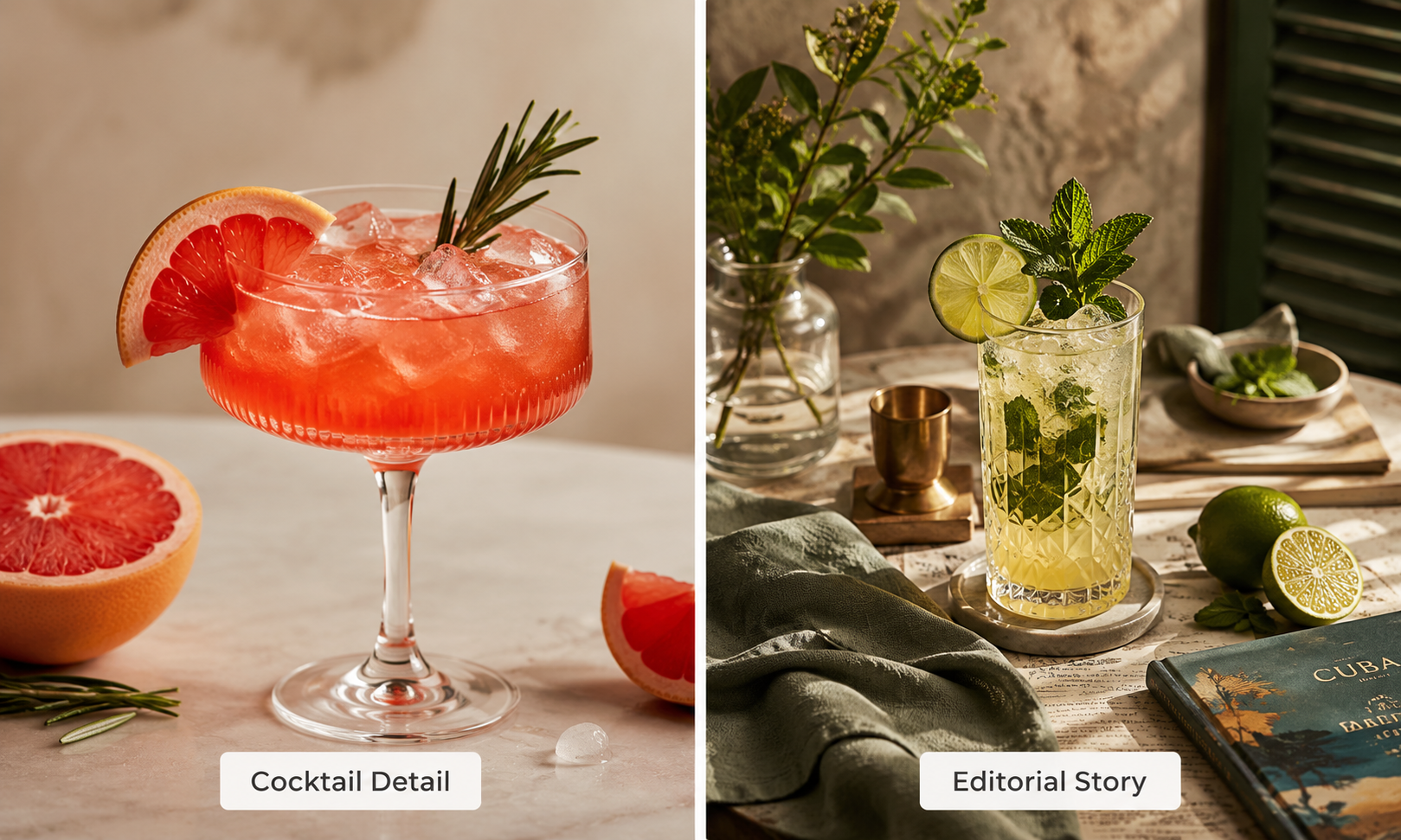
Cayla Zahoran creates food and drink photography from her New York studio. Her work appears in menus, packaging, editorial content, advertising, and social media. Her studio includes a working kitchen, which supports projects that require drinks and food to be prepared on the same set.
Zahoran often uses ingredients and table details to provide context. These elements help viewers understand the flavor or serving style without covering the main drink.
Published profiles connect her work with Esquire, Saveur, The Wall Street Journal, Jose Cuervo, Jameson, and Bacardi.
Sources: Cayla Zahoran's official portfolio and Wonderful Machine photographer profile
Louise Palmberg and Real-Life Drink Settings
Louise Palmberg works across food, drinks, hospitality, and film. Her background in restaurants has influenced the way she photographs serving moments and dining spaces. Her published client list includes Starbucks, Tanqueray, Aperol, Nespresso, Grey Goose, and Guinness.
Some of Palmberg’s images focus closely on the drink. Others show people holding, serving, or enjoying it in a real location. She also directs motion content. This can help a photo and video collection maintain the same lighting, setting, and overall visual direction.
Sources: Louise Palmberg's about page and Louise Palmberg's portfolio
Gabriel Lucido and Colorful Commercial Drinks
Gabriel Lucido is a commercial photographer based in Orange County, California. His work uses bright colors and clearly defined product shapes.
Backgrounds may be bold, but the drink remains easy to identify. Labels and packaging are usually positioned toward the viewer. His portfolio is useful for understanding how several strong colors can appear in one image without making the product difficult to see.
Lucido’s wider commercial work has appeared through major retailers, including Costco, Walmart, Sam’s Club, and Albertsons.
Sources: Gabriel Lucido's official portfolio and Foodelia photographer profile
Hannah Caldwell and Moody Still-Life Drinks
Hannah Caldwell is a Melbourne photographer with a fine art background and more than twenty years of industry experience. She works across beverages, food, products, still life, and advertising. Her images often use deeper shadows and smaller areas of controlled light.
This darker style can make glass, metal, and textured labels stand out. It is often suitable for spirits, wine, and products that need a more serious appearance.
Her official biography lists recognition from international photography programs, including the World Food Photography Awards and Lürzer’s Archive.
Source: Hannah Caldwell's official biography
Matthew Lloyd and People-Led Drink Campaigns
Matthew Lloyd combines drink photography with portraits and lifestyle images. People often play an important role in their beverage work. A bartender may be shown preparing a drink. Another image may place the product in a restaurant, event, or social setting. This approach helps explain how the drink fits into real life. The product remains visible while the person gives the image a clear use or purpose.
Lloyd works in studios and on location. His portfolio is relevant when the campaign needs more than an isolated bottle against a plain background.
Source: Matthew Lloyd drinks portfolio
What Can You Learn From Professional Drinks Photography?
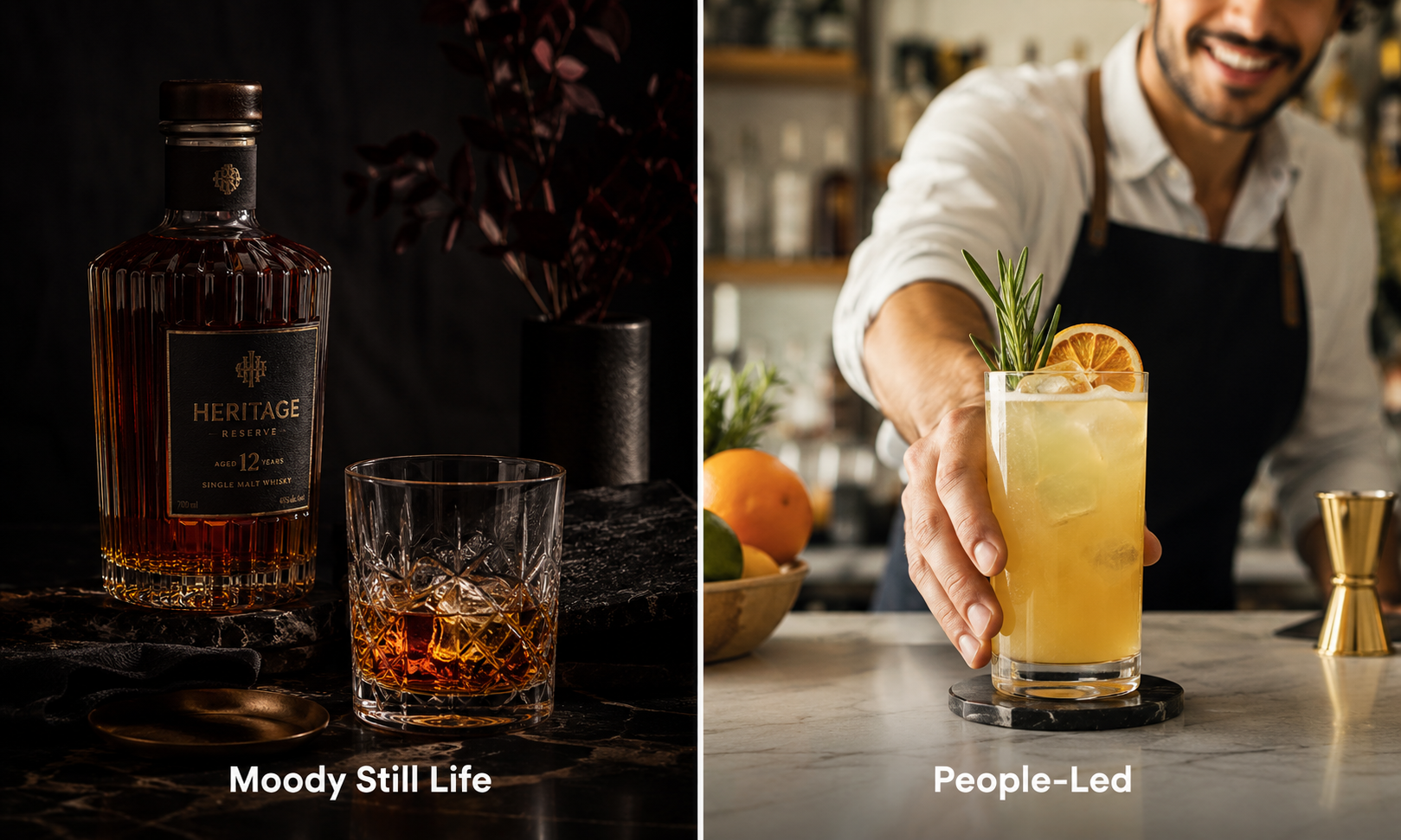
Professional drink photography depends heavily on lighting and reflection control. These two skills affect the bottle shape, liquid color, label, ice, and glass surface.
You do not need professional equipment to learn from these portfolios. Look at where the light appears and which product detail receives the most attention.
How They Use Light
Glass and clear liquid can lose their shape when all the light comes from the front. Drinks photographers often place a light behind or beside the product. Backlighting can make the liquid brighter. Side lighting helps define the edge of the glass or bottle.
The label may need a separate light because paper does not reflect light in the same way as glass. Without enough light, the bottle may look attractive while the brand name becomes difficult to read.
Notice which part of each image appears brightest. It often shows what the photographer wants you to see first.
How They Control Reflections
Every glass bottle reflects the lights and nearby objects. Drinks photographers control these reflections instead of trying to remove every one. White cards can create clean highlights along the bottle. Black cards may add a darker edge and make clear glass easier to see. Small changes in the camera or light position can move a bright patch away from the label, reducing the need to remove glare from photos later.
Good reflection control also makes the product easier to understand. Viewers can see its shape, surface, cap, and printed details without distracting glare.
How They Build Brand Identity
Drink images should look connected when they appear across a menu, website, package, and social account.
Photographers create this connection through repeated colors, backgrounds, glassware, and lighting choices. That consistency is especially important for aesthetic Instagram posts, where several images are viewed together on the same brand feed. The amount of human activity in the images also affects the style.
Choose one clear direction before planning individual photos. This reduces the risk of receiving images that look good separately but do not work together.
How to Hire a Drinks Photographer
A strong portfolio is the first step. You also need to understand who will prepare the drinks and what files you will receive. Write down your main requirements before asking for prices. Include the number of drinks, where the images will appear, and whether you also need video.
Review Similar Drink Work
Look for a portfolio containing a similar drink and container. As with other types of product photography, cocktails, clear spirits, dark bottles, cans, and hot drinks create different lighting and styling problems. Experience with one category does not always transfer directly to another.
Ask to see a complete project rather than judging only the photographer’s homepage. A full set shows whether the color and lighting remain consistent across several images.
Ask About Styling Support
Confirm who will prepare the drink and manage the smaller details. Some photographers handle simple drink styling themselves. Larger shoots may involve a drink stylist, food stylist, or prop stylist.
Ask who will select the glassware and prepare the ice. You should also know who replaces garnishes or cleans fingerprints from bottles during the shoot. This information affects the price and the amount of preparation you need to handle yourself.
Confirm Final Deliverables
Before the shoot, confirm exactly what the final package includes, such as high-resolution images, web-ready files, social media crops, transparent backgrounds, or short-form video. Clear deliverables help avoid extra editing later and ensure each asset fits its intended channel.
When additional versions are needed, prepare and refine drink visuals with AI by adjusting composition, improving image quality, and removing distracting elements. This makes it easier to create polished variations while keeping the original lighting and brand style consistent.
Discuss Image Licensing
Photography prices may include both production work and image usage rights. The license should explain where the images can appear and how long they can be used. It should also cover the countries where the content will be published. A license for a website may not include product packaging or paid advertising. Ask for these uses to be written into the agreement before the shoot.
FAQs
How Much Does a Drinks Photographer Charge?
There is no fixed price. The cost depends on the photographer, shoot length, crew, styling, editing, and image licensing. Ask for a written estimate based on your shot list and planned use.
Can One Photographer Shoot Photos and Video?
Yes, many photographers offer both. Review their photo and motion portfolios separately. Confirm the video length, format, editing, and final number of files before booking.
What Lenses Should I Get as a Beginner Photographer?
Start with the zoom lens included with your camera, then add a 35mm or 50mm prime for everyday photos. Choose a macro lens only when close-up details become a regular need. Check camera compatibility before buying.
How Do You Shoot Drink Photography With an iPhone?
Place the drink beside a window with indirect light. Tap the glass to set focus and exposure, turn on the grid, and hold the phone steady. Lower the exposure slightly if bright reflections lose detail.
Conclusion
The right drinks photographer should already have work that matches your product and intended setting. Compare complete portfolios rather than choosing only by reputation. Check how each photographer handles glass, labels, reflections, and people.
10 Famous Drinks Photographers to Know in 2026

100+ Father’s Day Jokes That Dad Will Actually Laugh At

100+ Free Stable Diffusion Prompts to Generate Amazing AI Art
133 Independence Day Captions for Social Media

1440p vs 4K: Key Differences, Real Scenarios & Blur Fix

165 Father’s Day Card Messages & Ideas