How to Write a Menu Description
Learn how to write a menu description that helps customers choose with confidence. Use clear ingredients, cooking methods, flavors, textures, portions, and dietary details, then keep every item concise, consistent, accurate, and easy to scan online.

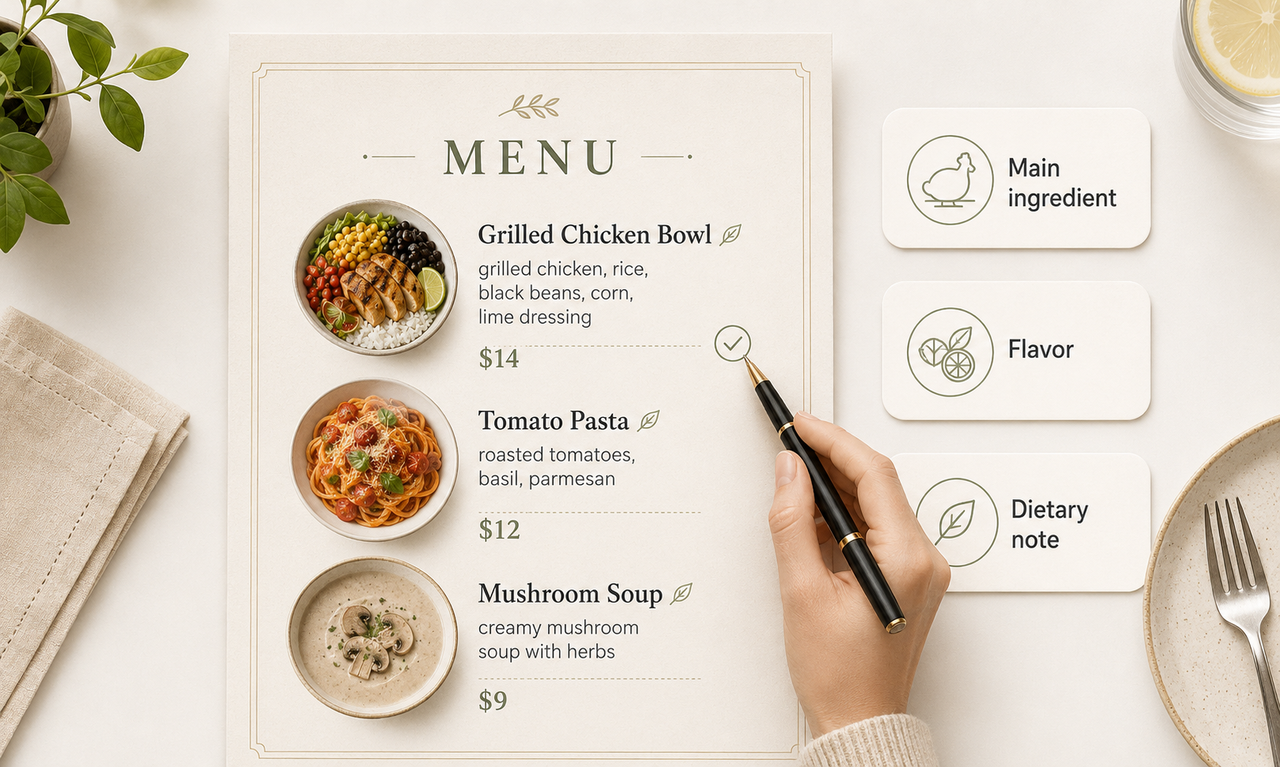
A good menu description informs customers what the dish is, what it tastes like, and why it is worth ordering. For anyone crafting a first menu, plain details are more important than flowery food language. Diners should be able to identify a main ingredient, gauge its flavor, and be alerted to any significant dietary considerations while ordering. When wording is accurate and restrained, research shows that word choice can influence how consumers visualise food and assess its price.
What Makes a Good Menu Description?
An effective menu description answers at least some of the questions a customer has about an item before he or she orders it. It can reduce hesitation and make it easier for customers to decide what to order.
Tell Customers What the Dish Actually Is
State of the food in the simplest description, before embellishing. When you look at a menu, a diner should be able to tell at a glance if an item is grilled chicken, tomato pasta, mushroom soup, or chocolate cake. If a dish has an unusual name, include a brief description, for example, pad thai – fried rice noodles with shrimp and vegetables. Maintain the name but make it easier to choose.
Highlight What Makes the Dish Special
Select the one detail that makes the dish differ from the nearest item on the menu. When two chicken dishes are prepared with different sauces, identify the sauce. And when the difference is in the cooking, state whether it's grilled, smoked, or slow-cooked.
A dish name or history of origin is also valuable when it is true. Studies on ethnic restaurant menus have shown that exotic food names and the true story of origin can enhance perceived food authenticity. For instance, Grandma Rosa’s Lasagna becomes useful when the description tells what the name is about. It might be about a family recipe with beef, ricotta, and a tomato sauce that’s slow-cooked.
Make it short and explain any unfamiliar ingredient that contributes to the taste. Don’t make up a history just to make the item sound traditional.
Balance Clarity With Brand Personality
The style can be relaxed, friendly, fun, or polished, but the food descriptions need to be simple to understand.
A family cafe might get away with familiar language like creamy and comforting. A contemporary wine bar might be a bit more utilitarian in the language, but with ingredients and preparation information. Maintain the same level of formality throughout the menu so every dish feels connected to the same brand. The wording should also match the mood created by the restaurant’s restaurant interior design.
Keep Each Description Short and Easy to Scan
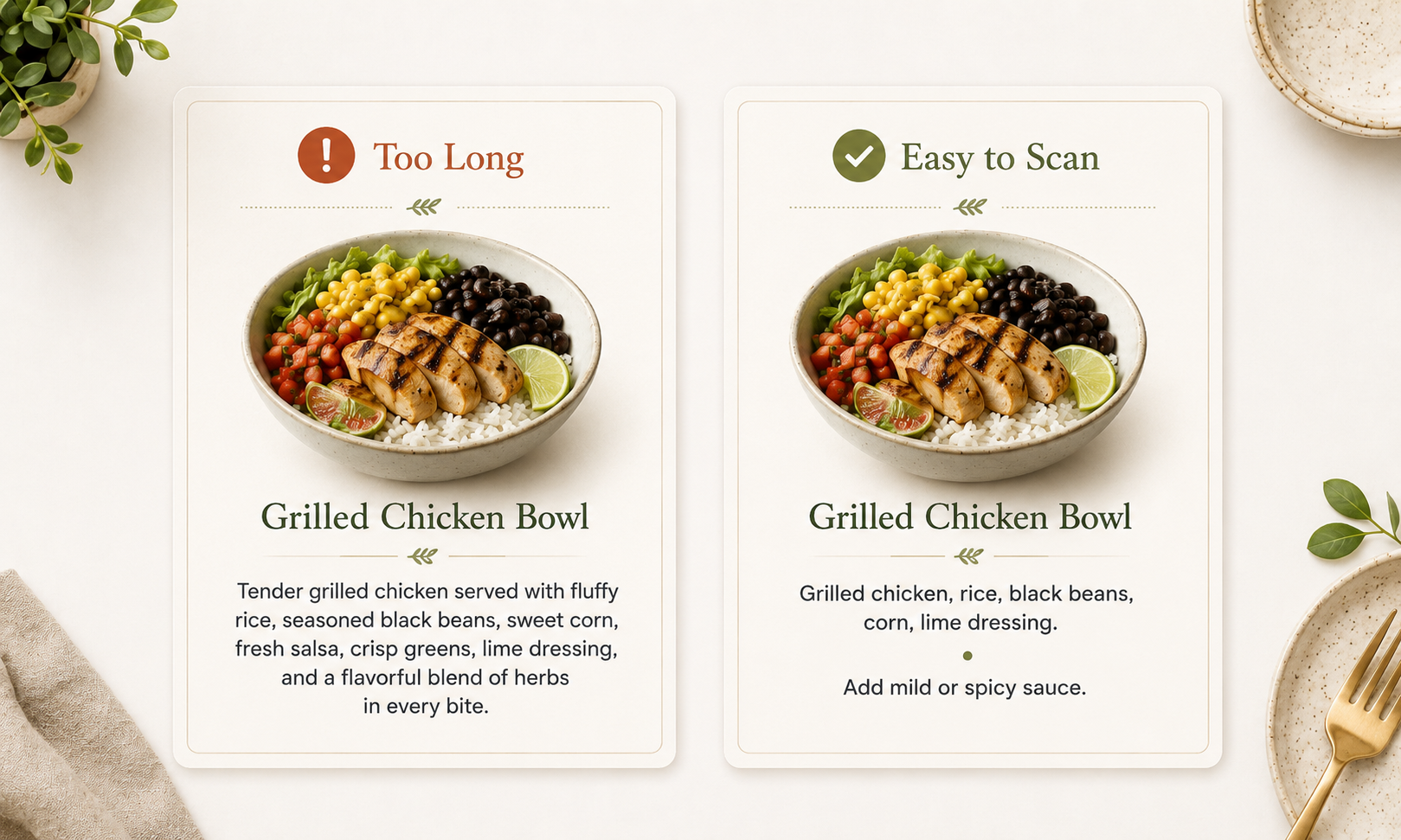
Most items need one clear sentence. A second short sentence can explain a side choice, heat level, or serving detail.
| Menu setting | Useful length | Information to place first |
| Printed menu | One sentence | Main ingredient and cooking method |
| Mobile ordering | One short sentence or two brief lines | Dish type and key flavor |
| Dessert list | One sentence | Main flavor and texture |
| Wine list | One sentence | Grape, origin, body, and main notes |
How to Write a Menu Description Step by Step
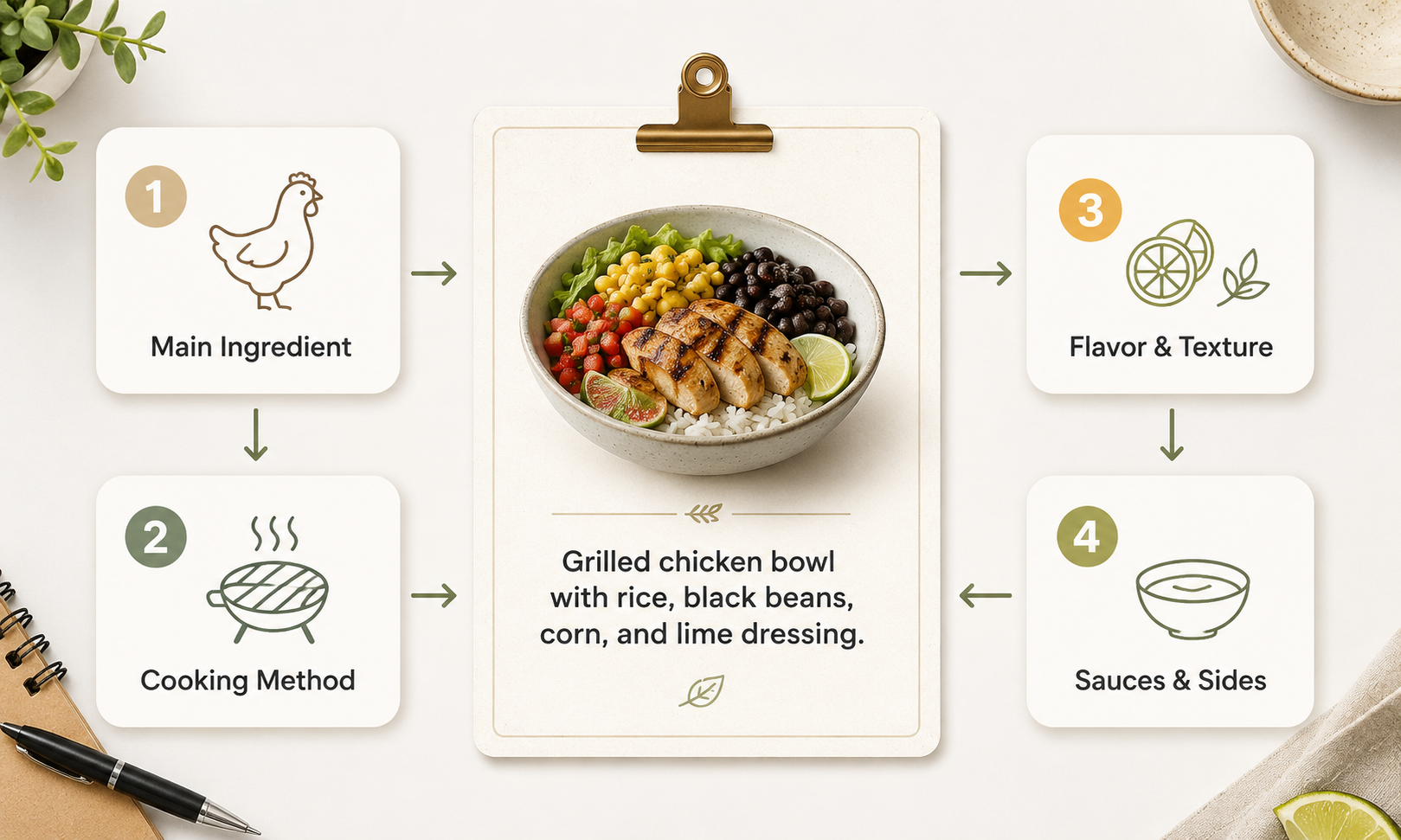
Write the facts first, then add one or two details that help the customer picture the food. The same order can be used for almost every menu item.
Start With the Main Ingredient
Begin with the ingredient that defines the dish. Use chicken thigh instead of meat, wild mushrooms instead of vegetables, or dark chocolate instead of sweet filling. Specific names make nearby choices easier to compare. Do not begin with a mood word or broad claim. Customers still need to know what they will receive.
Add the Cooking Method
Explain how the main ingredient is prepared when the method changes flavor or texture. Grilled, roasted, fried, steamed, smoked, and slow-cooked each set a different expectation.
Keep the term familiar. If you use a technique that many customers may not know, explain the result in simple words, such as cooked slowly until tender.
Describe the Flavor and Texture
Use one flavor word and one texture word when both add useful information. Choose words customers can connect to taste, heat, sweetness, acidity, or texture. Crispy chicken with a mild garlic sauce is clear. Rich, amazing, delicious, unforgettable chicken gives no real detail.
Mention Sauces, Sides, and Toppings
Include every major component that arrives as part of the standard dish. Give priority to ingredients that could change the decision. Anchovies, olives, mushrooms, raw seafood, and strong chili heat should not be hidden behind a broad phrase such as house toppings.
Keep optional changes outside the main description. The description should show the default dish, while selectable options can cover extra cheese, sauce choices, side substitutions, or a preferred cooking temperature.
Add a quantity when the customer cannot judge the portion from the item's name. Six chicken wings, two tacos, or a twelve-ounce steak give clearer information than words such as generous or large.
Add Details That Increase Perceived Value
Useful value details explain real work, quality, or origin. House-baked bread, hand-cut fries, line-caught fish, and a recipe made in small batches can support a higher expectation when the claims are accurate. Avoid empty claims such as best, famous, luxury, or world-class. A specific fact is easier to trust. The same principle applies to food ad design, where specific details about ingredients, preparation, and origin are more convincing than unsupported praise.
Edit Out Anything Customers Do Not Need
Read the sentence once as a hungry customer. Remove repeated ingredients, weak adjectives, kitchen notes, and details that do not affect the choice. Check that the name and description do not say the same thing. Then compare nearby items so they follow a similar order and use the same spelling, punctuation, dietary labels, and serving terms.
Once each description is clear, review the full menu so that dish names, descriptions, and prices follow the same structure. The finished copy should fit comfortably in print and online layouts.
The Zawa AI Menu Maker can turn finalized content into a polished menu. Add dishes, descriptions, prices, a logo, brand colors, and food photos, then adjust the layout for printed menus, websites, or QR code ordering.
Menu Description Examples for Different Dishes
Good examples show the food before selling it. When descriptions are paired with images, accurate food photography should reinforce the ingredients, portion, and texture presented in the copy. Each description below uses a different structure because customers look for different details across menu sections.
Appetizer Menu Description Examples
Appetizers generally require a protein, preparation method, and dipping sauce. For instance, crispy cauliflower with smoked paprika and lemon yogurt informs the diner what will arrive at the table and where the flavor inspiration comes from. Have portion information handy if the dish is a shared item.
Main Course Menu Description Examples
A main course will tell you about the center of the plate and the sides included. Slow-Roasted Beef with Red Wine Sauce, Whipped Potatoes, and Green Beans. If patrons are able to choose a side or how they want their food cooked, have that as a separate option so the main description is easy to scan.
Dessert Menu Description Examples
Dessert copy should focus on the main flavor and the texture customers expect. The warm apple cake with cinnamon sauce is clear without extra praise. Dark chocolate tart with a crisp crust and raspberry cream gives a useful contrast. Mention nuts, alcohol, or a very rich filling when those details may affect the order.
Drink and Wine Description Examples
For a drink, tell us the base spirit and the dominant flavor. For the mocktail list, a description of the ingredients is sufficient. The wine notes can have the grape, region, body, and up to 1-2 clear notes, for example, California Pinot Noir: Light-bodied with cherry notes. Don’t use jargon unless your regulars know it.
Online Ordering Menu Description Examples
Online menu descriptions should explain the default order before customers open the customization options. As more restaurants adopt AI in the food industry, finalized dish information can also be reused across online menus, delivery listings, and promotional content. However, the default ingredients and portion details should remain consistent on every channel. Use a grilled chicken bowl with rice, black beans, corn, and lime dressing, then place choices such as extra avocado or a different protein in separate fields.
Make the required choices clear. A customer should know whether they must select a side, bread type, or spice level before adding the item to the cart. Optional changes should be labeled separately so customers can distinguish the standard dish from paid additions.
Common Menu Description Mistakes
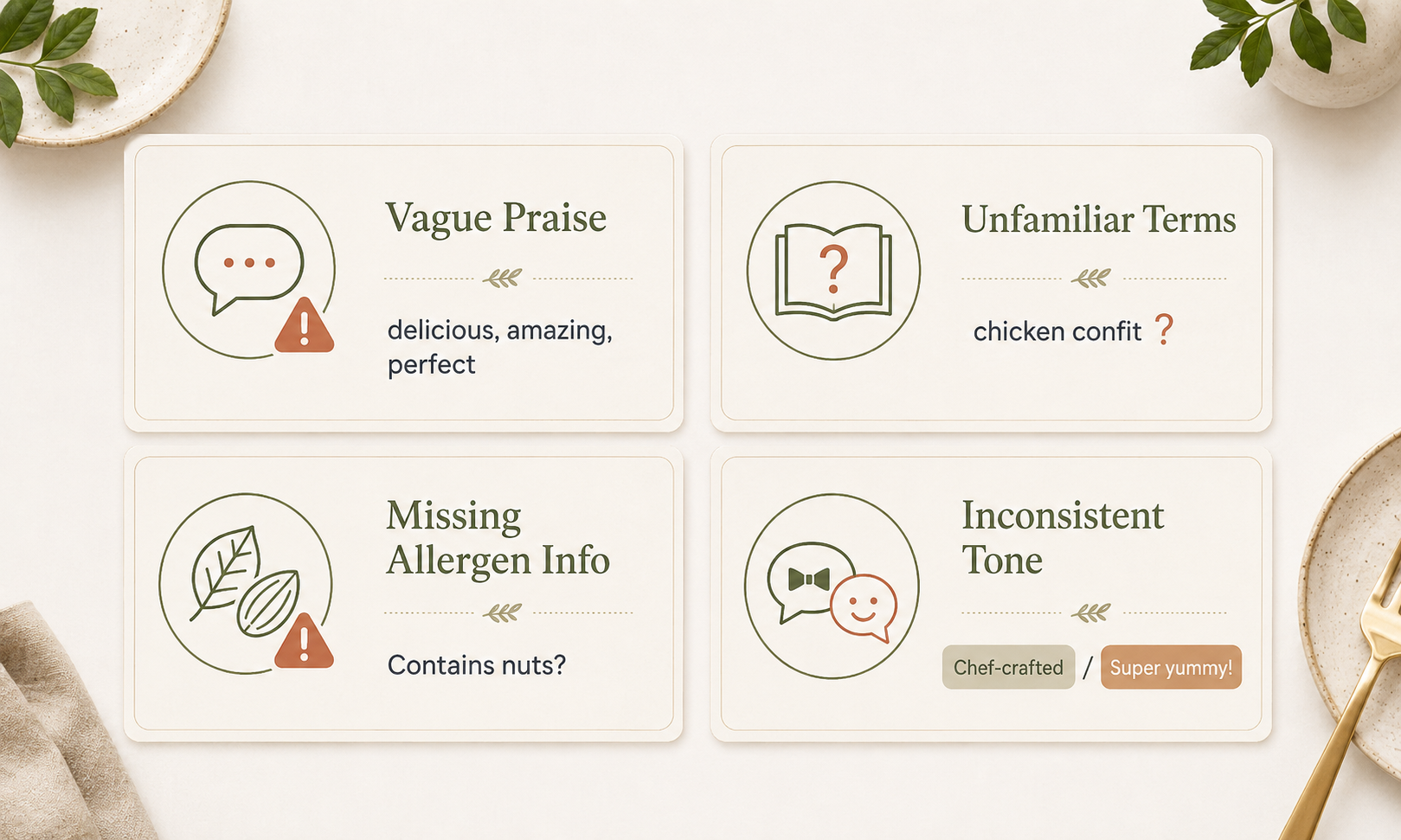
Most descriptions fail because they make the customer work too hard. The problem may come from vague praise, unfamiliar terms, missing safety details, or a menu voice that changes from item to item.
Using Too Many Adjectives
One powerful adjective can do wonders. Four or five often make the sentence hard to believe. Substitute delicious, mouthwatering, wonderful, and perfect with an adjective like crisp, smoky, or tender. And see if the word refers to something that a customer can taste or feel. Cut it if it’s only praise.
Writing With Complicated Culinary Terms
A culinary term can stay when it is part of a dish name or is common to the restaurant’s audience. Add a simple explanation when the word is likely to be unknown. For example, chicken confit is chicken cooked slowly in fat until it is tender. Diners should never have to look up a word before they decide what to eat.
Leaving Out Dietary and Allergen Details
Display helpful food labels and maintain a current allergen guide. There are nine major allergens in the US that are recognized by the FDA, including milk, eggs, peanuts, wheat, soy, sesame, fish, shellfish, and tree nuts. Regulations may vary locally. Never say that a product is free of an allergen unless the ingredient list and the process are free of that allergen.
Using a Different Tone for Every Menu Item
Read multiple descriptions at once. If one description is written in a formal tone, another one is joking, and a third one sounds like a recipe, the customers might get confused about the brand identity. Select a common, shared pattern within names, order of ingredients, cooking terms, and dietary labels. Minor tweaks are allowed — so long as the menu is still one coherent conversation.
FAQ
How Long Should a Menu Description Be?
Keep it to one concise sentence. A second short sentence can help when customers need a serving detail, side choice, heat level, or preparation note.
Should Every Menu Item Have a Description?
No. Familiar items may only need a clear name, while signature dishes and unfamiliar foods need more detail. Use descriptions where they help customers choose with confidence.
Should Menu Descriptions Include Prices?
Yes. Show the current price close to the item's name or description. Keep the format consistent so customers can compare choices without searching across the page.
How Often Should Restaurants Update Their Menus?
Update descriptions whenever ingredients, portions, prices, or availability change. Review the full menu before each seasonal launch and after any recipe change that affects flavor, allergens, or serving details.
Conclusion
A good menu description can provide just the right amount of information to help customers make a decision, without overwhelming them. Begin with the protein, then add the cooking technique, and finally the most relevant flavor or texture. Be truthful in all statements and use plain language consistent with the food.
Look at the entire menu as a whole. Standardized names, prices, dietary labelling, and sentence structure can also make printed and online menus more user-friendly. When diners know what they are getting, they can make up their minds more quickly and feel better about the choice.
You May Be Interested

130+ Independence Day Quotes for Instagram

133 Independence Day Captions for Social Media

What Is 1440p Resolution? QHD Explained (2026)

1440p vs 4K: Key Differences, Real Scenarios & Blur Fix

35 AI Image Prompt Examples: How to Get Outstanding AI Images

5 Ways To Use Journal Prompts

6 Free Art Prompt Generators