
Vegetarian Meal Prep Ideas for a Healthy Week
Explore practical vegetarian meal prep ideas for a healthy week, including balanced proteins, grains, vegetables, sauces, shopping tips, storage advice, and 10 flexible menus that help save time, reduce waste, and keep weekday meals varied and fresh.

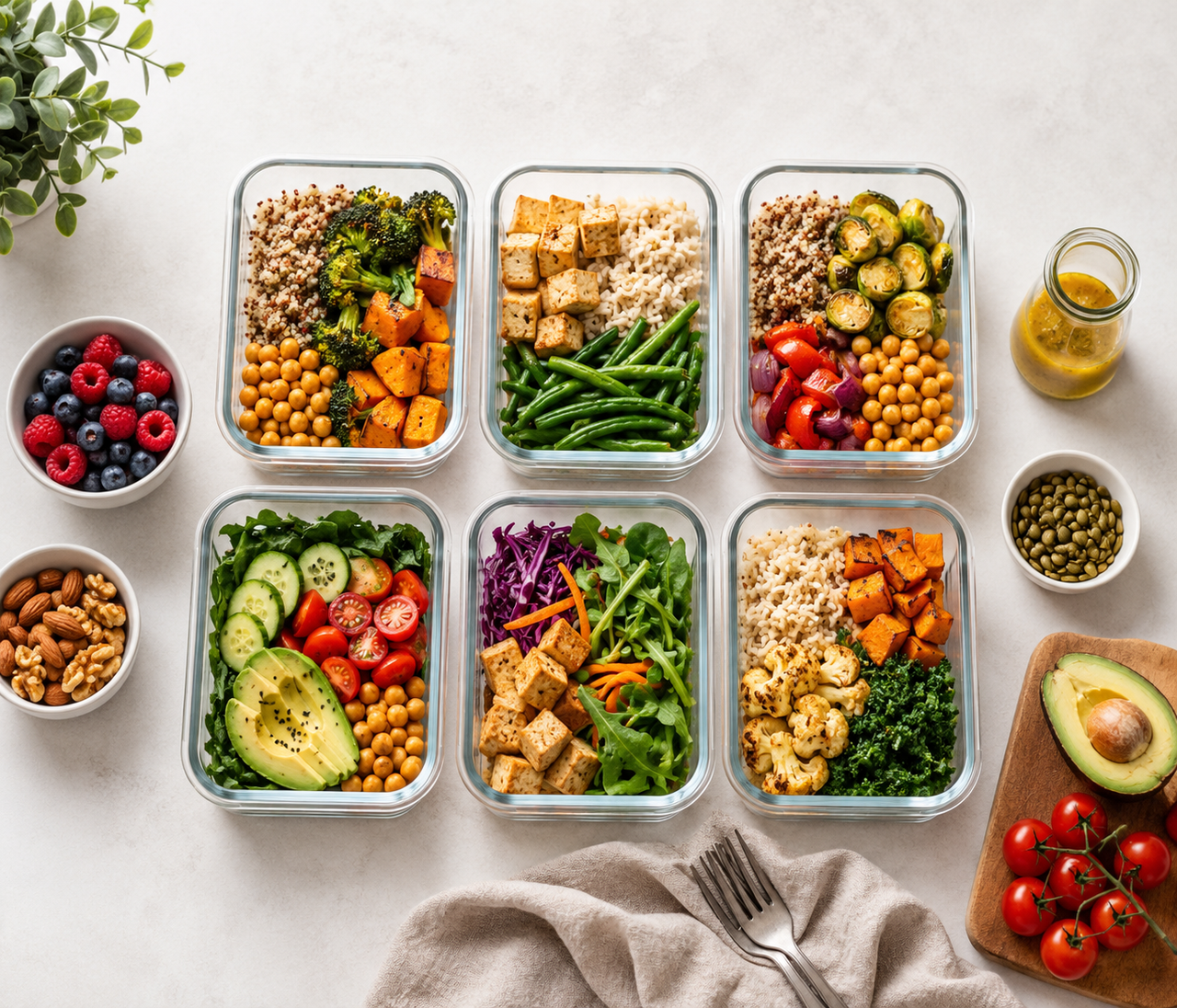
When weekday schedules get busy, vegetarian meal prep can prevent lunch from becoming an afterthought. The goal, however, is not to fill the refrigerator with five identical containers. By combining versatile staples with different proteins, vegetables, and seasonings, one preparation session can support several meals without making the week feel repetitive.
Rather than cooking everything on the same day, plan around how long each ingredient will remain appealing. Sturdy vegetables and grains can be prepared in advance, while herbs, avocado, and other delicate additions are better handled later. This balance between nutrition, variety, and storage makes the routine easier to maintain.
What Makes Vegetarian Meal Prep Healthy?
For a vegetarian meal to feel complete, it needs more than a large serving of vegetables. Protein contributes staying power, fiber-rich carbohydrates provide energy, and healthy fats add flavor and satisfaction. How those ingredients are portioned will depend on appetite, activity level, and individual nutrition needs.
Choose a Filling Vegetarian Protein
Without a substantial protein source, a vegetable bowl can start feeling like a side dish. Lentils and beans fit naturally into soups, salads, curries, and wraps, whereas tofu or tempeh can absorb a wide range of marinades. When dairy and eggs are included, Greek yogurt, cottage cheese, and boiled eggs create additional options. Preparing two proteins—perhaps baked tofu and seasoned chickpeas—offers variety without requiring two completely separate cooking sessions.
Add Veggies, Grains, and Healthy Fats
Once the protein has been selected, the rest of the meal can be built around color, energy, and texture.
For color and fiber: Broccoli, carrots, cabbage, peppers, zucchini, or leafy greens
For lasting energy: Quinoa, brown rice, farro, potatoes, or whole-grain pasta
For richness: Nuts, seeds, avocado, olives, tahini, or olive oil
Although no single ratio works for everyone, vegetables can occupy a generous share of the container. Grains and fats can then be adjusted according to how filling the meal needs to be.
Pick Foods That Stay Fresh Longer
Because ingredients age at different rates, every lunch does not need to be assembled on Sunday. Leafy salads, avocado, and sliced tomatoes are better suited to the first few days, while cabbage, carrots, cooked grains, and roasted vegetables can cover the middle of the week. For Friday, a previously frozen portion of chili or lentil soup is often more reliable than a five-day-old salad.
Easy Vegetarian Meal Prep Ideas
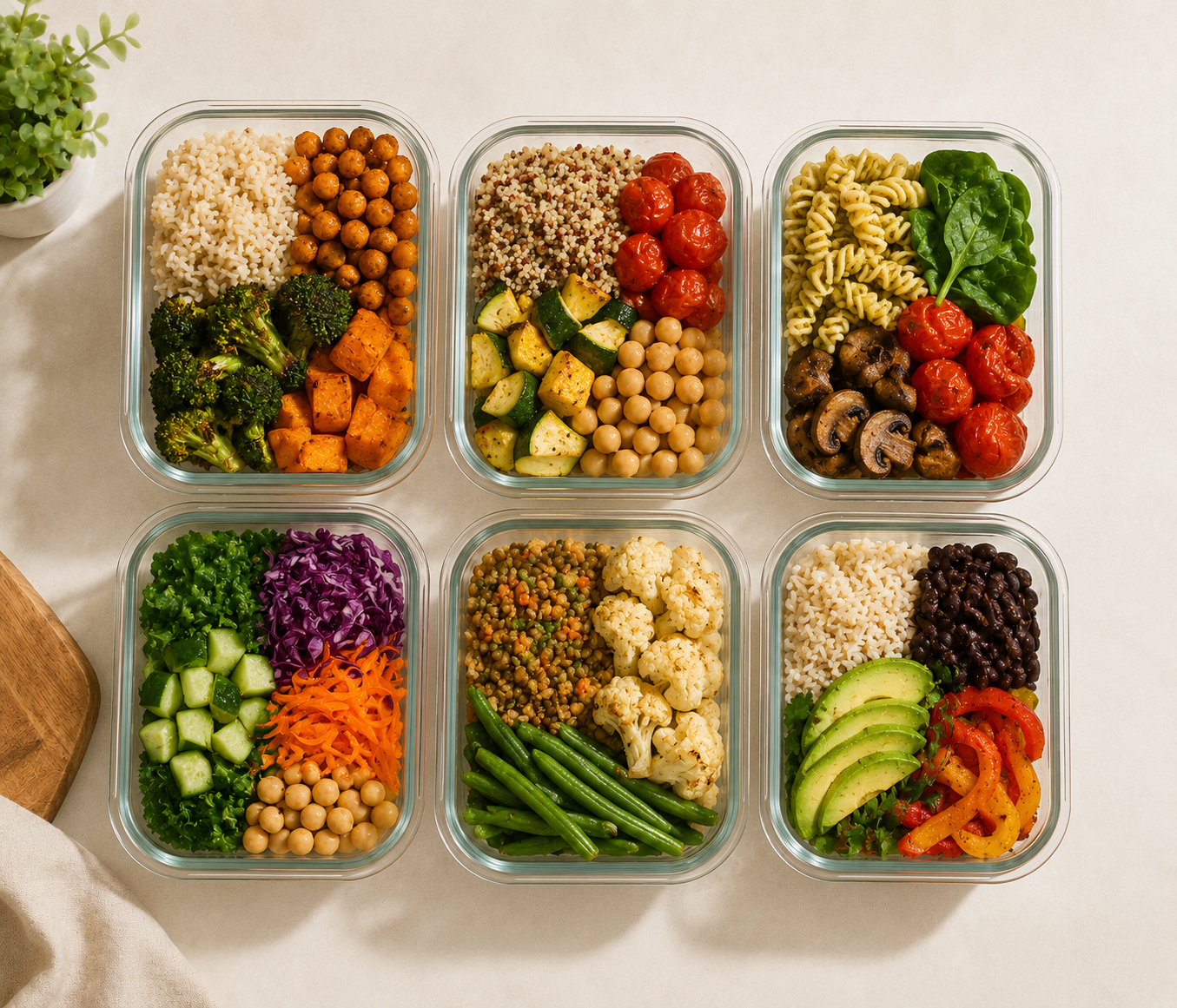
On a typical Sunday, an efficient routine might begin with a pot of quinoa and a tray of vegetables and tofu in the oven. While those cook, there is time to wash greens and mix two sauces. Within about an hour, the kitchen can produce enough components for several meals without requiring five separate recipes.
Prep Ingredients Instead of Full Meals
Separate components offer more flexibility when the week’s schedule is uncertain. If the number of meals, portions, and prep tasks still feels unclear, a practical meal prep plan can organize those decisions before cooking begins. Prepared beans and vegetables might become a warm bowl on a work-from-home day, then fill a wrap for the next morning’s commute. Keeping everything apart also makes it easier to change the portion size or serving temperature.
Cook One Base for Several Meals
Instead of preparing several grains, make one mildly seasoned base that can move between different cuisines. Brown rice could accompany black beans and salsa on Monday, enter a tofu stir-fry on Wednesday, and add body to a vegetable soup on Thursday. Strong seasoning can be added later, allowing the base to remain adaptable.
Use Sheet Pans for Easy Cleanup
When oven space is limited, one large sheet pan can handle vegetables and plant-based protein together. Potatoes and carrots should begin cooking first; broccoli, peppers, tofu, or chickpeas can join them later. By arranging each ingredient in a separate section, anything that finishes early can be removed without overcooking the rest.
Make Sauces and Dressings Ahead
With two contrasting sauces available, similar ingredients can take on completely different flavors. Lemon, tahini, garlic, and water produce a creamy Mediterranean-style dressing, while tamari, ginger, rice vinegar, and sesame oil suit noodles or tofu. Clearly labeled jars make it easier to remember what is available before preparing another sauce.
Keep No-Cook Foods Ready
Even a well-planned week can include a day with no time for reheating. Hummus, canned beans, whole-grain bread, yogurt, fruit, washed greens, and pre-cut vegetables provide a useful backup. In a few minutes, those foods can become a hummus wrap, bean salad, yogurt bowl, or simple snack plate.
Vegetarian Meal Prep Shopping List
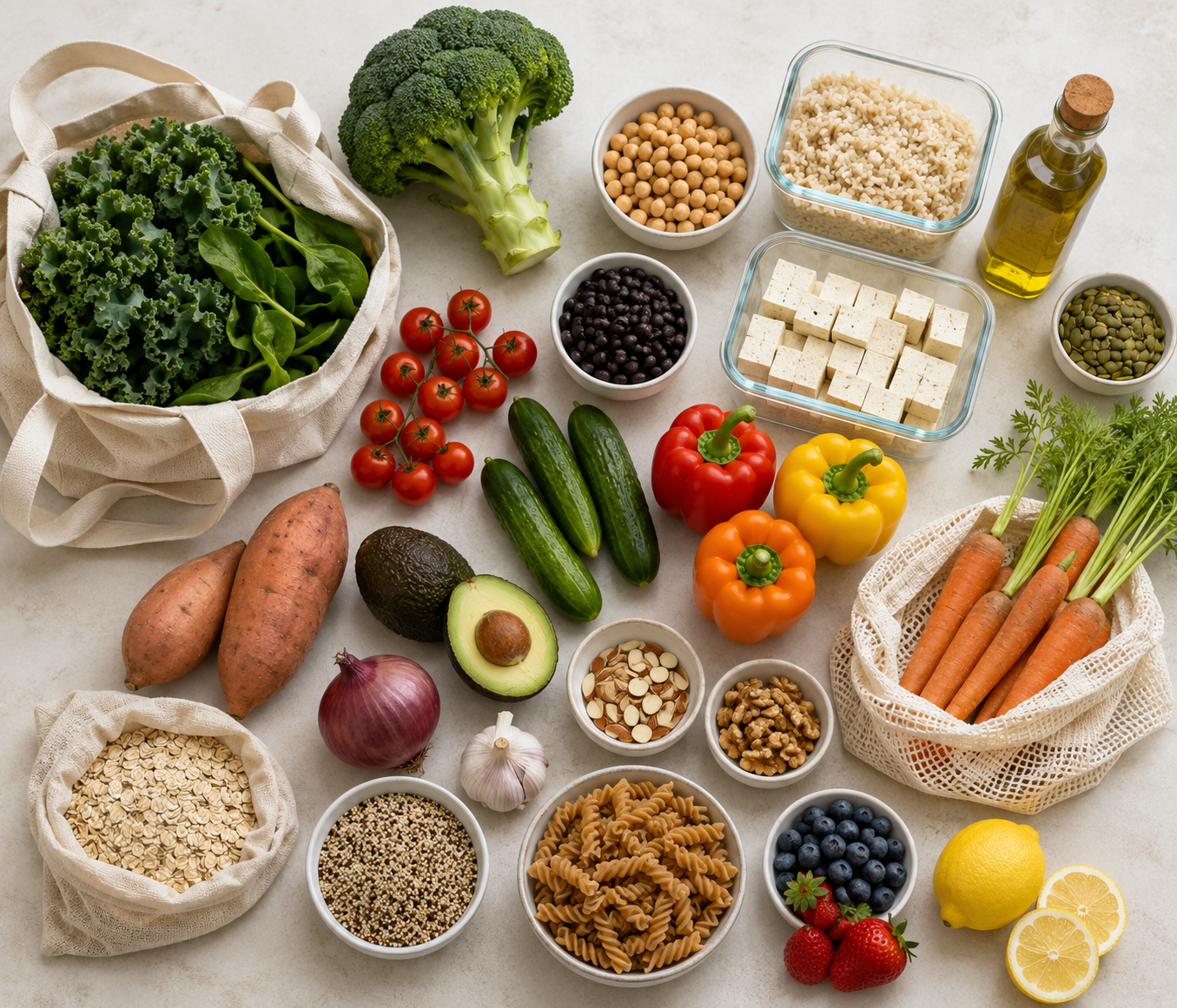
Start the shopping list with the number of meals that will actually be eaten at home. Four lunches might require one grain, two proteins, five or six vegetables, one leafy green, two toppings, and ingredients for two sauces. Planning by quantity keeps an ambitious recipe list from creating unnecessary food waste. For a more visual system, Zawa can help turn meal names, notes, and images into a reusable weekly layout.
Grains and Other Filling Staples
For most weekly plans, one main staple and a quick backup are sufficient.
Brown rice, quinoa, farro, barley, or couscous
Whole-grain pasta, soba noodles, or tortillas
Potatoes or sweet potatoes
Rolled oats or whole-grain bread
When preparation time is short, couscous or whole-grain bread provides an immediate option. Rice, barley, and farro make more sense when there is time to cook several portions together.
Fresh and Frozen Vegetables
To keep the selection manageable, combine durable produce with a few ingredients intended for immediate use.
Longer-lasting: Carrots, cabbage, broccoli, cauliflower, and bell peppers
Quick-cooking: Mushrooms, zucchini, spinach, and green beans
Fresh additions: Cucumbers, tomatoes, herbs, and salad greens
Frozen backups: Peas, corn, edamame, spinach, or mixed vegetables
During the first half of the week, delicate greens and cucumbers can take priority. Carrots, cabbage, and frozen vegetables remain available when the fresher produce is gone.
Vegetarian Protein Sources
Rather than buying every possible meat substitute, select two or three proteins that suit the planned dishes.
Canned chickpeas, black beans, kidney beans, or white beans
Lentils, split peas, or dried beans
Tofu, tempeh, seitan, or frozen edamame
Eggs, Greek yogurt, or cottage cheese, if included in the diet
For last-minute meals, canned legumes require almost no preparation. Tofu, tempeh, or seitan works better when a dish needs a firmer centerpiece.
Healthy Fats and Crunchy Toppings
A small topping can make a soft grain bowl or soup more interesting without adding another recipe.
Almonds, walnuts, cashews, or pistachios
Pumpkin, sunflower, sesame, hemp, or chia seeds
Avocado, olives, tahini, or natural nut butter
Toasted breadcrumbs or crispy onions
Across several meals, one ingredient can perform different roles. Pumpkin seeds, for instance, add crunch to breakfast oats, kale bowls, and creamy soups.
Sauces, Spices, and Seasonings
Instead of buying several single-purpose sauces, stock ingredients that can be combined in different ways.
For acidity: Lemons, limes, rice vinegar, or balsamic vinegar
For savory flavor: Soy sauce, tamari, miso, nutritional yeast, or vegetable stock
For heat: Chili flakes, hot sauce, curry paste, or smoked paprika
For freshness: Garlic, ginger, cilantro, parsley, or basil
Before adding anything to the cart, check open condiments and spices at home. Often, only one missing ingredient is needed to complete a dressing or marinade.
How to Store Vegetarian Meal Prep
Although storage can seem like the final step, it affects both food safety and meal quality. Most cooked leftovers should be refrigerated within two hours and eaten within three to four days or frozen. Dating each container makes the correct eating order easier to see.
Cool Food Quickly and Refrigerate Promptly
After cooking, large batches should be divided among shallow containers rather than left in a deep pot. Smaller portions lose heat faster and can enter the refrigerator promptly without waiting to reach room temperature. During initial cooling, cover the containers loosely; once chilled, seal them securely.
Store Wet and Crunchy Foods Apart
In salads, wraps, and grain bowls, excess moisture usually causes texture problems first. Dressings, salsa, and cut tomatoes can travel in small containers, while nuts, croutons, seeds, and crispy chickpeas stay dry until needed. Before refrigeration, washed greens should also be dried thoroughly.
Freeze Meals for Later
For meals scheduled near the end of the week, freezing may preserve quality better than extended refrigeration. Soups, curries, chili, casseroles, cooked grains, and breakfast burritos generally freeze well in individual portions. Lettuce, cucumber, avocado, and some dairy-based sauces are better added after thawing.
Reheat Meals Without Drying Them Out
When refrigerated rice or quinoa appears dry, a small splash of water or broth can restore moisture. Covering the dish loosely in the microwave traps steam, while stirring halfway through helps the center heat evenly; cooked leftovers should reach 165°F (74°C). For roasted tofu and vegetables, an oven or air fryer produces firmer edges than a microwave.
10 Vegetarian Meal Prep Menus to Try
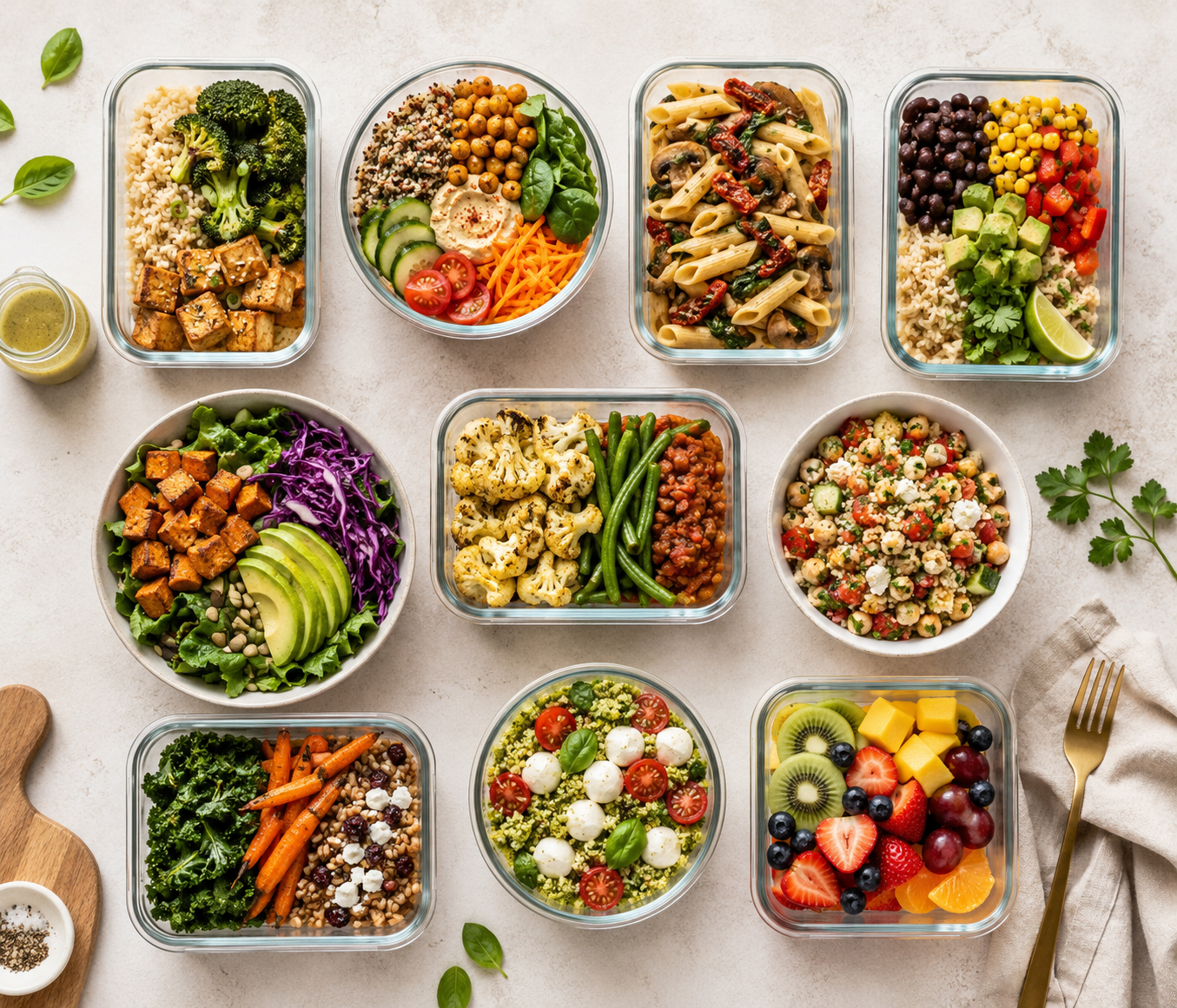
Choose two or three menus according to where they will be eaten and whether reheating is available. A practical week might include one cold office lunch, one freezer-friendly meal, and one bowl that uses leftover vegetables. After selecting the dishes, an AI menu maker can arrange their names, sections, and photos in an editable weekly layout. Rotate the remaining ideas into future weeks instead of trying to prepare all ten at once.
Vegan Breakfast Burritos
For rushed mornings, a freezer-ready burrito provides a complete breakfast in one package. Tofu, black beans, peppers, spinach, and salsa make a substantial filling without eggs or dairy. After the filling has released its excess moisture, roll it into tortillas and wrap each burrito individually. A brief finish in a skillet restores a crisp exterior after microwave reheating.
Mediterranean Quinoa Salad
No microwave is needed for this office-friendly salad. Seasoned quinoa and chickpeas form the base, and cucumber, olives, parsley, tomatoes, and optional feta add freshness. To vary four prepared portions, mix roasted peppers and harissa into one or two servings rather than seasoning the entire batch the same way. Anyone documenting the finished meal can follow a few food photography tips to keep the colors fresh and the composition clean without making the dish look artificial.
Sesame Soba Noodles
Once the cooked soba has been rinsed under cold water, it becomes a convenient base for edamame, cabbage, carrots, and scallions. A ginger-sesame dressing supplies enough flavor for the dish to be served cold. Because some soba noodles contain wheat as well as buckwheat, the package label should be checked when allergies or gluten-related restrictions are involved.
Chickpea Shawarma Wraps
With cumin, coriander, paprika, and garlic, canned chickpeas develop the warm flavor associated with shawarma-style seasoning. Two roasted cans can cover more than one dish: half may fill wraps with hummus, cucumber, and pickled onion, while the remainder tops a salad or baked sweet potato. One cooking task therefore produces two noticeably different lunches.
Easy Vegetarian Chili
When several dinners are needed, a large pot of chili is easier to scale than individually assembled bowls. Black beans, kidney beans, tomatoes, peppers, and corn form an inexpensive foundation. Cornbread can accompany the first serving, while rice or a baked potato changes the next. Any remaining portions can move to the freezer.
Curry Lentil Soup
Because red lentils soften quickly, they naturally thicken a soup without requiring cream or flour. Carrots, tomatoes, spinach, curry powder, and coconut milk create a warming meal that can stand on its own. After refrigeration, a splash of broth restores a lighter consistency, while yogurt or cilantro can soften an especially spicy batch.
Meal-Prep Vegetable Bowls With Pesto
Whenever small amounts of roasted vegetables remain from other recipes, a pesto bowl gives them a clear purpose. Farro or brown rice forms the base, white beans contribute protein, and pesto connects broccoli, zucchini, peppers, or onions. If basil and pine nuts are expensive, spinach and sunflower seeds can replace part of them in a lower-cost version.
High-Protein Caprese Chickpea Salad
Compared with a traditional tomato-only Caprese salad, chickpeas make this version much more substantial. Per serving, approximately three-quarters of a cup of chickpeas and two ounces of mozzarella provide a useful starting point. Whole cherry tomatoes release less liquid than sliced ones, while basil, balsamic vinegar, and black pepper preserve the familiar flavor.
Kale and White Bean Power Bowls
Unlike delicate lettuce, kale retains its structure after being prepared in advance. A brief massage with olive oil and lemon juice softens the leaves before white beans, roasted sweet potato, and pumpkin seeds are added. Served cold, the bowl works as an office lunch; at home, the beans and sweet potato can be warmed for a temperature contrast.
Sweet and Spicy Tempeh Bowls
Baking tempeh in a single layer creates firmer edges and a more satisfying texture. A glaze of tamari, chili sauce, maple syrup, and lime balances sweetness, heat, and acidity. Rice, broccoli, and shredded cabbage complete the bowl. Use any extra tempeh in lettuce cups or alongside noodles. If a phone photo looks too dark or the background distracts from the food, an AI food photography tool can create a cleaner image for a personal recipe card or social post.
FAQs
For most people, the practical questions begin after the recipes have been selected. Substitutions, cold lunches, container choices, and nutrition goals can all change how a weekly plan should be organized.
Can Vegetarian Meal Prep Ideas Work Without Tofu?
Yes. Depending on the recipe, tofu can be replaced with beans, lentils, tempeh, seitan, eggs, edamame, or dairy products. Lentils suit soups and curries, beans fit wraps and bowls, and eggs or Greek yogurt work particularly well at breakfast.
Which Vegetarian Meal Recipes Taste Good Cold?
Grain salads, soba noodles, bean salads, sturdy kale bowls, and wraps generally taste good cold. For a satisfying result, include a flavorful dressing, a protein source, and at least one crisp ingredient. Someone without access to a microwave might pack sesame noodles on Monday and a chickpea salad with bread on Tuesday.
What Are the Best Vegetarian Meal Containers?
Airtight glass or food-safe plastic containers work for most prepared meals. When ingredients need separation, compartments prevent unwanted mixing, while leak-resistant lids are essential for soups and curries. Any container placed in a microwave or freezer should be specifically labeled as safe for that purpose.
Can a Vegetarian Meal Help With Weight Loss?
Yes, vegetarian meals can support weight-loss goals when portions and total calorie intake match individual needs. Although vegetables, legumes, whole grains, and protein-rich foods may improve fullness, oils, cheese, nuts, and creamy sauces still contribute significant calories. Overall eating patterns matter more than simply removing meat, and specialized nutrition needs should be discussed with a qualified professional.
Conclusion
Instead of pursuing a perfect five-day plan immediately, begin with a few meals that suit the actual week ahead. When dinners away from home are already scheduled, fewer refrigerated portions will prevent waste; if Friday remains uncertain, a frozen soup offers a reliable backup. By noting what was eaten, discarded, or missed, the next preparation session can become faster and more accurate.
You May Be Interested

100+ Father’s Day Jokes That Dad Will Actually Laugh At

100+ Good Quotes for Instagram Bio (Copy & Paste Ideas)

100+ Mother's Day Quotes to Celebrate Mom

105 Independence Day Trivia Questions 2026

133 Independence Day Captions for Social Media
