How to Create a Meal Prep Plan
Build a practical meal prep plan that fits your schedule, budget, and appetite. Learn how to choose recipes, shop smarter, prep efficiently, store food safely, avoid common mistakes, and keep weekly meals flexible, varied, and easy to manage at home.

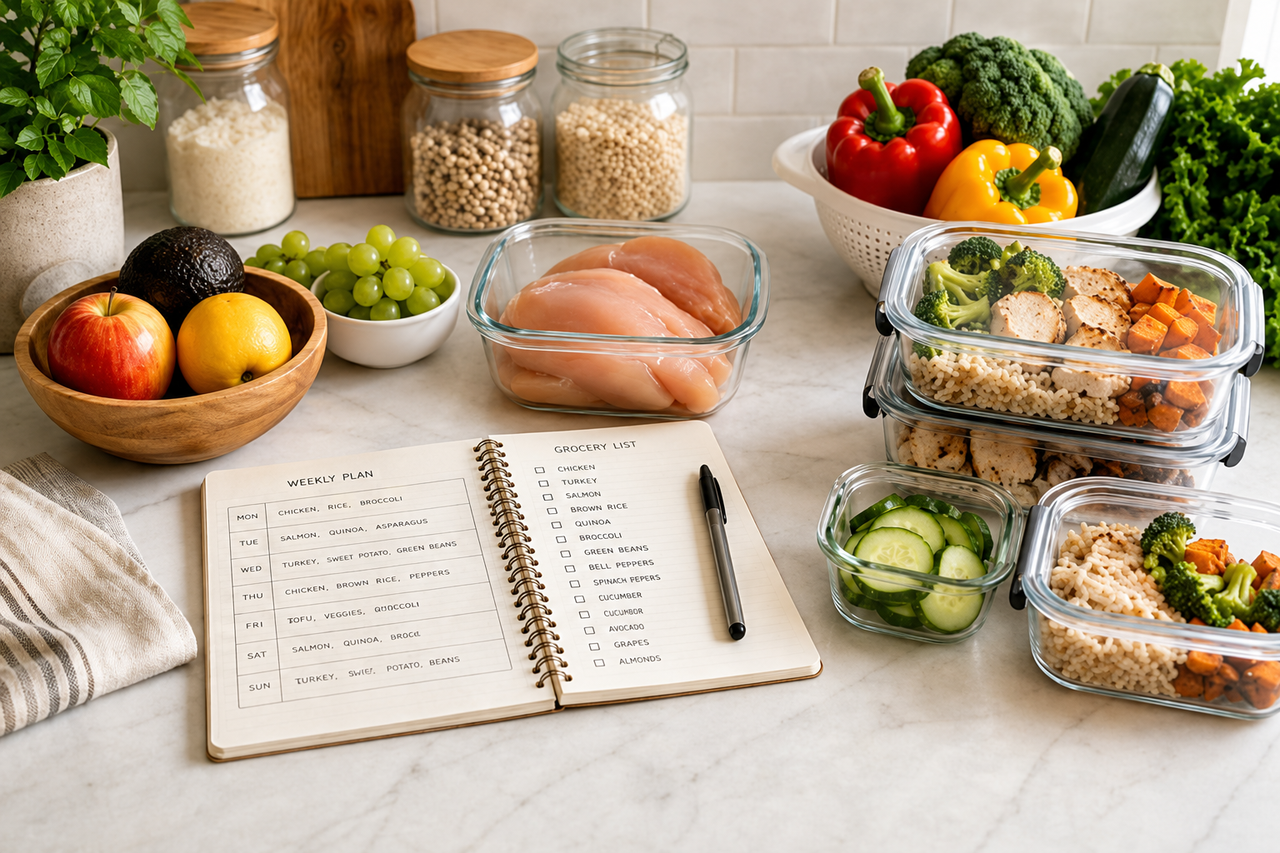
A meal prep plan helps you get ahead of the week. You decide what you want to eat, check what is already in the kitchen, and buy only what you still need. You can also handle some of the prep early, when you have more time.
That does not mean spending all Sunday cooking seven days of food. For most people, that is too much. A good plan works around your actual schedule and the meals you enjoy. It should also match the amount of time you are willing to spend in the kitchen.
What Is a Meal Prep Plan?
A meal prep plan helps you decide what to eat over the next few days while fitting around your schedule. If you get home late on weekdays, you might cook chicken, rice, and roasted vegetables on Sunday and divide them into grab-and-go containers. If you prefer fresher meals, prep only the time-consuming parts: chop onions and peppers, marinate the meat, wash salad greens, or cook a pot of rice. Then, on a busy Tuesday night, you can turn those ingredients into a stir-fry, grain bowl, or quick dinner in 15 minutes instead of starting from scratch.
Meal Prep vs. Meal Planning
Meal planning answers the "what's for dinner" question. It is all about picking your recipes and mapping out a weekly menu.
Meal prep takes things a step further. It turns that written plan into real, physical food by tackling the actual legwork ahead of time:
Buying the groceries
Washing and chopping ingredients
Cooking certain items in advance
Dividing meals into grab-and-go containers
Don't overcomplicate it. Start by mapping out your menu, then decide exactly how much prep work actually fits your weekly schedule.
Benefits of Meal Prep
MPreparing ingredients or meals in advance reduces the amount of cooking you need to do on busy weekdays.When a home-cooked dinner is already waiting in the fridge, you are less likely to spend money on takeout after a busy day.
The benefits go far beyond just saving you time:
Less food waste. Because you map out your ingredients before hitting the store, you buy exactly what you need instead of letting random vegetables rot in the bottom drawer.
Better routines. A predictable food schedule keeps your habits consistent. It stops you from making poor, impulsive food choices when you are starving.
Easy portion control. Pre-packing your meals takes all the daily guesswork out of eating well. It makes staying on track completely effortless.
How to Create a Meal Prep Plan in 6 Simple Steps
Meal prep can be as simple as cooking rice, chopping vegetables, or marinating meat before a busy week begins. Plan around the nights you expect to get home late and prepare only what you will realistically use. The following six steps show you how to turn your weekly schedule into a practical meal prep routine.
Step 1: Decide How Many Meals You Need
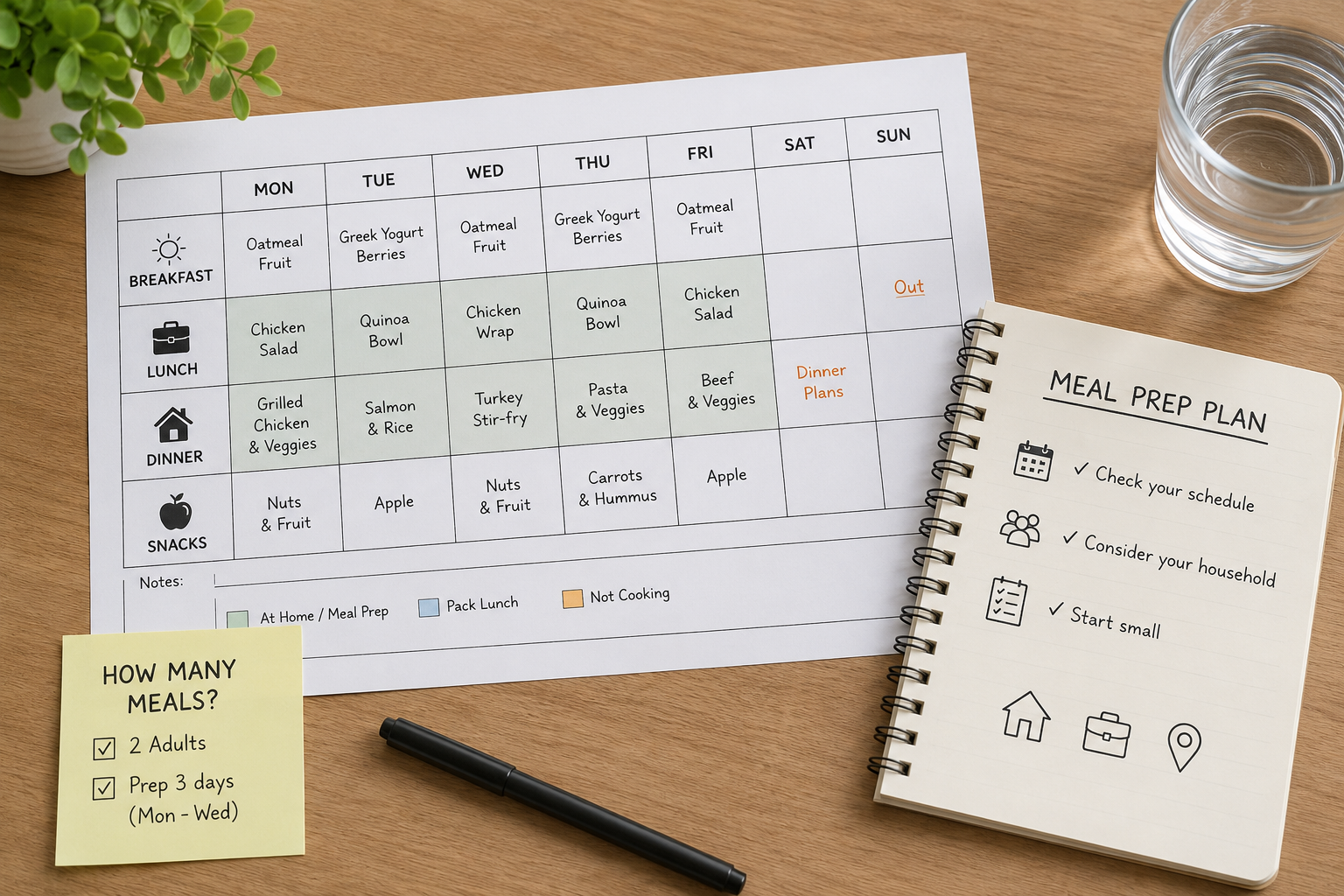
Check your calendar first. Mark the exact days you plan to eat at home, pack a lunch for work, or need a quick bite on the go. Skip the busy days. You don't need to cook for nights when you already have dinner plans, travel scheduled, or expect to stay late at the office. Factor in your household. Think about how many people you are feeding and how much food each person realistically eats. Start small. If you are new to this, prepping just two or three days of lunches or dinners is plenty while you learn the ropes.
Step 2: Choose Easy, Versatile Recipes
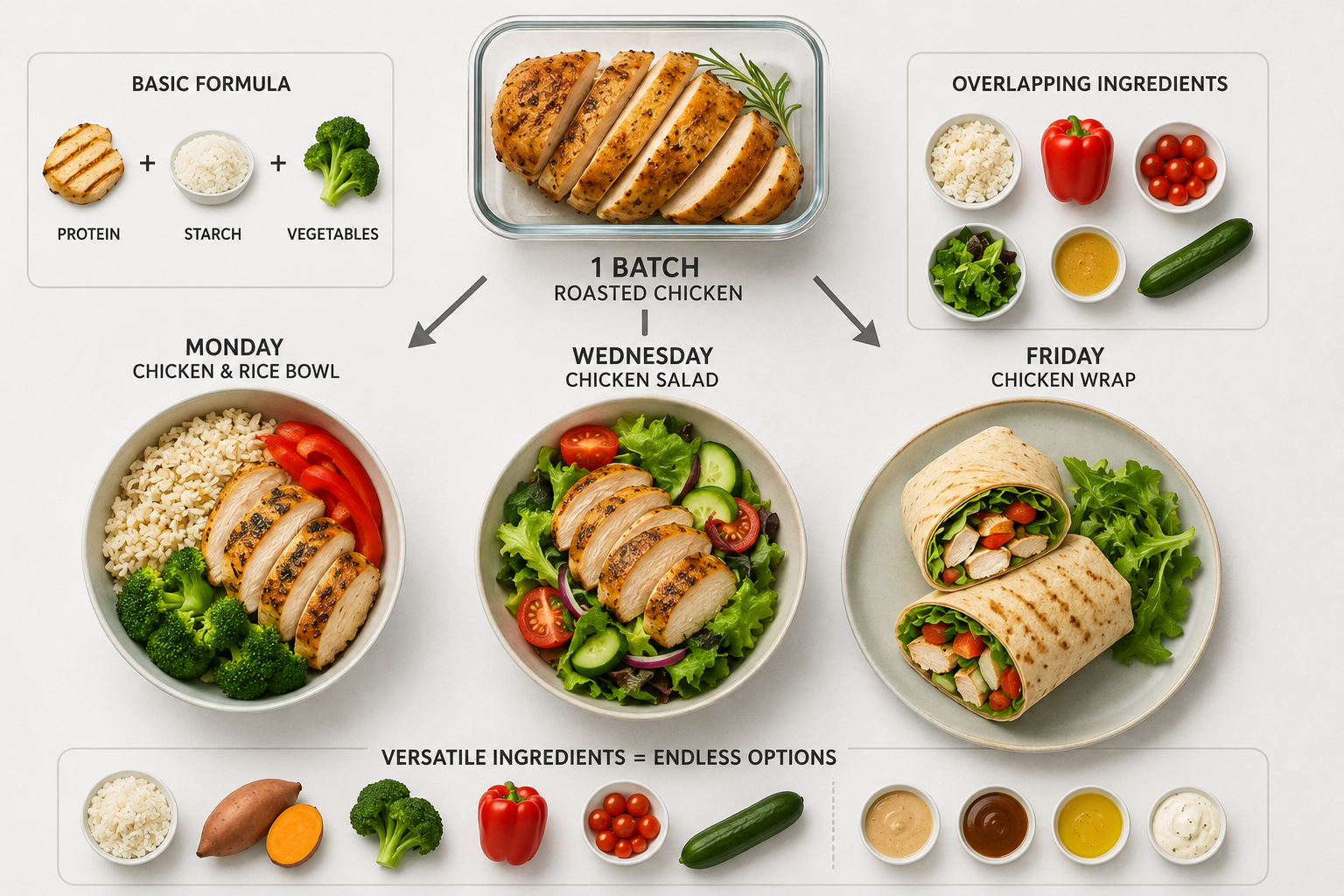
Keep recipes simple. Look for dishes with only a few steps that store well and mix easily with other foods. Follow a basic formula. You can build each plate around one protein, one starch, and a couple of vegetables. Think about versatility. A single batch of roasted chicken can pair with rice on Monday, then slip into salads, sandwiches, or wraps later in the week. Buy overlapping ingredients. This keeps your grocery list short, while different sauces and side dishes prevent the meals from feeling repetitive.
Step 3: Make a Smart Grocery List
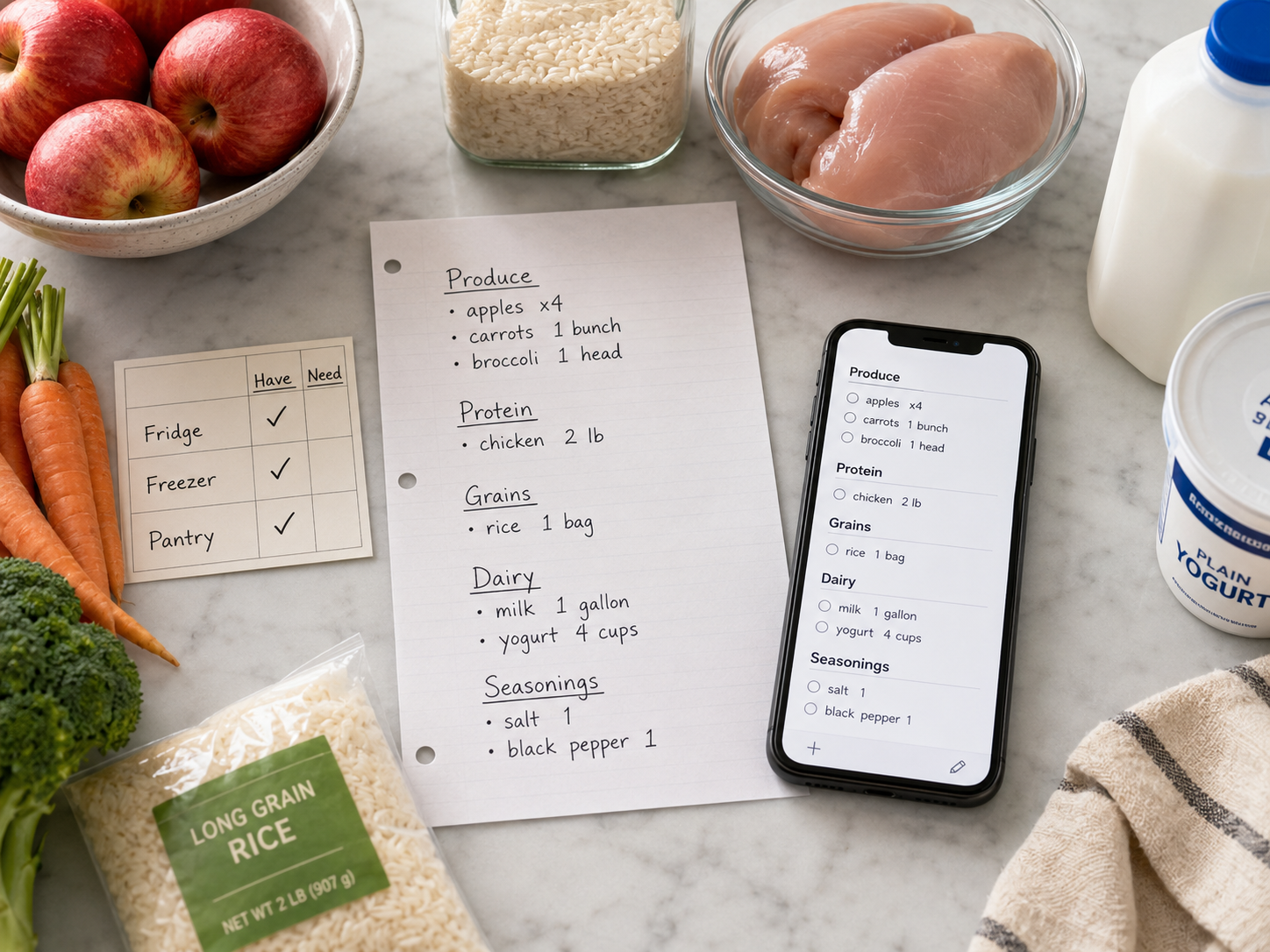
Once you have selected your recipes, check your refrigerator, freezer, and pantry. Note which ingredients you already have. Then list the fruits, vegetables, proteins, grains, dairy products, and seasonings you still need. Add estimated quantities to avoid buying too much or too little. Organizing the list by grocery store section can save time and reduce duplicate or impulse purchases. If you start with a handwritten list, you can convert images to text so the ingredients remain editable when you reorganize the list or adjust quantities.
Step 4: Prep and Cook Ingredients Efficiently
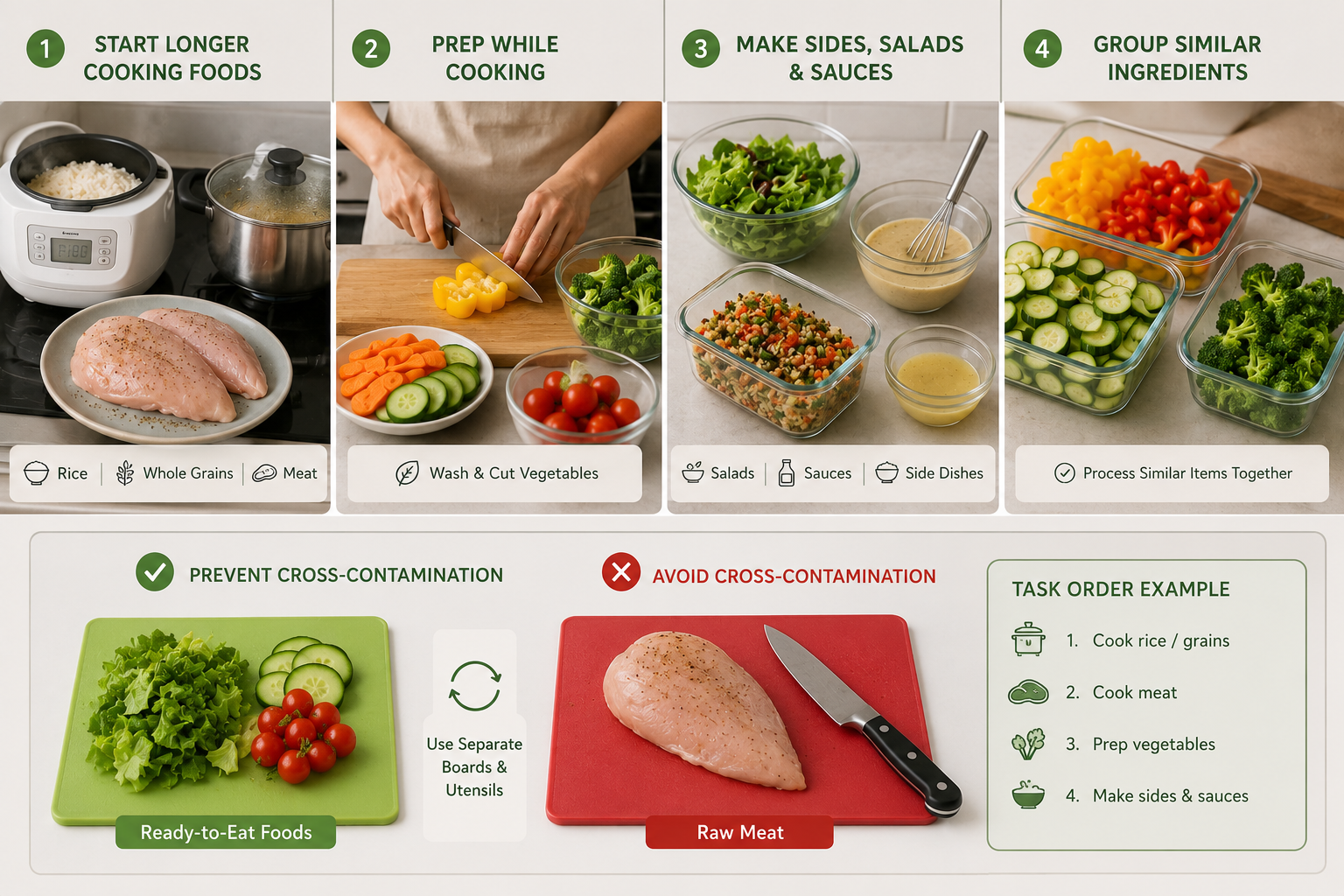
Plan the order of your tasks before you begin. Start with foods that take longer to cook, such as rice, whole grains, and meat. You can wash and cut vegetables while the oven or rice cooker is running. Use the same block of time to prepare salads, sauces, and side dishes. Process similar ingredients together when possible. Use separate cutting boards and utensils for raw meat and ready-to-eat foods to prevent cross-contamination.
Step 5: Portion and Store Food Properly
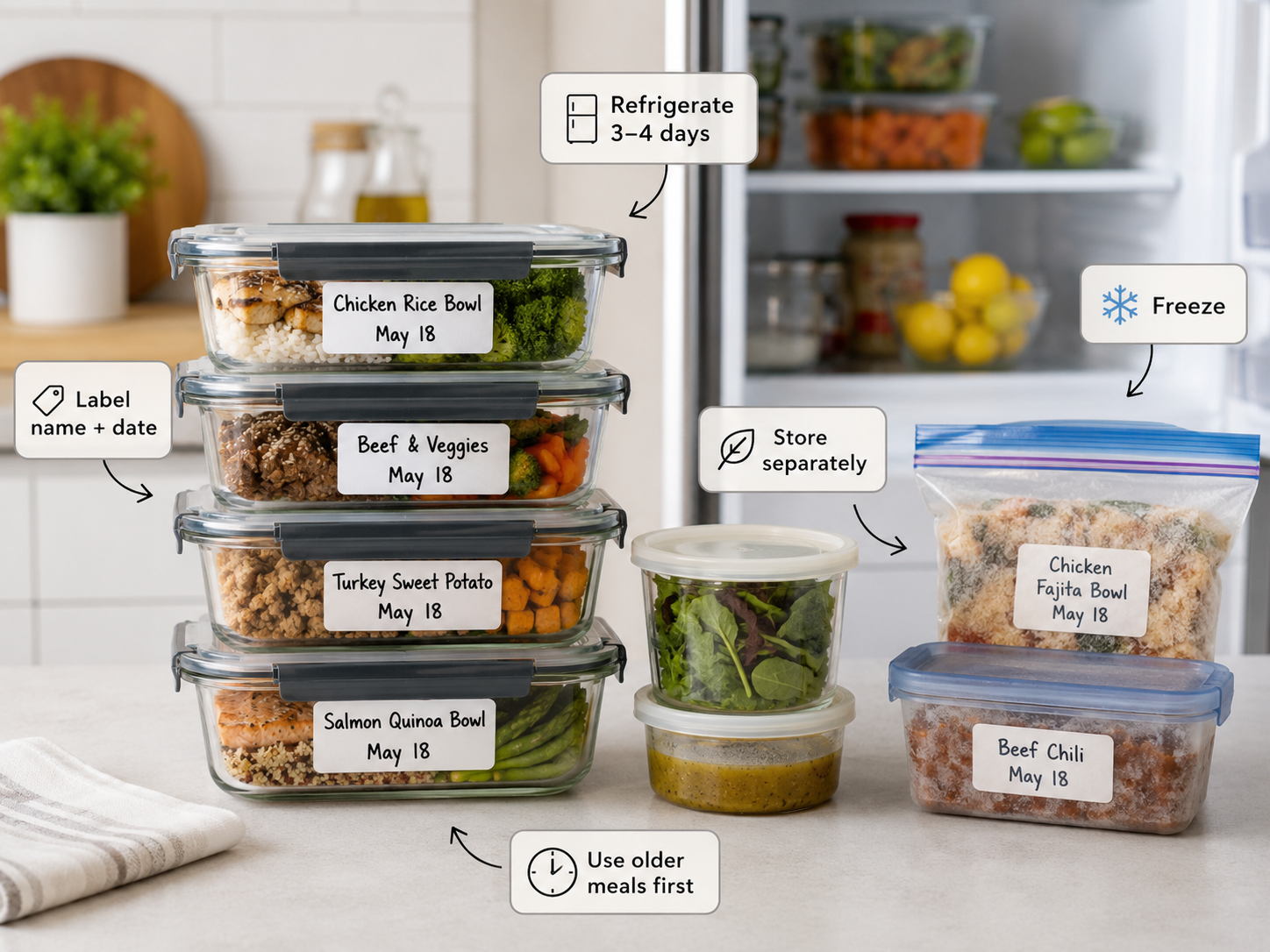
After cooking, cool the food within a safe amount of time and place it in clean, sealed containers. Refrigerate meals you plan to eat soon. Freeze portions that you will not eat for several days. Store salad greens, sauces, and ingredients that soften easily in separate containers to preserve their texture. Label each container with the meal name and preparation date. Place older meals where you can see and use them first.
Step 6: Build Flexibility Into Your Plan
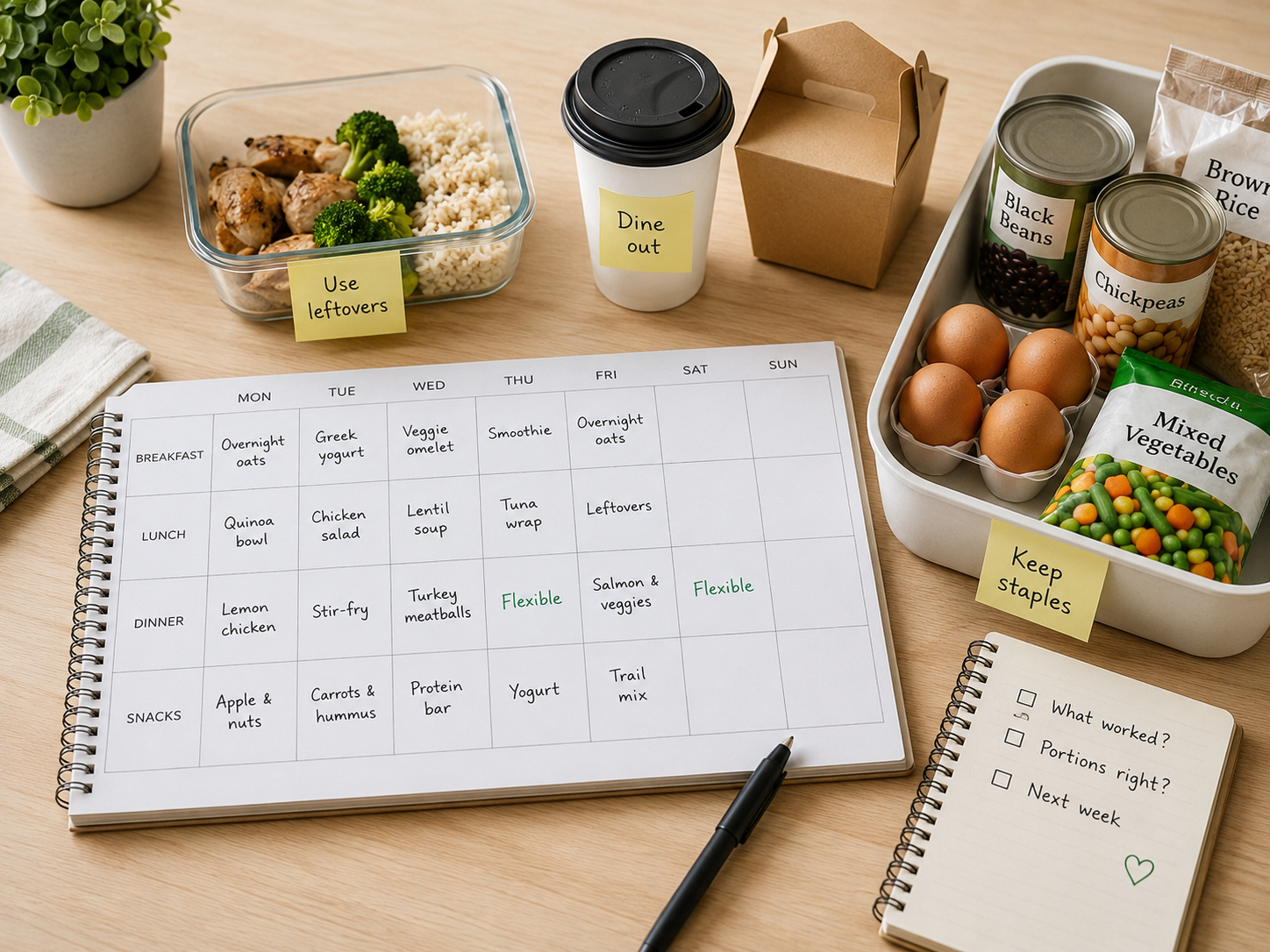
Meal prep should free your week, not trap it. By leaving a few meals completely unplanned, you give yourself the flexibility to enjoy leftovers, dine out, or adapt when your schedule suddenly changes. Keep basic staples on hand. Stocking your kitchen with items like eggs, canned goods, and frozen vegetables ensures you can always throw together a quick meal without any stress. Reflect before moving forward. Look back at what worked, check if your portions were right, and use those lessons to design a better plan for the coming week.
Common Meal Prep Mistakes to Avoid
Meal prep can save time, but small choices can make a big difference. You need to prepare the right amount, choose meals that store well, and keep food at a safe temperature. If the plan becomes too complicated, you may struggle to follow it or end up wasting food. Watch out for these common mistakes before you start.
Prepping Too Much Food at Once
It is easy to prepare too much food when you first start meal prepping. But plans change, and you may not be as hungry as expected. Food can also lose its flavor and texture after several days in the refrigerator. Begin with enough meals for two or three days. If that amount works for you, prepare more next time. Freeze anything you will not eat soon.
Choosing Recipes That Do Not Store Well
Some dishes keep well. Others do not. Fried food loses its crisp texture quickly, and dressed salads can turn soggy in the refrigerator. Ingredients with a lot of water often have the same problem. Stews, roasted meats, grains, and roasted vegetables are usually better choices because they still taste good after reheating. Keep sauces and delicate toppings in separate containers. Add them when you are ready to eat.
Skipping Portion Planning
Plan your portions before you cook. Without a rough estimate, you may make too much or run out before the week ends. Start with the number of people you need to feed. Then consider their appetites and dietary needs. Divide the protein, grains or starches, and vegetables into portions that make sense for each person. Once everything is packed, each meal is ready to grab and go.
Forgetting Variety
The same meal can get boring after a few days. When that happens, you may stop following your plan. Try using the same main ingredients in different ways. Serve chicken with rice one day, add it to a salad the next, and use what remains in a wrap. A new sauce, spice, or side dish can also change the flavor without creating extra work.
Ignoring Food Storage and Safety
Improper cooling, portioning, or storage can shorten the life of your meals and create food safety risks. Place cooked food in clean, sealed containers and refrigerate or freeze it based on when you plan to eat it. Prepare and store raw and cooked foods separately. Label containers with the preparation date. Check each meal before eating and reheat it thoroughly when needed.
Tips for Making Meal Prep Easier
Meal prep involves more than cooking food in advance. You also need a clear plan that is easy to follow. Weekly templates, color coding, and visible checklists can help you understand your schedule at a glance. These tools can also prevent missed ingredients and duplicate tasks.
Use a Weekly Meal Planning Template
A weekly template gives you one place to organize breakfast, lunch, dinner, and snacks. Well-structured meal planning pages usually keep the weekly menu, serving sizes, grocery list, and prep schedule together, so you can update one part without rebuilding the entire plan. You can also record recipes, serving sizes, required ingredients, and preparation times. Each week, you only need to replace a few meals instead of creating a new plan from scratch. Saving useful templates also makes it easy to revisit favorite recipes and successful meal combinations.
Color-Code Meals by Category
Use different colors to mark breakfast, lunch, dinner, and snacks. You can also assign colors based on protein type or storage method. For example, green can represent vegetarian meals, blue can mark seafood, and yellow can identify meals that need to be frozen. Color coding helps you review the week quickly. It can also reveal repetitive meals or gaps in your food choices.
Keep a Visible Grocery and Prep Checklist
Keep your grocery list and prep tasks in a place you check often, such as the refrigerator door, a phone app, or a digital calendar. Organize the grocery list by store section. Arrange the prep checklist in the order you will complete each task, such as washing, cutting, cooking, and portioning. Check off each task as you finish it. This approach reduces missed steps and keeps the process organized.
A photo-based checklist can also be printed and pinned to the refrigerator. Choosing a standard photo print size gives you enough room for meal thumbnails, quantities, and short prep notes while keeping the page compact.
Make Your Meal Prep Plan More Visual
Adding meal photos to your weekly plan can help you recognize each dish and understand your schedule at a glance. Photos can also help you stay motivated and save meal combinations you enjoy. Kitchen lighting can leave visible grain in the darker areas of a photo, even when the dish itself is in focus. Noise reduction software is most useful in this situation because it targets the grain without requiring the entire image to be replaced.If you take photos of your homemade dishes, you can use Zawa to improve the lighting, color, and overall appearance. You can then add the images to your digital planner, personal recipe collection, or social media posts.
Conclusion
A good meal prep plan should fit your life. Start small, perhaps with only two or three meals for the week. As you get used to the routine, adjust the recipes, portions, grocery amounts, and storage methods. Plans can change, and yours should leave room for that. When the routine feels realistic, it becomes easier to waste less food, manage busy weekdays, and eat more regularly.
FAQ
What Is the 3-3-3 Rule for Meal Prep?
The 3-3-3 rule usually involves choosing three proteins, three carbohydrate sources, and three vegetables for the week. You can combine them in different ways to create several meals. For example, you might prepare chicken, eggs, and beans with rice, potatoes, and pasta. This method simplifies shopping and cooking while providing enough variety throughout the week.
How many days ahead should you meal prep?
Most cooked meals can be prepped three to four days in advance when stored in airtight containers at 40°F (4°C) or below. If you are preparing food for the entire week, refrigerate the first few portions and freeze the rest. Thaw frozen meals in the refrigerator before reheating. The USDA recommends eating refrigerated leftovers within three to four days.
What foods should you not meal prep for a whole week?
Avoid refrigerating cooked meat, seafood, rice, pasta, egg dishes, and most leftovers for a full seven days. Use them within three to four days or freeze later portions. Dressed salads, cut avocados, and crispy foods are also poor choices because they quickly become soggy, brown, or lose their texture.
You May Be Interested

140+ Facebook Bio Ideas: Short, Professional, Unique, and More

100+ Funny Mother's Day Jokes That Will Make Mom Laugh

150+ Instagram Bio Ideas for Moms

100 Short Success Quotes to Inspire Your Creative Journey

105 Independence Day Trivia Questions 2026