
30 Best Wedding Menu Ideas to Wow Your Guests
Explore 30 wedding menu ideas for every celebration, from cocktail-hour bites and plated dinners to food stations, desserts, and late-night snacks. Learn how to match your menu to your style, season, guest count, dietary needs, and budget with ease.

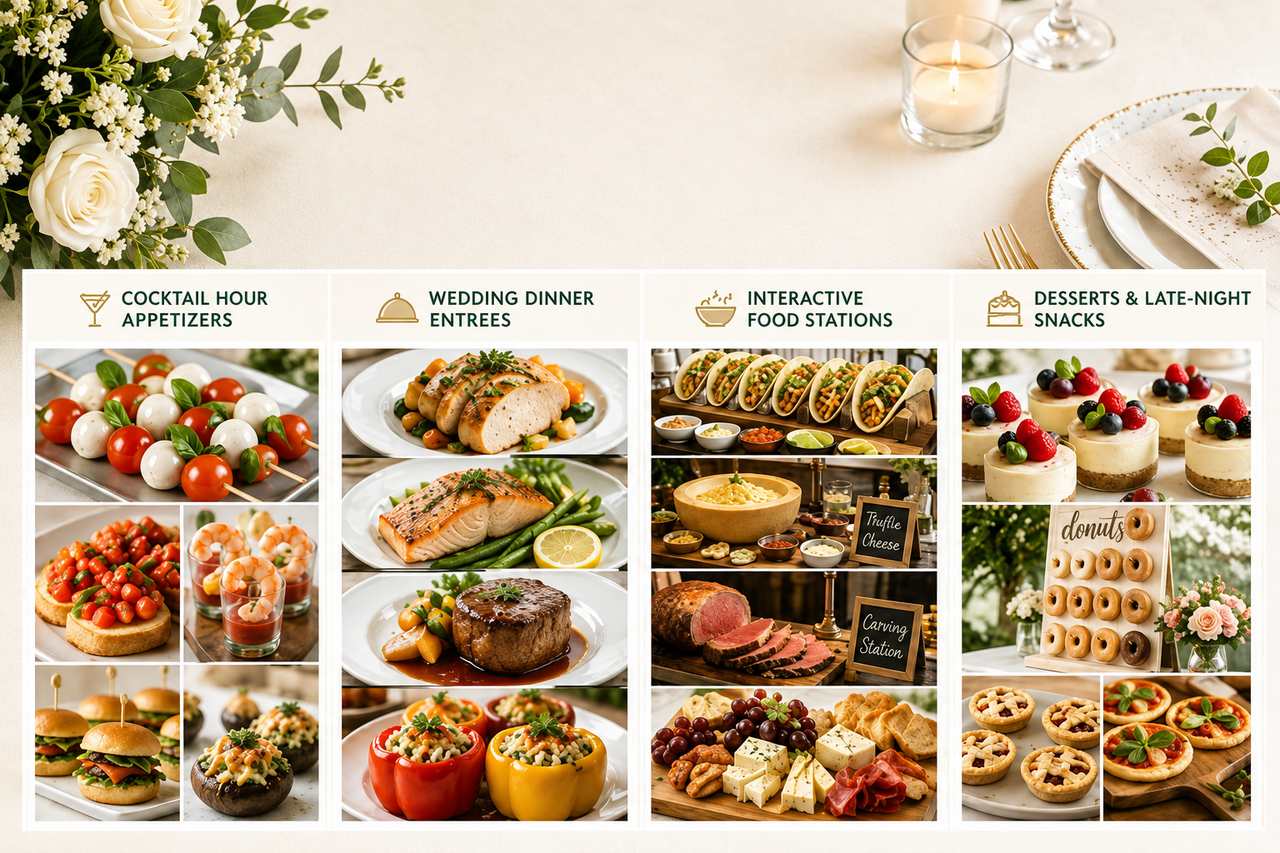
Great food matters, but a wedding menu has to do more than taste good. It should fit your wedding style, guest count, serving setup, dietary needs, and budget.
Below, you’ll find 30 wedding menu ideas for U.S. celebrations, from cocktail-hour bites and dinner entrées to food stations and late-night snacks. We’ve also included practical advice on planning the menu, laying it out, and keeping food service on track on the big day.
How to Plan a Wedding Menu Your Guests Will Love
The best wedding menus match the style of the event while remaining practical to serve and enjoyable for guests. Expensive or unusual dishes are not always the best choice.If you are deciding between styles, narrow your options by service type, season, guest count, and budget before comparing specific dishes.
Match the Menu to Your Wedding Style
Start with the overall feel of the wedding. A formal reception may call for a plated, multi-course dinner, beef tenderloin, or surf and turf. Outdoor weddings often work well with barbecue, buffets, or food stations. For a smaller, more casual celebration, pizza, tacos, and passed appetizers can be a great fit.
If you have a specific wedding theme or cultural background, consider adding menu ideas that reflect your story, such as traditional family recipes, regional specialties, signature cocktails, or personalized menu designs.
Remember, when creating wedding logos, keep the initials, font, and color treatment consistent across all pieces.
Consider Your Guest Count and Dietary Preferences
Guest count affects both the menu and the way the meal is served. For a larger wedding, choose dishes that can be made in big batches, served consistently, and kept at the right temperature.
A smaller guest list gives you more room to personalize the menu. Ask about dietary needs early, including vegetarian, vegan, gluten-free, kids’ meals, and food allergies.
You do not have to meet every individual preference. Still, guests with common dietary restrictions should have a clear and satisfying option.
Choose Menu Ideas Based on the Season and Guest Experience
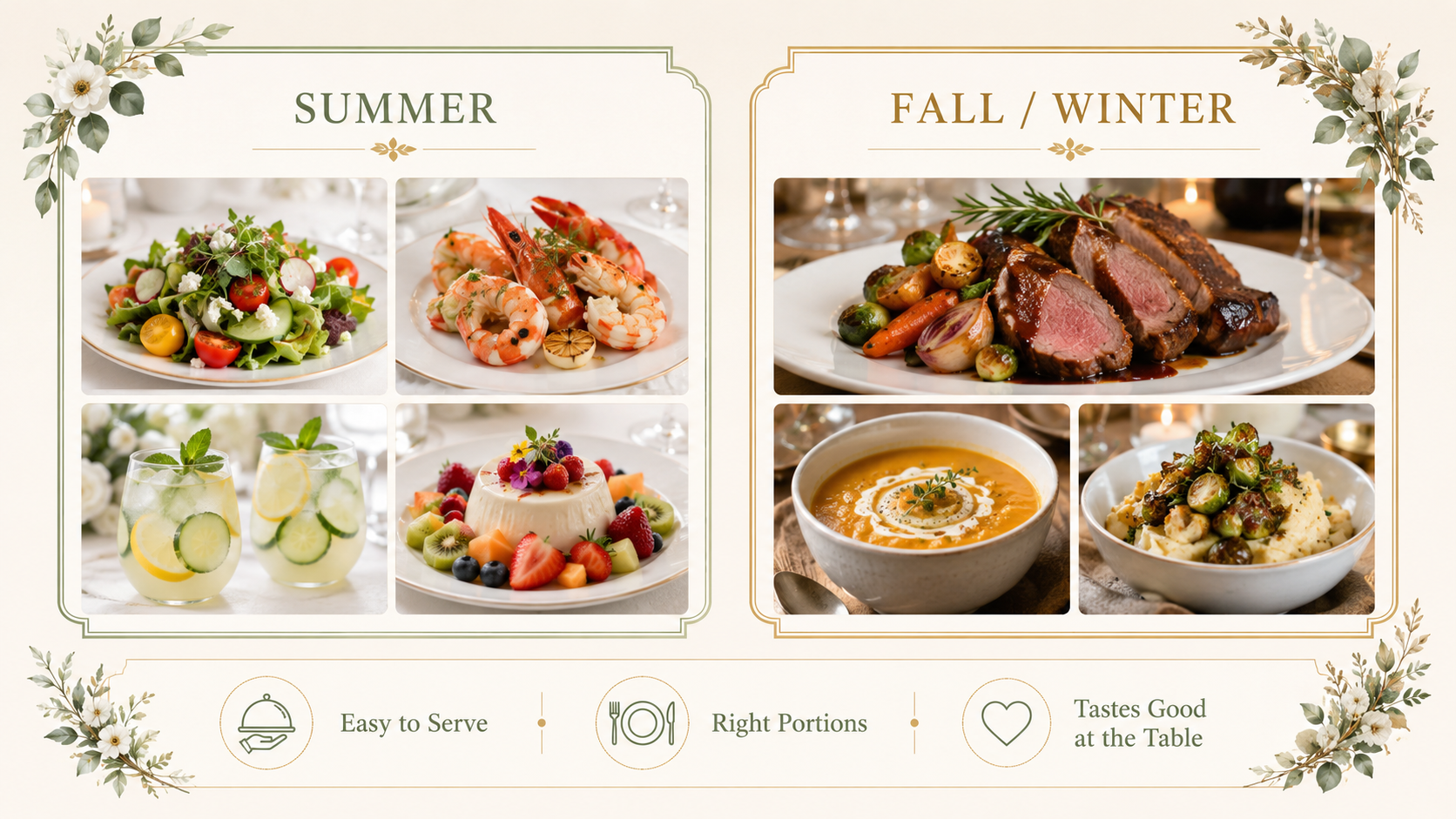
Season matters. Summer weddings pair well with fresh salads, seafood, chilled drinks, and fruit-based desserts. For fall and winter, roasted meats, hearty soups, and warm sides usually feel more fitting.
Consider how easily the food can be served, whether portions are appropriate, and whether the dish will still taste good when it reaches guests.
30 Best Wedding Menu Ideas to Wow Your Guests
You don’t need expensive ingredients to create a wedding menu guests will remember. Start with familiar favorites. Then add seasonal ingredients, local flavors, or dishes that mean something to you. This usually works better than making every item feel trendy or unfamiliar.
Cocktail Hour and Appetizer Ideas
Cocktail hour food should be easy to grab and finish in one or two bites. Mix hot and cold options, meat and vegetarian choices, and a few different textures. Guests will have plenty to enjoy without filling up before dinner.
1. Caprese Skewers
Caprese skewers are simple, fresh, and easy to eat while guests mingle. Each one usually includes a cherry tomato, a piece of fresh mozzarella, and a basil leaf.
They work especially well for spring and summer weddings, garden receptions, and outdoor venues. They’re also an easy vegetarian choice. Finish them with a little balsamic glaze or garlic-infused olive oil for more flavor.
2. Bruschetta or Crostini Bites
Bruschetta and crostini are classic wedding appetizers that are easy to customize. Go with tomato and basil, or try ricotta, roasted mushrooms, caramelized onions, figs, or smoked salmon.
These bites work well for rustic weddings, Italian-inspired menus, and relaxed cocktail hours. You can also change the toppings to match the season.
3. Mini Crab Cakes
Mini crab cakes feel special without being too formal. They are a natural choice for beach weddings, coastal celebrations, or seafood-focused menus.
Serve them with lemon aioli, tartar sauce, or a light herb sauce. Keep them small enough to finish in one or two bites.
4. Shrimp Cocktail Shooters
Shrimp cocktail shooters are neat, easy to serve, and simple for guests to grab. They are a classic American wedding appetizer, especially for summer weddings, beach receptions, and modern formal events.
Add lemon, fresh herbs, or a little spicy sauce to give the traditional version a fresh twist.
5. Mini Sliders
Mini sliders are familiar, filling, and always popular during cocktail hour. They work especially well for barn weddings, backyard receptions, and casual outdoor celebrations.
Classic beef is an easy choice, but fried chicken, pulled pork, and mushroom sliders also work well. Keep the sauce light so they are not messy to eat.
6. Stuffed Mushrooms
Stuffed mushrooms are rich, savory, and perfect for fall or winter weddings. They also fit well at indoor receptions and more traditional dinners.
Popular fillings include spinach and cheese, herbed breadcrumbs, caramelized onions, and sausage. When the rest of the menu is meat-heavy, choose a spinach, cheese, or roasted vegetable filling for a more satisfying vegetarian option.
Wedding Dinner and Main Course Ideas
A wedding entrée should feel satisfying, but it also needs to hold up well when served to a large crowd. A common approach is to offer two or three choices, such as chicken, beef, fish, and a vegetarian option. This gives guests enough variety without making the menu too complicated.
7. Herb-Roasted Chicken
Herb-roasted chicken is one of the safest wedding entrée choices. It is familiar, widely liked, and usually more budget-friendly than steak or seafood.
Serve it with roasted root vegetables, mashed potatoes, or seasonal greens. Lemon herb sauce, mushroom sauce, or a light cream sauce all work well. Boneless chicken breast or thighs are also easier for guests to eat.
8. Grilled Salmon
Grilled salmon feels light but still polished. It works well for spring and summer weddings, coastal venues, and modern formal receptions.
Popular pairings include lemon butter sauce, dill sauce, herb rice, and roasted asparagus. If you are already serving beef or chicken, salmon gives guests a lighter option.
9. Beef Tenderloin or Steak
Beef tenderloin and steak are classic choices for a formal American wedding dinner. They are a good fit for hotel weddings, black-tie receptions, and higher-end menus.
They are often served with mashed potatoes, roasted vegetables, red wine sauce, or peppercorn sauce. For a larger wedding, beef tenderloin may be easier to serve consistently than individual steaks.
10. Pasta Primavera
Pasta primavera combines pasta, seasonal vegetables, herbs, and a light sauce. It is a more filling vegetarian entrée than a simple salad or vegetable plate.
It works well for spring and summer weddings, Italian-inspired menus, and relaxed outdoor dinners. Use olive oil, tomato sauce, or a light cream sauce. Avoid anything too heavy, since the pasta may sit before it reaches the table.
11. Vegetarian Stuffed Peppers
Vegetarian stuffed peppers are colorful, filling, and polished enough for a plated dinner.
Popular fillings include quinoa, wild rice, beans, mushrooms, spinach, and cheese. They can also be made vegan or gluten-free, which makes them a flexible option for guests with dietary restrictions.
12. Fried Chicken With Elevated Sides
Fried chicken is not just for casual parties. Pair it with truffle mac and cheese, honey butter biscuits, cornbread, mashed potatoes, or a polished coleslaw, and it can feel right at home on a wedding menu.
It is especially popular for Southern weddings, barn receptions, backyard celebrations, and family-style dinners.
13. Surf and Turf
Surf and turf usually pairs steak or beef tenderloin with lobster, shrimp, or crab. It is a classic choice for couples who want the dinner to feel a little more special.
It works well for coastal weddings, luxury hotel receptions, and smaller formal dinners. To keep costs under control, serve a smaller portion of beef with grilled shrimp instead of a full steak and lobster tail.
Interactive Wedding Food Station Ideas
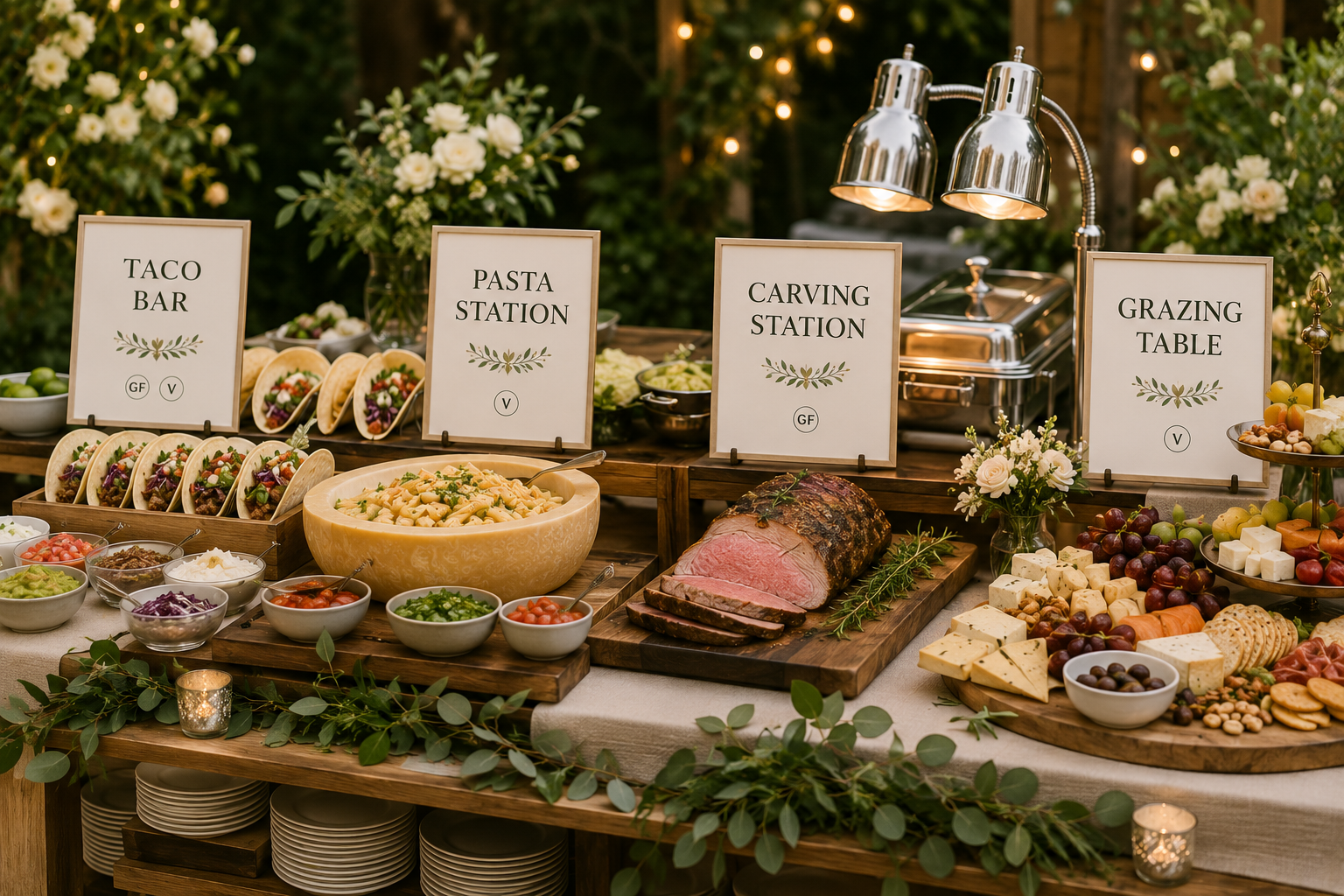
Food stations give guests more freedom to build a plate they actually want. They also make dinner feel more relaxed and social.
Still, more stations do not always mean a better experience. One or two standout stations, paired with a few fixed sides or appetizers, are usually enough. This helps keep lines short and the setup under control. Each station should also have a simple sign naming the food and any dietary details. Reviewing poster design ideas can help you organize that information clearly on larger station boards.
14. Mac and Cheese Bar
A mac and cheese bar is a fun take on classic American comfort food. It fits right in at Southern weddings, barn receptions, and late-night snack hours.
Set out toppings such as bacon, grilled chicken, breadcrumbs, jalapeños, green onions, and roasted mushrooms. A classic version plus one specialty flavor is usually plenty. There is no need to overload the station with too many sauces.
15. Taco Bar
A taco bar is an easy crowd-pleaser for outdoor weddings, backyard receptions, and Mexican-inspired celebrations.
Offer a few fillings, such as beef, chicken, grilled fish, and roasted vegetables. Add salsa, guacamole, cheese, and sour cream. Six to eight toppings are usually enough to give guests options without slowing down the line.
16. Pasta Station
A made-to-order pasta station adds a personal touch to an Italian-inspired wedding or indoor reception.
Popular choices include marinara, Alfredo, pesto, chicken, shrimp, and seasonal vegetables. To keep service moving, stick with two pasta shapes and two or three sauces.
17. Wood-Fired Pizza Station
Wood-fired pizza is a natural fit for barn weddings, garden receptions, winery venues, and laid-back outdoor celebrations.
Choose three or four set flavors, such as Margherita, pepperoni, mushroom, and seasonal vegetable. Keep fresh slices coming instead of making a custom pizza for every guest. It is faster and keeps the line moving.
18. Sushi or Poke Bowl Station
A sushi or poke bowl station feels fresh and modern. It is a great choice for coastal weddings or Asian-inspired menus.
Along with salmon, tuna, and shrimp, include tofu, avocado, roasted vegetables, and cooked options. That gives pregnant guests, kids, and anyone who does not eat raw fish something they can enjoy.
19. Carving Station
A carving station can make a buffet feel more polished. It works especially well for hotel weddings, holiday receptions, and fall or winter events.
Roast beef, beef tenderloin, ham, turkey, and slow-roasted pork are all popular choices. Having a staff member slice the meat keeps the station neat and helps manage portion sizes.
20. Charcuterie or Grazing Table
A charcuterie board or grazing table can double as both food and décor during cocktail hour.
Build it with cheeses, cured meats, fruit, nuts, bread, olives, and dips. It is a strong fit for winery weddings, garden celebrations, and boho-style receptions. Keep vegetarian items separate from the meats, and add a few gluten-free crackers so more guests can enjoy it.
Affordable Wedding Menu Ideas That Still Feel Special
A smaller catering budget does not mean the food has to feel basic. Start with dishes that are easy to serve, hold up well, and work for a crowd. Good presentation and the right serving style can make even familiar food feel wedding-ready.
21. Family-Style Dinner
Family-style service brings large platters to each table, so guests can pass the food around and serve themselves. It encourages guests at the same table to interact more naturally throughout the meal.
Roast chicken, braised beef, pasta, mashed potatoes, roasted vegetables, and salad all work well. Keep in mind that family-style service is not always cheaper than a buffet. Ask about platter rentals, extra portions, and staffing before you book it.
22. Brunch Buffet
A brunch buffet can cost less than a formal dinner, especially for a morning or early afternoon wedding.
Think scrambled eggs, waffles, French toast, breakfast potatoes, bacon, sausage, and fresh fruit. Mini pastries, a bagel station, or a mimosa bar can make the setup feel more festive without adding too much to the menu.
23. BBQ Spread
BBQ is a popular choice for outdoor weddings, barn venues, and backyard receptions across the U.S.
Pulled pork, smoked chicken, and brisket are easy to serve in large batches. Add mac and cheese, cornbread, baked beans, and coleslaw. Two meat options plus one vegetarian choice are usually enough.
24. Baked Potato Bar
A baked potato bar is filling, flexible, and easy on the budget.
Set out toppings like cheese, sour cream, bacon, green onions, broccoli, chili, and roasted mushrooms. Six to eight toppings give guests plenty to work with without turning the station into a mess.
Wedding Dessert and Late-Night Snack Ideas
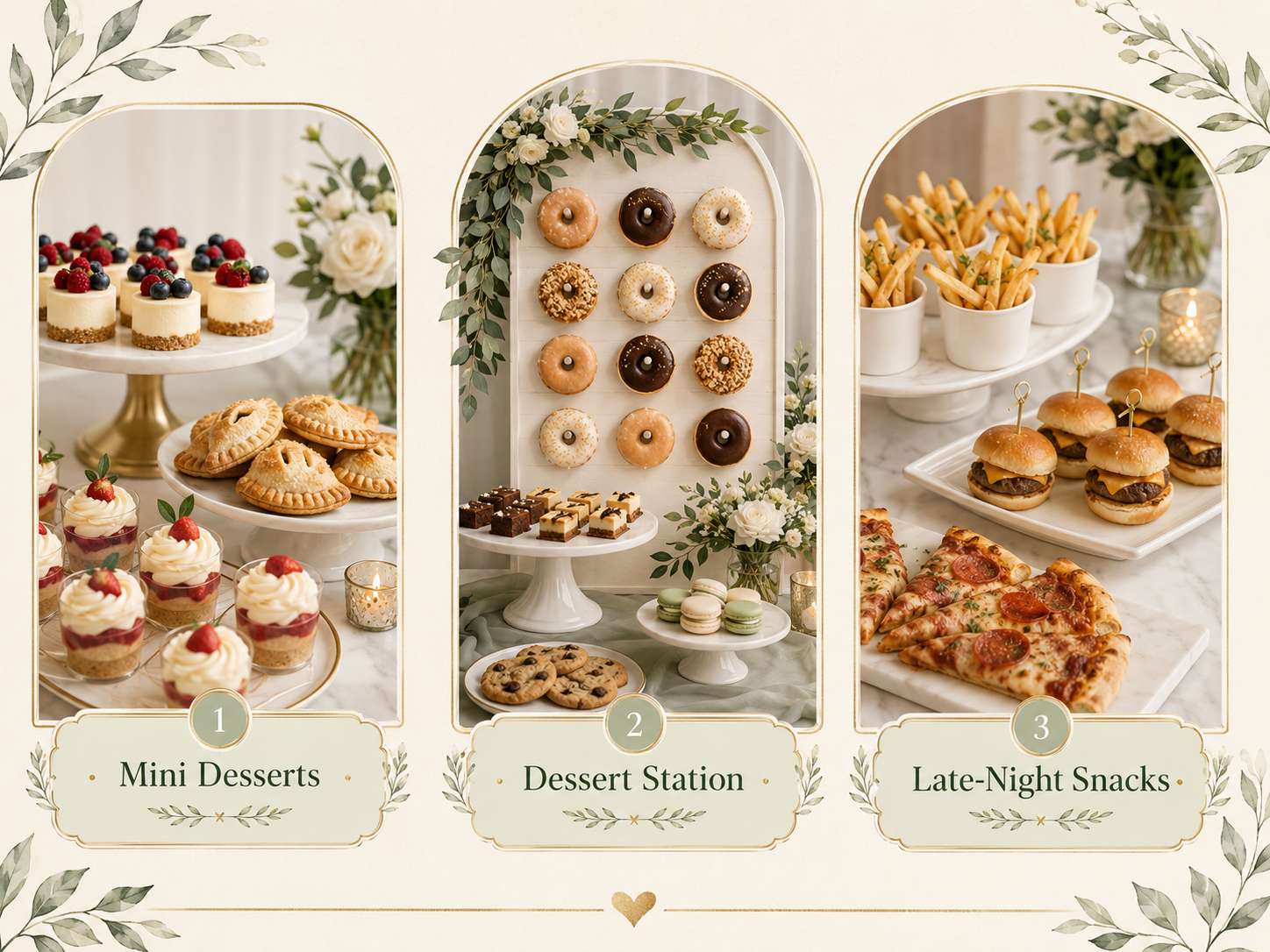
Wedding dessert does not have to stop at cake. Mini desserts, dessert stations, and late-night snacks give guests more to choose from and keep the party feeling fun after dinner.
25. Cookies and Milk
Cookies and milk are simple, nostalgic, and easy for almost everyone to enjoy. They work especially well for cozy winter weddings, family-style receptions, and laid-back evening celebrations.
Offer a few familiar choices, such as chocolate chip, oatmeal raisin, peanut butter, and sugar cookies. Pair them with regular milk, chocolate milk, or a plant-based option.
26. Mini Cheesecakes
Mini cheesecakes are easy to serve and much less messy than slicing a full cake.
Choose two or three flavors, such as classic, strawberry, chocolate, or salted caramel. Fresh fruit or small toppings can help tie them into your wedding colors.
27. Donut Wall or Donut Station
Donut walls have become a popular wedding dessert in the U.S. They can fill out a dessert table and double as a fun photo spot.
Keep the flavors familiar. Glazed, cinnamon sugar, chocolate, and filled donuts are all safe choices. Refreshing the display throughout the event is often more important than building an elaborate setup.
28. Mini Pies or Hand Pies
Mini pies and hand pies bring a cozy, all-American feel to the dessert table. They are a great match for fall weddings, rustic venues, and holiday celebrations.
Apple, cherry, blueberry, pumpkin, and pecan are all popular. For a cooler-weather wedding, serve them with hot coffee, apple cider, or a warm spiced drink.
29. Ice Cream Bar
An ice cream bar is a fun choice for summer weddings, outdoor receptions, and celebrations with lots of families and kids.
Stick with two or three popular flavors, plus one dairy-free option. Add chocolate sauce, caramel, fruit, nuts, sprinkles, or cookie crumbles for toppings.
30. Late-Night Fries, Pizza, or Sliders
After a few hours of dancing, guests are often more excited about fries, pizza, or sliders than another fancy dessert.
Pick one. That is usually enough. Serve fries in small cups, cut pizza into easy-to-grab slices, or keep sliders light on the sauce so guests can eat without making a mess.
How to Design a Wedding Menu That Looks as Good as the Food
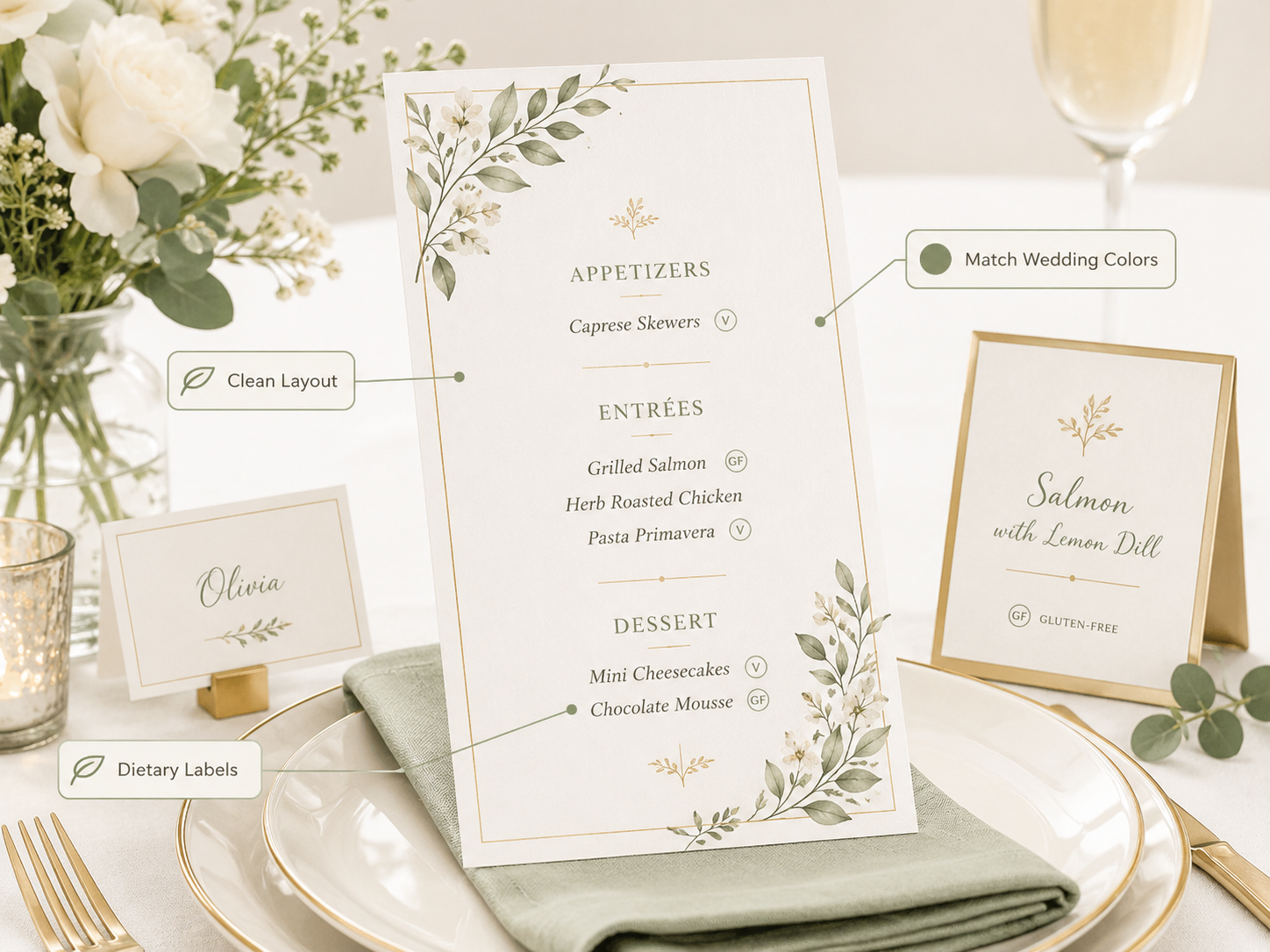
Your wedding menu is part of the table setting, not just a list of dishes. The right layout can tie in with the rest of the reception and help guests see what’s coming without having to study the card.
Keep it clear. Use colors and details that match the wedding, but don’t let the design compete with the food.
Keep the Menu Card Clean and Easy to Read
Guests should be able to glance at the menu and understand it right away. List the food by course: appetizers, entrées, sides, and dessert. Let the dish names stand out, then keep the descriptions brief. One or two lines is usually enough.
Two fonts should do the job. Script can look beautiful, but too much of it is hard to read, especially once the lights go down. Small, pale text causes the same problem.
Match the Menu Design to Your Wedding Style
Pull colors and small design details from the rest of the wedding. Your invitations, place cards, flowers, and venue are all good places to start. Many brand color palette examples use two or three coordinated shades, which is usually enough to keep a wedding menu consistent without making it feel busy.
Soft colors and botanical touches fit a garden wedding. Blues, creams, and sandy neutrals feel right near the beach. A formal dinner may look better with clean lettering, darker shades, and a small metallic accent.
Starting with a blank page can take time. An AI menu maker such as lets couples add their dish list, wedding colors, theme, and menu details, then build a finished design around them.
That can come in handy when you need several matching pieces, such as place-setting menus, buffet signs, table menus, or a larger display near the entrance. A poster vs flyer comparison can also help you decide which information belongs on a large entrance display and which works better on smaller handouts or station signs.
Call Out Signature Dishes and Dietary Labels
Give special dishes a little extra attention. It might be a family recipe, the chef’s specialty, or a meal the couple has shared for years.
A short label is enough:
Couple’s Favorite
Family Recipe
Chef’s Pick
Seasonal Special
Dietary labels need to be easy to spot, too. Use the same wording or icons throughout the menu for vegetarian, vegan, gluten-free, and nut-containing dishes. No guest should have to guess what they can safely eat.
Use Real Food Photos Where They Make Sense
Food photos can work well on a wedding website, a digital menu, a buffet sign, or a food station display. They help guests know what to expect and can draw attention to a signature dish.
For printed menu cards at each seat, less is usually better. Dish names and short descriptions often look cleaner than a page filled with photos.
Not every food photo comes out perfectly. Some look too dark, show a messy background, or clash with the rest of the set. Before adding photos to your wedding menu, make simple adjustments to improve brightness, clarity, and overall presentation while keeping the food looking natural.
For example, if a photo looks underexposed, you can learn to brighten an image to improve menu lighting and bring out more details. Avoid heavy edits or unrealistic filters — the final image should still represent the dish your guests will actually receive.
Final Thoughts
A memorable wedding menu does not have to be long or expensive. Guests often enjoy familiar food the most, especially when it fits the season, the setting, and the way the meal will be served.
Book a tasting before you lock everything in. Check the portion sizes, dietary labels, and serving plan, and make sure the menu cards are easy to read. A little planning goes a long way toward keeping dinner on time and making the meal feel special.
FAQ
What Is a Typical Wedding Menu?
A typical American wedding menu often includes a few cocktail-hour appetizers, one or two entrée choices, two or three sides, a salad, and dessert. Chicken, beef, fish, and a vegetarian dish are common entrée options.
What Is a Good Wedding Menu for a Large Guest List?
For a large wedding, go with food that can be cooked in batches and kept warm without losing quality. Roast chicken, slow-roasted beef, pasta, BBQ, and buffet-style meals all work well.
Skip dishes that need to be cooked one at a time or served at an exact temperature. Those can slow down service and make it harder to keep every plate consistent.
Is a Buffet or Plated Dinner Better for a Wedding?
There is no single best choice; it depends on your venue, budget, guest count, and the atmosphere you want. A plated dinner feels more formal and keeps the meal on a set schedule. It usually requires more servers and may cost more. A buffet gives guests more choices and works well for larger or more casual weddings.
You May Be Interested

100+ Father’s Day Jokes That Dad Will Actually Laugh At

100+ Good Quotes for Instagram Bio (Copy & Paste Ideas)

150+ Instagram Bio Ideas for Moms

100+ Trending Instagram Bios for Boys to Upgrade Your Profile

12 Trusted Green Logo Examples Used by Successful Brands
