How to Start a Food Truck Business
Learn how to start a food truck by validating demand, setting a realistic budget, securing permits, choosing a code-compliant vehicle, and building a focused menu. It also covers location testing, marketing, profitable growth, and common startup mistakes.


Starting a food truck begins with a menu, but the menu affects nearly every decision that follows. A burger-and-fries concept may need fryers, ventilation, fire suppression, and more generator power, while a coffee or cold-sandwich truck has very different space and refrigeration needs. Local rules can also determine where the truck is stored, how water tanks are sized, and whether food must be prepared in a commissary. Check these requirements before buying a vehicle, since bringing a used truck up to code can quickly erase the savings.
How to Start a Food Truck in 6 Steps
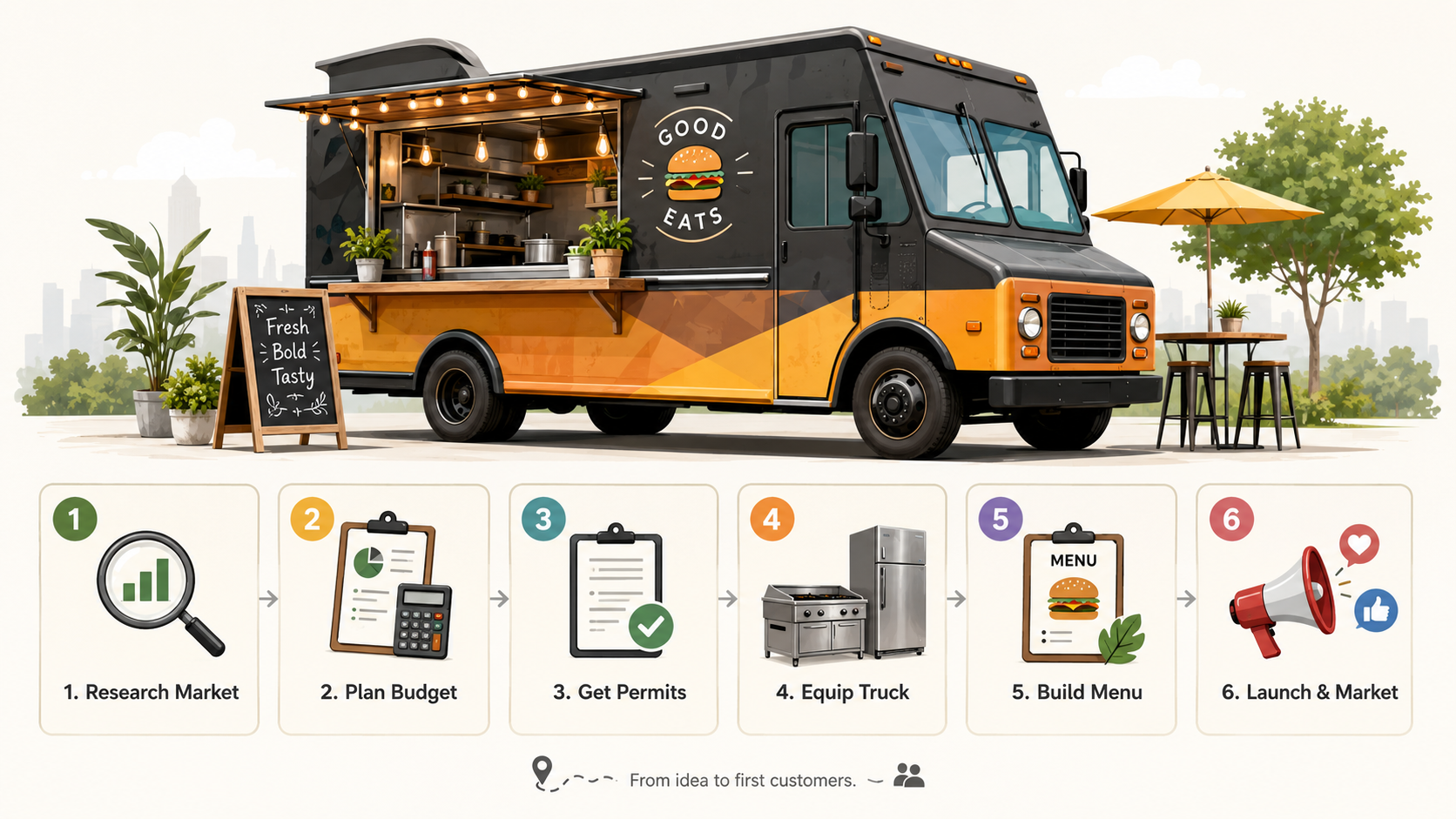
The first six steps take the business from an idea to a truck that is ready for inspection and service. Work through them in order, especially the menu, permit, and vehicle decisions. Buying a truck too early is a common and expensive mistake because equipment approved in one city may fail inspection in another.
Step 1: Research Your Market and Customers
Spend a few lunch periods watching the places where you hope to sell. A busy office district at noon may be empty after 2 p.m., while a brewery could draw steady evening traffic but charge a vendor fee. Record foot traffic, wait times, menu prices, and what nearby trucks sell out of first.
Then test a small version of your concept at a farmers market, pop-up, or private event. Selling 40 meals provides more useful information than asking friends whether they like the idea. It also shows whether customers will accept your target price and whether the menu can be served quickly from a small kitchen.
Step 2: Plan Your Budget and Funding
The truck will probably be the largest expense, but it should not consume the entire budget. Current U.S. estimates place a food truck at roughly $40,000 to $150,000, with licenses and permits varying from under $2,000 to well over $20,000 depending on the location and approval process. Startup inventory, insurance, commissary rent, fuel, parking, event fees, repairs, and payroll must also be covered before sales become predictable.
Build the budget around a slow opening month rather than a sold-out launch. A used truck may cost less upfront but need a new generator, plumbing repairs, or a code-compliant ventilation system. Keep a separate reserve for breakdowns and delayed permits so one failed refrigerator or missed inspection does not stop the business before it gains regular customers.
Step 3: Register and Permit the Business
Before paying a deposit on a truck, send the proposed menu and equipment layout to the local health and fire departments. Some jurisdictions want a detailed floor plan, equipment specifications, water-tank information, and a food-safety plan before scheduling an inspection. In Washington, DC, for example, inspections involve health, fire, and licensing agencies.
The menu matters during approval. Adding fried chicken later may require a hood, fire-suppression system, grease storage, or a revised food-safety plan. Commissary rules can create another surprise: New York City requires permitted mobile units to be stored, cleaned, and serviced at an approved facility, with trucks returning at least once each day. NYC mobile food vendor requirements Confirm these details early, along with parking restrictions and permit availability, because submitting the wrong layout or buying an unsuitable truck can delay opening for weeks or months.
Step 4: Choose and Equip Your Food Truck
Let the menu determine the truck layout. A high-volume taco concept needs enough griddle space and cold storage to serve several orders at once, while a coffee truck benefits more from water capacity, electrical power, and an efficient pickup counter.
Calculate the combined electrical load of refrigerators, freezers, lights, air conditioning, and small appliances before choosing a generator. Also check aisle width, headroom, axle capacity, ventilation, fresh- and wastewater tanks, and access to frequently used ingredients.
Step 5: Build Your Menu and Operations
Keep the menu focused so your team can prepare orders quickly, control ingredient costs, and deliver consistent food during busy service. Choose dishes that work within the truck’s limited space and rely on overlapping ingredients to reduce storage needs and waste. Once your items and prices are set, organize them into a clear, readable menu that your team can update easily as the business evolves.
Step 6: Market and Launch Your Food Truck
Build interest before opening by sharing your concept, menu previews, truck setup, and launch date on social media. Learning how to create an Instagram post around menu previews, location updates, and behind-the-scenes moments can help customers understand what to expect before opening day. Set up accurate business listings and post your weekly locations so customers know where to find you. A soft opening can help your team test cooking times, order flow, payment systems, and inventory levels before a larger launch. After opening, track sales and customer feedback to improve the menu and choose stronger locations.
How to Choose Food Truck Locations
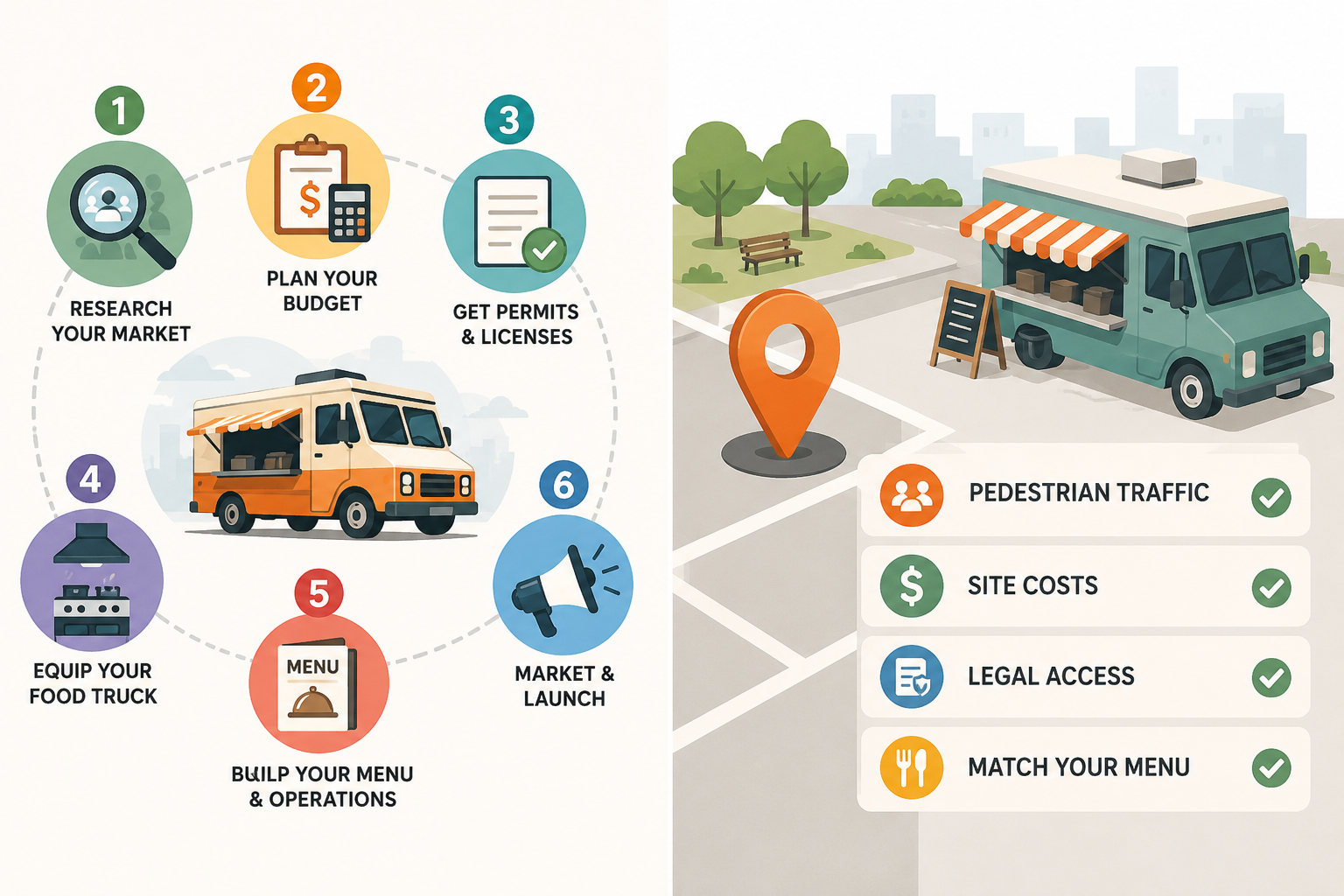
A crowded location does not always produce strong sales. Office workers rushing between buildings may have little time to stop, while a smaller brewery crowd may stay longer and order more. What matters is whether the menu, customer habits, operating hours, and site costs work together.
Evaluate Traffic, Fees, and Available Sites
The best time to judge a location is during the hours when the truck would actually operate. A business district may look promising at noon but become quiet after 1:30 p.m. Beyond foot traffic, consider whether customers can see the truck, reach the ordering window, and wait without blocking a sidewalk or parking lot.
Low site fees are not much of an advantage when access is poor or several trucks already sell similar food. Local vending and parking rules should also be confirmed before any booking.
Test and Adjust Your Weekly Schedule
Two or three trial services usually reveal more than a single busy afternoon. Weather, nearby events, and office schedules can make one day unusually strong or weak. Instead of ranking locations by revenue alone, compare what remains after food waste, labor, fuel, and site fees.
Sometimes a quieter stop with lower costs and faster service earns more profit. Strong locations can become regular weekly stops, while consistently weak ones should be replaced.
How to Sustain and Grow Your Food Truck
Once your food truck is running, focus on improving profit and building steady demand before expanding. Use sales data to identify what works, give customers reasons to return, and add new revenue streams that fit your current capacity.
Track Sales, Costs, and Location Results
Review weekly sales by menu item, day, time, and location. Track food cost, labor, fuel, parking fees, event commissions, and waste to calculate the actual profit from each service period. Remove or reprice low-margin items, prepare more of consistent bestsellers, and replace locations that repeatedly underperform. A simple spreadsheet or point-of-sale report can help you spot these patterns.
Build Repeat Customers and Local Partnerships
Give customers a reason to follow the truck between visits. Useful Instagram post ideas include weekly location schedules, sold-out updates, customer photos, partner events, and short clips from service. You can also work with breweries, offices, schools, and event organizers on recurring stops or joint promotions. Consistent updates and familiar locations make it easier for occasional visitors to become repeat customers.
Add Catering and Seasonal Revenue
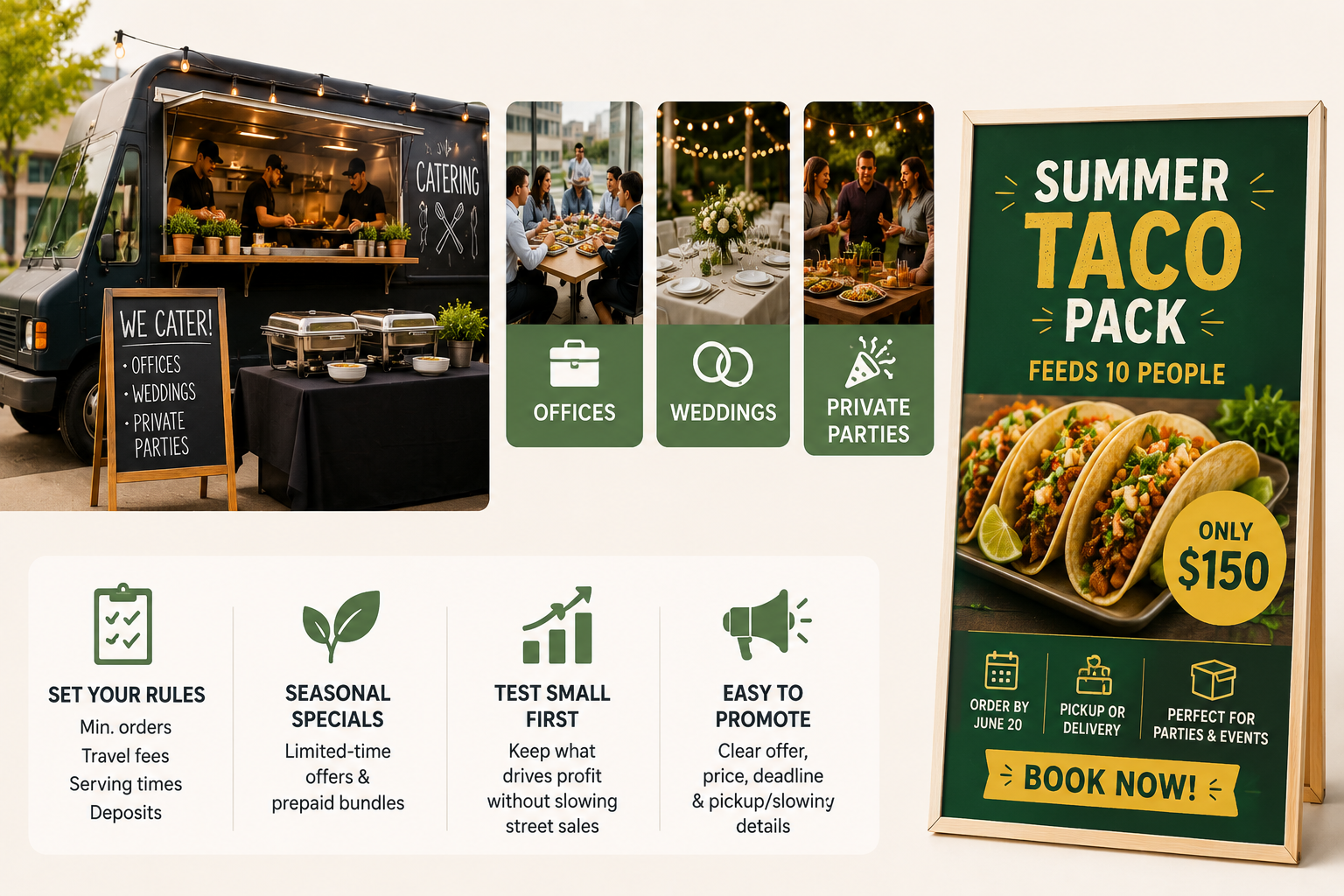
Monetize your existing menu through catering. Using high-efficiency dishes your kitchen already masters, design tailored packages for offices, weddings, and private parties. Lock in the rules early. Before accepting any bookings, establish strict terms for minimum orders, travel fees, serving times, and deposits. You can also add seasonal specials or prepaid bundles when they fit your operations and margins.Test small first. Only keep the offers that generate healthy margins without disrupting your core street operations. For a limited-time package, a good advertising poster should make the offer, price, order deadline, and pickup or delivery details easy to understand at a glance.
Expand to More Trucks or New Locations
Do not expand until your first truck has stable margins, reliable suppliers, and repeatable operating procedures. Before adding a second vehicle or entering a new market, test demand through catering, pop-ups, or additional service days and review the staffing, insurance, and licensing requirements carefully. Test the waters first. Before buying a second vehicle, gauge local demand through low-risk pop-ups, catering gigs, or extra service days while carefully crunching the numbers on staffing, insurance, and maintenance. Watch the legal landscape closely. Since licensing rules vary wildly by city and state, verify the local codes before entering any new market.
Common Food Truck Startup Mistakes
Many food truck problems begin before the first service day. Avoiding the following mistakes can help protect your budget, simplify daily operations, and give the business more room to grow.
Buying a Truck Before Permit Approval
Never assume a prebuilt truck will automatically pass inspection. Codes vary significantly by city and state.Before buying, always submit the vehicle’s floor plan and equipment list to local agencies to verify specific rules for sinks, ventilation, and fire suppression. Check everything first. Otherwise, unexpected retrofits will bleed your budget and delay your opening.
Underestimating Costs and Working Capital
Think beyond the truck. Your budget needs to cover a wide range of operating costs, from permits and insurance to fuel, repairs, commissary rent, payroll, and processing fees. Early sales will fluctuate. To survive the dry spells, maintain several months of working capital as a cushion. Never skip the emergency fund. One major equipment failure can instantly paralyze your entire operation.
Offering Too Many Menu Items
Large menus often increase waste and slow down prep.To slash costs and prep time, start with five to eight core items that share ingredients and cook quickly in a cramped kitchen. Test everything. Drop any dish that slows down the line, and only add new items once your team can handle rush periods consistently.
Relying on One Location or Sales Channel
Relying on one location is risky. Construction, bad weather, changing rules, or a drop in traffic can quickly reduce sales at a single location. It is safer to spread demand across several tested channels and stops. Build a weekly route of tested stops, keep backup locations ready for cancellations, and mix street vending with catering, festivals, and private events. This mix stabilizes revenue. If one channel fails, the rest keep you afloat.
FAQs
Is a Food Truck a Good Investment?
A food truck can be a good investment when it has proven customer demand, manageable startup debt, and locations that remain profitable after fees. Test the menu through pop-ups or catering before purchasing a truck. Strong sales alone are not enough if food waste, repairs, and parking costs consume the margin.
How Much Do Food Truck Owners Make a Year?
Food truck owner income varies widely because annual revenue is not the same as personal earnings. Food trucks may generate around $250,000 to $500,000 in annual revenue, while typical net profit margins range from 6% to 9%. That equals roughly $15,000 to $45,000 in business profit before taxes and owner-specific expenses.
How Long Does It Take to Start a Food Truck?
Starting a food truck usually takes several months. A ready-to-use truck in a city with a straightforward permit process may open sooner, while custom construction and multiple inspections can extend the timeline. Health and fire approval often takes longer than business registration, so wait for local guidance before announcing an opening date.
Do Food Trucks Pay Rent for Locations?
Yes, many food trucks pay to operate at locations or events. Payment may be a fixed parking fee, a percentage of sales, or an event entry charge. Breweries, offices, and apartment communities sometimes provide free space when the truck helps attract visitors or serve residents.
What Are the Disadvantages of a Food Truck?
The main disadvantages of a food truck are limited kitchen space, weather-dependent sales, location restrictions, and costly breakdowns. A failed generator can shut down refrigeration, while rain can empty an otherwise reliable lunch stop. Backup locations, emergency repair funds, and catering orders help reduce these risks.
Conclusion
Starting a food truck business takes more than a great menu idea. First, make sure there is real demand in your area. Set a realistic budget, learn the local operating requirements, and choose a truck that allows your team to serve food quickly and consistently. Keep the concept focused. Test different locations, track actual sales, and strengthen your daily operations before you expand. Careful planning now can prevent expensive changes later and give your business a better chance of staying profitable.
You May Be Interested

Remix Photo: Clone Any Viral Image Layout with Your Own Product | Zawa

140+ Facebook Bio Ideas: Short, Professional, Unique, and More

100+ Good Quotes for Instagram Bio (Copy & Paste Ideas)

15 Top AI Art Generators to Create the Best Masterpieces