Build a Food Blog That Can Grow and Earn
How to become a food blogger starts with choosing a clear niche, understanding your target readers, and creating useful content they can trust. This article explains how to research successful blogs, set up a website, test and photograph recipes, plan your first posts, and grow traffic through SEO, social media, and email. It also covers realistic ways to make money, including ads, brand partnerships, digital products, and freelance services, while highlighting common mistakes such as chasing too many topics, publishing untested recipes, and expecting fast income.

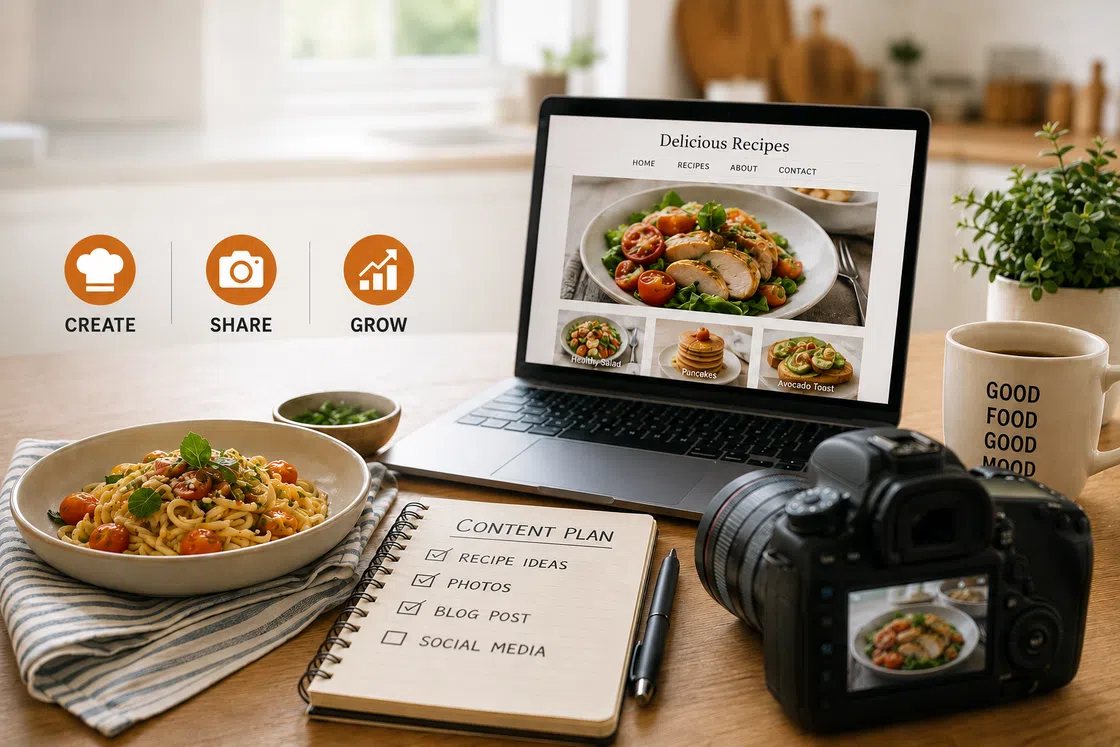
This guide breaks the process into practical steps, from choosing a niche and setting up your site to growing traffic and building your first income stream.No fluff, no gatekeeping. Just a practical, no-nonsense roadmap built for total beginners who want a side hustle they can actually sustain over the long haul.
Study Successful Food Bloggers Before You Start
The goal is not to copy someone else’s style. Use what you learn to spot content gaps and decide what you can offer that feels useful and different.
See What Other Food Bloggers Publish
Study a dozen or so successful blogs in your niche and look closely at the topics they publish most often. See what they’re constantly pushing out. A weeknight dinner blog usually leans hard into quick one-pot hacks and meal prep. But a serious baking site? They’re going to be obsessing over kitchen scales, ingredient swaps, and troubleshooting flat cakes.
Don't just skim their viral posts, either. Go straight to the comments and social media replies. When readers start complaining about weird cook times, storage issues, or how they totally ruined a recipe, pay close attention. These comments can reveal useful content gaps, especially when readers mention confusing steps, missing details, storage issues, or recipe failures..
Understand What Makes a Food Blog Useful
A strong hero image and a basic ingredient list are no longer enough on their own.
Lay out the practical stuff: prep times, exact oven temps, yield sizes, and reliable ingredient substitutes. Toss in clear storage tips, too. Don't just stop there, though. Paint a visual picture with your words—tell them how the dish should bubble, smell, or look right when it's done.
Also, don't sleep on recipe schema data. This simple back-end code gives Google a crystal-clear look at your cooking times, ratings, and nutritional facts. Nail this step, and your recipes will start popping up in those flashy, clickable "rich snippets" across Google Search and Images.
Decide Whether You Want a Blog, Social Page, or Both
A website and a social media account do different jobs. Your blog gives you a place to publish full recipes, bring in search traffic, and collect email subscribers. Instagram, Pinterest, and short-form video platforms are better for sharing cooking clips, showing your personality, and talking with followers.
If you want to start as a food blogger on Instagram, learning how to create an Instagram post that people will save or share can help you test different topics and visual styles. At the same time, work toward building your own website or email list. Social media algorithms can change, but your website and subscriber list give you a more reliable way to stay connected with readers.
How to become a food blogger step by step
Becoming a food blogger is not just about creating a website or setting up a social media account.The real challenge is building a routine you can stick with. Start by deciding who you want to reach and what kind of food content you want to share. Then create your posts, set up your blog or social accounts, and grow your audience over time.
Understand What Food Bloggers Actually Do
A food blogger does more than post meals online. The work often includes testing recipes, recording measurements, taking photos, writing posts, and answering questions from readers. Many food bloggers also spend time on SEO and social media.
As the blog grows, you may also deal with brand emails, rates, contracts, invoices, and sponsored-content disclosures. You do not need to learn everything at once, but it helps to treat the blog like an ongoing content project rather than a place to post food photos now and then.
Choose Your Food Blog Niche and Audience First
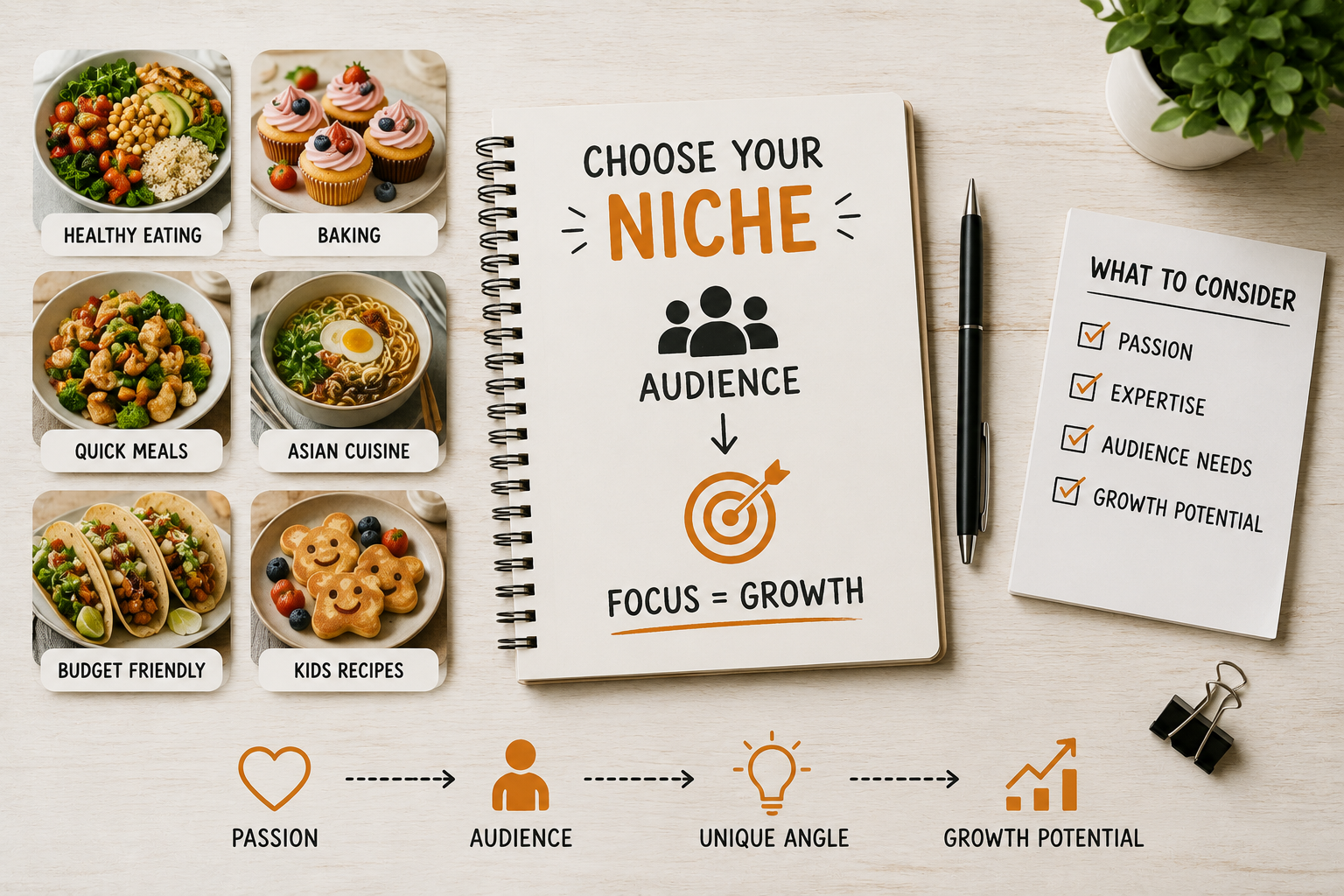
A clear niche determines what you write, the tone you use, and why readers keep coming back. A good niche should be specific enough for people to quickly understand your brand. It must also leave room for you to expand your content over time.
Pick a Specific Food Blog Niche
Do not start by trying to share all types of food. Instead, you can focus on a specific angle like air fryer recipes, family meals on a budget, gluten-free baking, Asian home cooking, high-protein breakfasts, or kids lunches.
Choosing a niche does not mean you cannot expand later. It simply helps a new blog build a clear identity. This lets readers know exactly what kind of content they will get when they follow you.
Choose a Clear Theme for Your Blog
Visitors should understand what your site is about as soon as they land on the page. A broad description like “I share my favorite meals” does not give them a clear reason to stick around. Choose a specific niche, such as 30-minute weeknight dinners for busy families, budget-friendly meals for college students, or beginner baking recipes that are hard to mess up.
Here’s a quick litmus test for your brand: what problem are you actually fixing? Maybe your whole game plan is helping corporate workers survive dinner in under half an hour. That’s your filter. If a new recipe idea doesn't directly serve that specific crowd, scrap it. Seriously. Don't go chasing viral TikTok trends just for a few cheap clicks if it muddies your brand.
Understand Your Target Reader
Know your reader's cooking experience, household size, budget, equipment, and time limits. For beginners, explain heat control, ingredient changes, and warning signs. For experienced bakers, provide precise weights, temperatures, and recipe ratios.
The clearer your target audience, the easier it is to provide specific details. This also helps you build a loyal audience.
Choose a Blog Name and Domain
Your blog name should be easy to spell, say, and remember. It should also leave room for your content to grow. Naming your blog after a specific ingredient, diet trend, or region can limit your future topics.
Before you pick a name, check domain availability, social media handles, and potential trademark issues. Once the name is settled, reviewing the main types of logos can help you choose a visual style that matches your niche and works across your website and social profiles. The US Small Business Administration recommends that a business name reflect your brand identity. It should also avoid conflicts with existing goods or services.
Create Food Content People Want to Read, Save, and Share
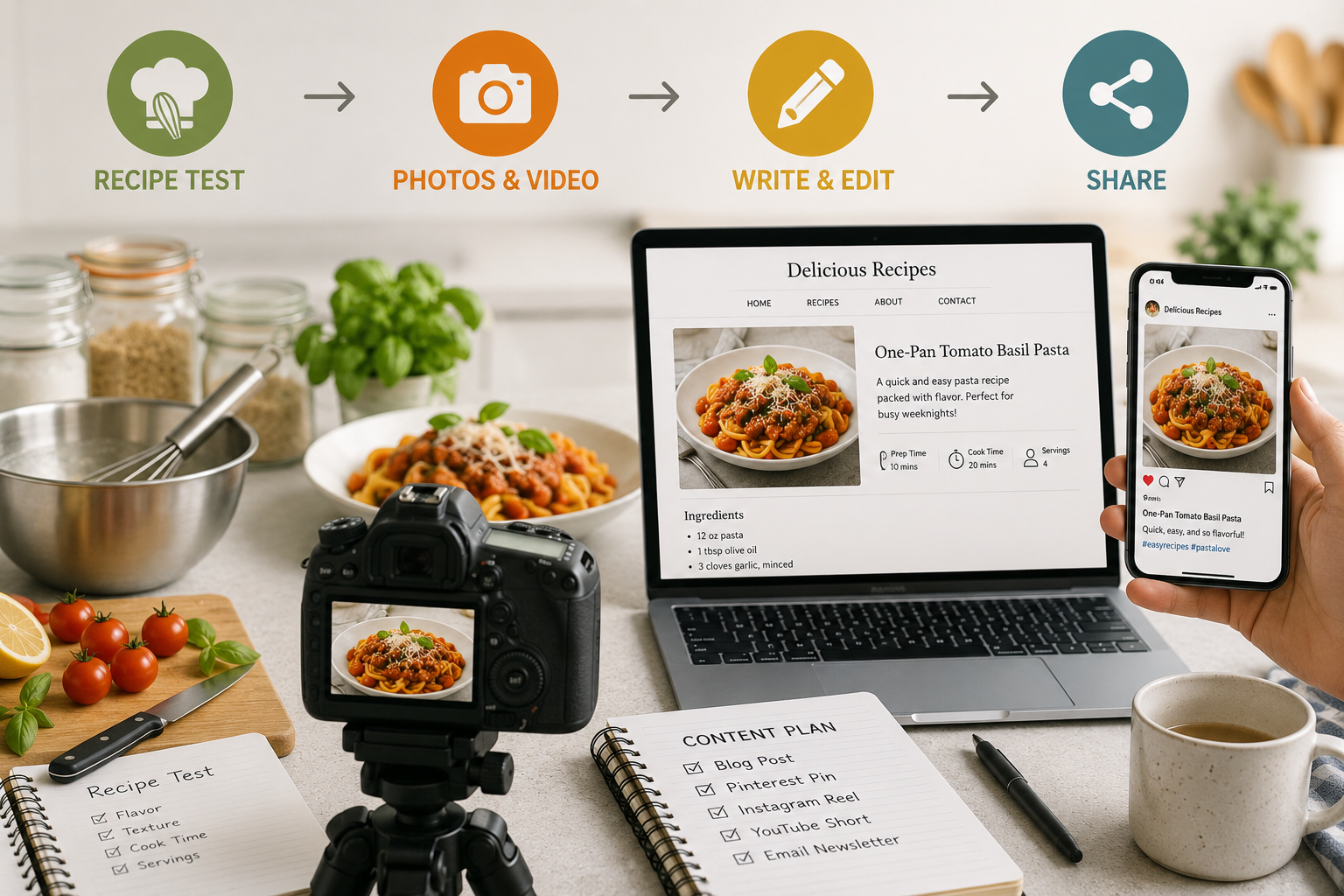
High-quality food content must be both practical and visually appealing. The written post helps readers successfully make the recipe. Photos and videos drive clicks and make the steps easier to follow.
Write Helpful Recipe Posts
Every recipe should come from real testing, not just rewriting other pages. Track ingredient weights, pan sizes, cook times, temperatures, and test results. Explain which steps directly affect the final dish.
Instead of just writing bake until golden brown, explain how long it takes. Describe what the surface should look like and how to fix an undercooked center. Readers do not need fancy descriptions. They want information that helps them succeed.
Use Editing Tools to Improve Visual Quality
High-quality food photos affect clicks, reads, saves, and shares on your blog posts. Clear surface textures, natural colors, and clean backgrounds help readers judge the taste and doneness of the food.
Beginners do not need to buy expensive camera gear right away. You can start by improving natural light, composition, and camera angles. After taking photos, you can use an AI image editing tool like Zawa . It helps improve photo clarity, adjust lighting, and clean up messy backgrounds. You can also resize the same image for blog posts, Pinterest pins, Instagram posts, and other social media visuals. Zawa currently offers features like image enhancement, object removal, background editing, and social media graphic creation.
Repurpose One Recipe Into Multiple Content Formats
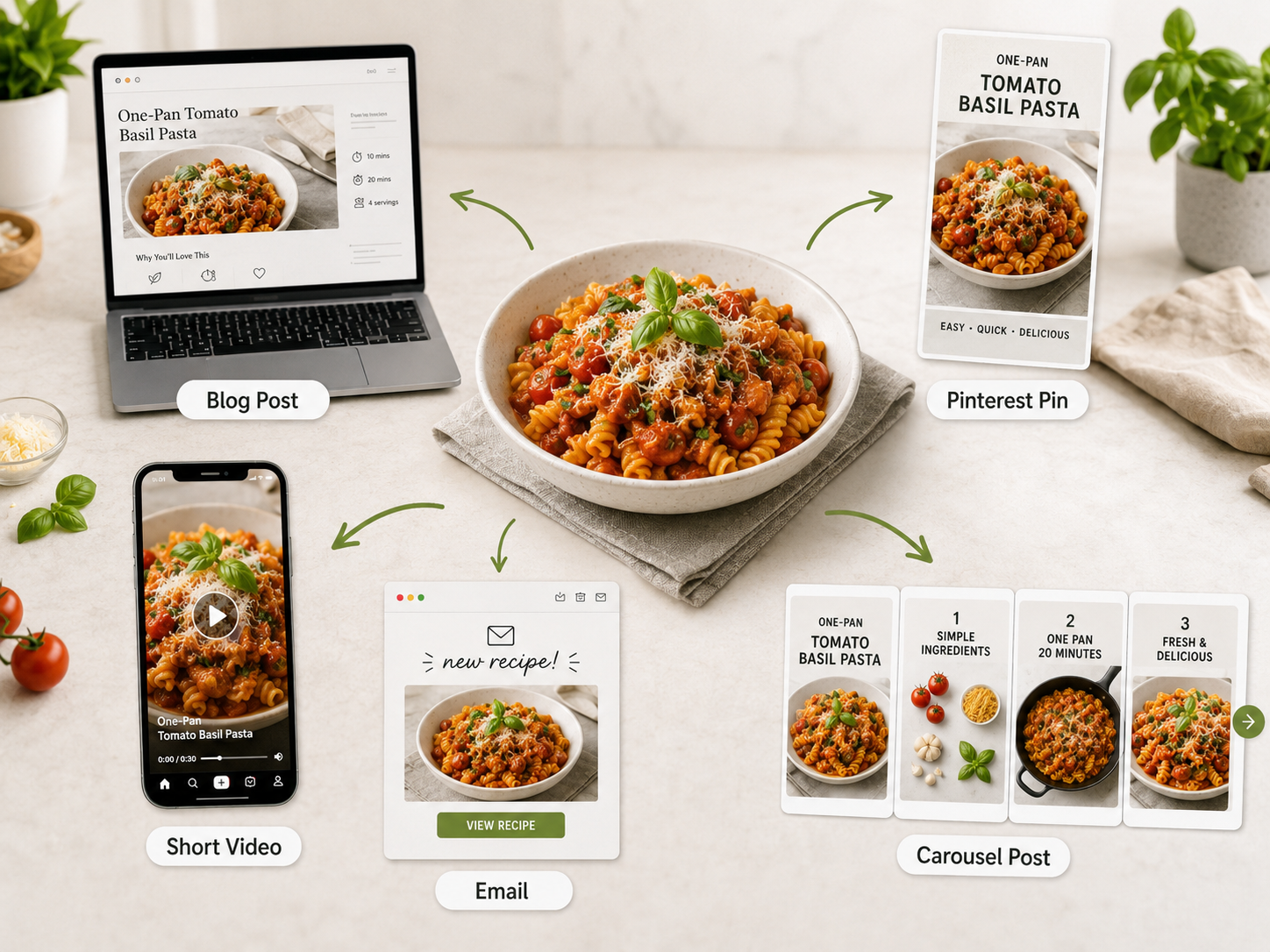
A well-tested recipe should not just be a single blog post. It can also become short videos, Pinterest pins, email content, or a carousel post that breaks the recipe into clear steps.
Content repurposing does not mean copying the same text everywhere. Instead, you reshape the information for each platform. Your blog gives the full explanation. Pinterest highlights the finished dish and searchable topics. Short videos show the most dynamic steps. Emails can offer storage tips or ingredient swaps.
Set Up Your Food Blog and Content Plan
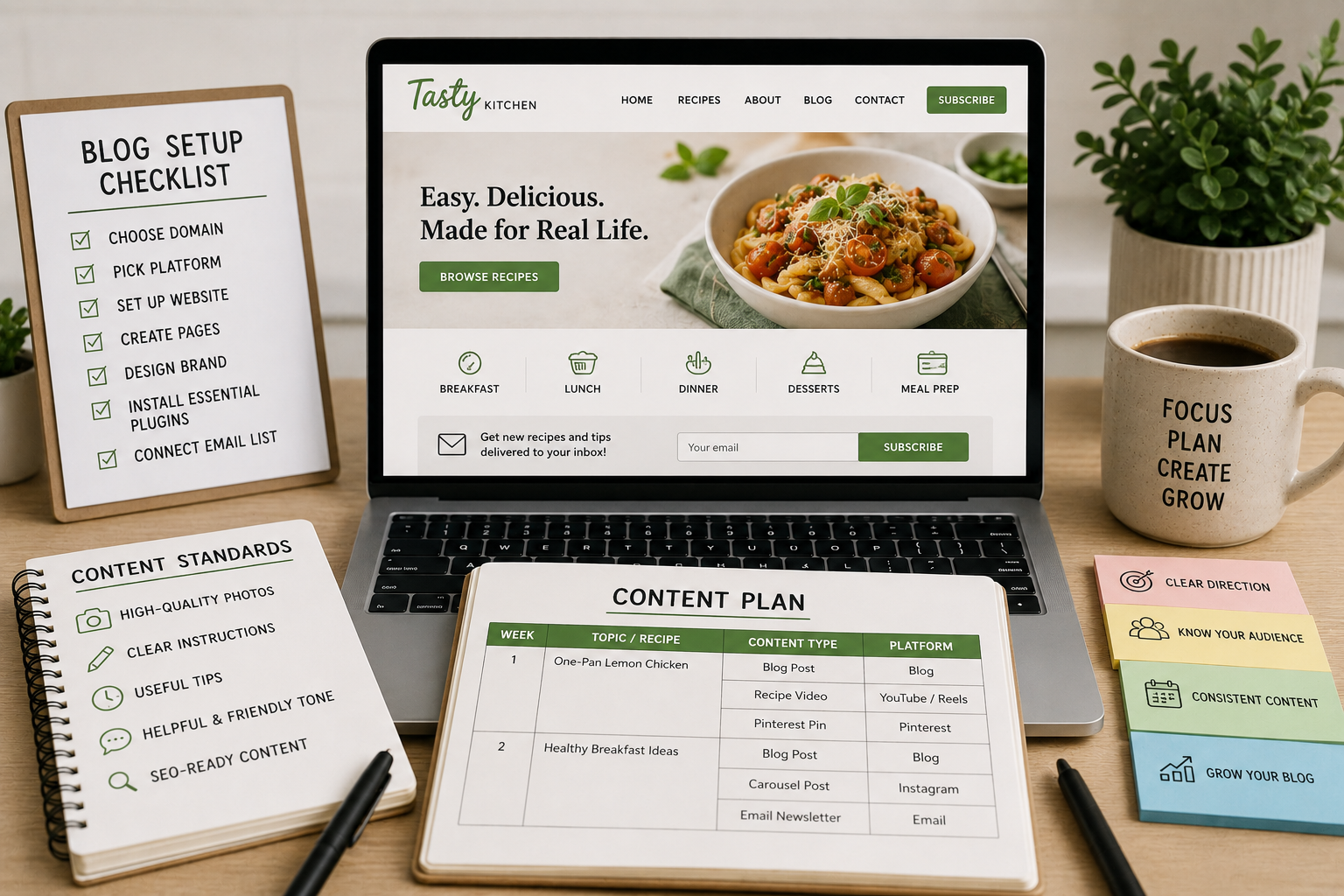
Define your direction and content standards before you build your website and launch plan. A new blog does not need every feature right away. Just make sure readers can find your recipes, learn about you, and subscribe for updates.
Choose the Right Blogging Platform
Do not choose a blogging platform based on a good-looking template alone. Design matters, but the features behind it will have a much bigger impact on your blog over time. Check whether you can use your own domain, edit key SEO settings, customize the site as it grows, and keep pages loading quickly on mobile devices.
If you're playing the long game to make real cash—think ad revenue, affiliate marketing kickbacks, or digital products—you need total control. Period. You need a platform that lets you tweak custom URLs, organize your categories without a headache, handle schema data, and drop in analytics tracking codes. If a platform locks you out of that backend stuff, dump it. Go with something that gives you the keys to your own house.
Build a Simple Blog Structure
A new blog can start with a homepage, About page, Contact page, Recipe Index, Privacy Policy, and a few main recipe categories. You can organize these categories by mealtime, cooking equipment, prep time, or dietary needs.
Do not create dozens of categories and tags that only have one post. Fewer categories with plenty of content make it easier for readers and search engines to understand your site structure.
Plan Your First 10 Blog Posts
Your first 10 posts should serve the same audience instead of covering 10 unrelated topics. Start with core recipes. Then, add ingredient guides, troubleshooting tips, storage methods, and pairing ideas around them.
For example, an air fryer chicken breast recipe can link to chicken breast marinades, air fryer cleaning tips, side dish ideas, and ways to store leftover chicken. This helps your early content build a cohesive theme.
Create a Realistic Publishing Schedule
Make a schedule you can stick to for at least three months. Base it on the actual time it takes to test recipes, take photos, write, and edit. Publishing one fully tested post a week is usually more valuable than posting daily for a short time and then quitting.
Do not sacrifice recipe accuracy just to post more often. Publishing lots of untested recipes might add more pages to your site, but it hurts reader trust in your blog.
Grow Your Food Blog Traffic and Audience
Once you publish your posts, you need to build a path for your target audience to find them. SEO, Pinterest, Instagram, short videos, and email lists all work differently. You do not need to use the same content strategy for every platform.
Learn Basic Food Blog SEO
Food blog SEO should start with real search needs. You can build topics around specific questions like how long to air fry chicken legs or how to bake a cake without eggs. Do not just use abstract creative titles.
Primary keywords can naturally appear in the page title, H1, body text, image alt text, and internal links. However, the post should still prioritize solving reader problems. For recipe pages, you can also add Recipe structured data. Use it to mark ingredients, time, and nutrition facts. This helps Google understand your page content.
Use Pinterest, Instagram, and Short Videos Strategically
Pinterest works best for searchable recipes, seasonal ideas, and content people want to save for later. Instagram is better for showing your style and building a closer connection with followers. Creating consistent aesthetic Instagram posts can also make your food content easier to recognize as people scroll. Short-form videos are especially useful for showing movement, such as mixing, slicing, cheese pulls, and before-and-after baking results.
Beginners do not need to manage every channel at once. Start with one or two platforms that fit your target audience. Then, look at saves, website traffic, and engagement to decide which content deserves more investment.
Start an Email List Early
Social media followers belong to the platform. Email subscribers give you a direct connection to your audience. Even if your blog traffic is low at first, you can attract subscribers with weekly recipes, meal plans, grocery lists, or free digital downloads.
Do not just use your emails to share post links. Add extra value like ingredient swaps, prep tips, and next week's meal plan. This keeps readers opening your emails.
Build Relationships With Other Food Bloggers and Brands
Building relationships with other bloggers should start with genuine comments, sharing high-quality content, or collaborating on themed posts. Do not just ask for link exchanges right away.
When brand partnerships come up, clearly define deliverables, revision limits, image usage rights, payment timelines, and ad disclosure rules. The FTC requires clear and conspicuous disclosures whenever a creator receives payment, free products, or other material benefits from a brand.
Make Money as a Food Blogger
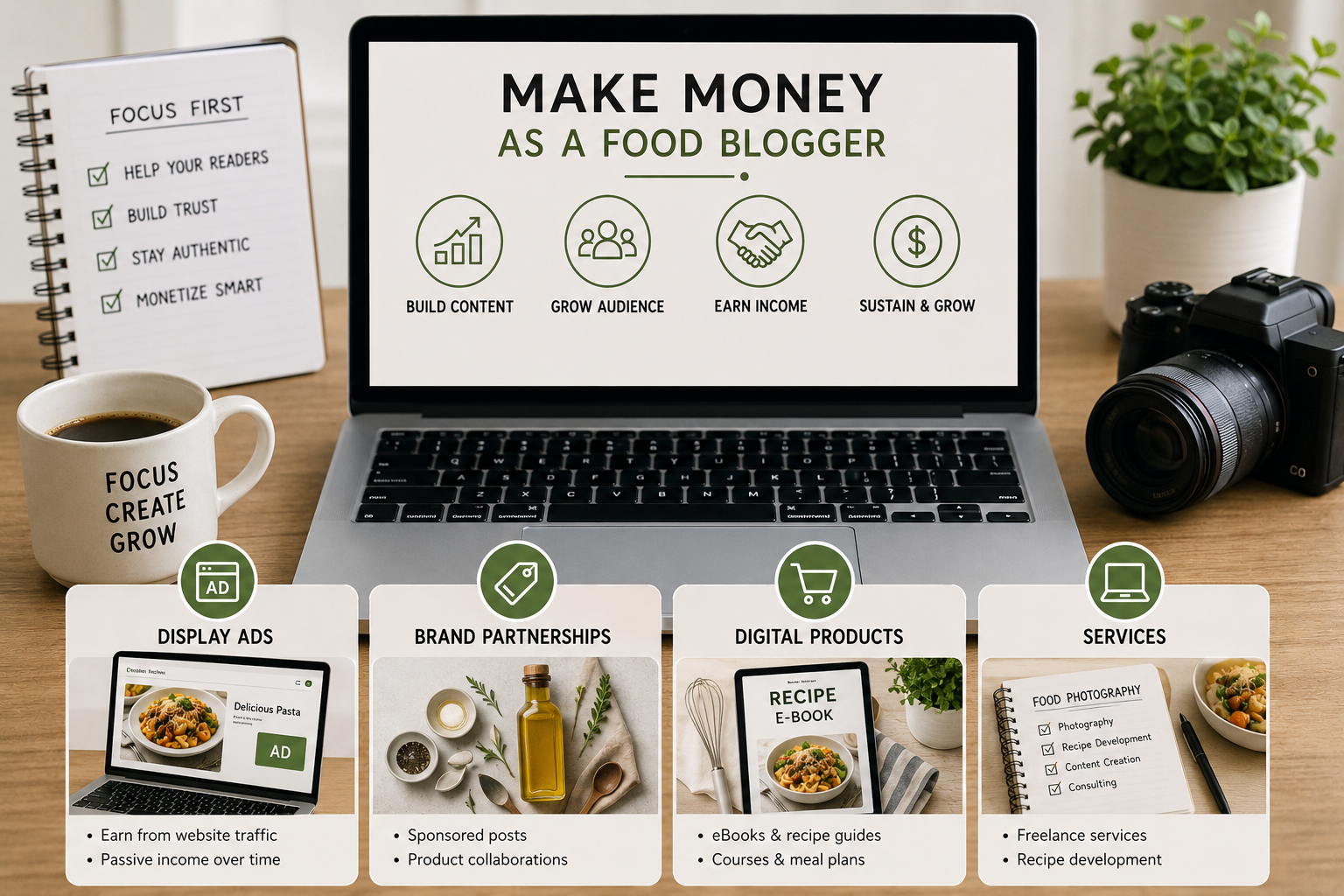
Learning how to become a food blogger and get paid is important. However, a food blog's income usually comes after you gradually build up content, traffic, and trust. Do not rush to monetize by accepting partnerships that do not fit your readers' needs. Otherwise, you could damage your brand identity before it stabilizes.
Display Ads
Display ads generate revenue based on website traffic. They work best for blogs that already have plenty of recipe pages and steady search traffic. Your actual earnings will depend on factors like traffic, user location, page count, seasonality, and the ad network.
During the early stages of your blog, prioritize content quality, page speed, and the reading experience. Blocking recipe steps just to add more ad slots can lower dwell time and keep readers from coming back.
Sponsored Content and Brand Partnerships
Brands may pay for recipe development, product features, social media content, or image licensing. Your rates should not just depend on follower counts. Factor in the cost of ingredients, recipe testing, photography, writing, revisions, and usage rights.
Before accepting a partnership, make sure the product truly fits your target audience. Always clearly disclose the business relationship in your content. Long-term trust is usually more valuable than a one-time payment from an unrelated sponsorship.
Digital Products, Services, and Freelance Work
Food bloggers can also sell digital cookbooks, meal plans, photography templates, or online courses. They can also offer services like food photography, recipe development, content writing, and social media creation.
This type of income does not require a lot of website traffic. For beginners, service-based income often comes sooner than ad revenue. This is because clients pay for specific skills and work, not just blog traffic.
Common Mistakes New Food Bloggers Should Avoid
The most common problem for beginners is not a lack of passion. It is trying to chase too many topics, platforms, and income streams at the same time. The following mistakes blur your content focus and add unnecessary production stress.
Choosing a Niche That Is Too Broad or Too Narrow
Covering all food is too broad. It makes it hard for readers to understand your niche. But focusing on a single obscure dish leaves you with too few topics.
A better approach is to choose a clear audience and core need while leaving room to grow. For example, you can start with 30-minute family dinners. Later, you can expand into meal prep, side dishes, and kitchen efficiency tips.
Posting Without Keyword Research
Publishing content based only on personal interest can disconnect your posts from actual search demand. Keyword research helps you understand the language readers use and the questions they care about. It also shows you what existing search results fail to explain clearly.
Keywords are just a guide for picking topics. They cannot replace personal testing and experience. Simply reorganizing information that is already in search results will not give you a long-term competitive edge.
Ignoring Food Photography Quality
Blurry, dark, or cluttered images hurt your click-through rate. They also make readers wonder if your recipes are actually tested. Before publishing, check your lighting, white balance, focal clarity, and crop ratios for different platforms. Reflective plates, glassware, and overhead lights can also create distracting highlights, so learning how to remove glare from photos is useful when the original shot cannot be retaken.
If your original photos have slight blurriness or background distractions, you can use Zawa's image enhancement, object removal, and background optimization features to fix them. However, always keep the food's true color, texture, and portion size. Avoid editing the final dish into something your readers cannot reproduce.
Expecting Fast Income Too Early
A few food accounts might grow fast, but this should not be the basis of your financial planning. Stable income usually requires building up searchable content, returning readers, email subscribers, and brand trust.
A more realistic approach is to set goals for content volume, organic traffic, and subscriber growth first. Then, gradually test ads, partnerships, and digital products. Do not judge whether your blog is worth continuing based only on your earnings from the first few months.
Conclusion
The core of becoming a food blogger is not mastering websites, photography, SEO, and monetization all at once. It is about building a content workflow you can sustain over time. Pick a clear audience, consistently post tested and practical content, and gradually improve your visuals, traffic, and business skills. This approach gives you a better chance to turn your hobby into a stable content business.
FAQ
Do Food Bloggers Make Money?
Yes. Food bloggers can earn income through display ads, brand partnerships, affiliate marketing, digital products, recipe development, food photography, and freelance services.
Established blogs rarely rely on just one revenue stream. Instead, they gradually build a monetization mix based on their traffic size, professional skills, and reader needs.
How Much Do You Get Paid as a Food Blogger?
There is no standard income rate. Display ad revenue usually depends on website traffic and audience location. Brand partnership income depends on content volume, production costs, platform performance, and image or video usage rights.
When pricing your work as a beginner, calculate all the time spent on ingredients, testing, photography, editing, revisions, and communication. Do not set your rates based on follower counts alone.
How Long Does It Take to Make $1000 per Month Blogging?
There is no reliable fixed timeline. Bloggers who offer food photography, recipe development, or freelance services might reach 1,000 dollars a month much faster than those who rely solely on SEO and ad revenue.
A better approach is to choose your income streams first, then work backward to see how many clients, product sales, or website visitors you need. Any claim that guarantees you will reach this income level within a specific number of months ignores differences in content quality, market competition, and business models.
Do I Need an LLC to Start a Blog?
In the US, starting a blog usually does not require setting up an LLC right away. When you operate as an individual without registering another business entity, your activities are generally treated as a sole proprietorship. An LLC is a separate business structure, and its registration and tax requirements vary by state and specific situation.
When your blog starts signing larger contracts, hiring people, selling products, or needing a clearer separation between personal and business liabilities, you can consult a local attorney or tax professional. Bloggers outside the US should follow the business registration, tax, and advertising rules of their own country and region.
You May Be Interested

100+ Trending Instagram Bios for Boys to Upgrade Your Profile

105 Independence Day Trivia Questions 2026

130+ Independence Day Quotes for Instagram
133 Independence Day Captions for Social Media

1440p vs 4K: Key Differences, Real Scenarios & Blur Fix